4F, Samjeong Tower, 672 Jungang-daero, Busanjin-gu, Busan, Korea
Comparison · Seomyeon, Busan · Foreigner-Friendly
Acne scar treatment in Busan Seomyeon, matched to the scar type you have.
Three scar shapes respond to three different approaches, and most faces carry a mixture. A course built around one method treats part of the problem — which is why assessment by type comes before any laser is chosen.
Scars are typed by shape before a method is chosen
On This Page
Ice pick scars
Boxcar scars
Rolling scars
Why does one course improve some and not others?
What about the marks that are not scars?
How do I work out which types I have?
Where does this sit alongside other treatment?
Why must active acne be controlled first?
How much improvement is realistic?
How long does a full plan take?
What should the consultation cover?
Scarring is where treatment expectations and mechanisms most often fail to line up. Understanding which shapes you have explains why a friend's excellent result may not be available to you, and what combination would actually work.
Does This Sound Familiar?
What patients say about scarring
I had a laser course and some scars improved and others did not.
The deep narrow ones have never responded to anything.
My skin looks better in flat light and terrible under a lamp.
How much improvement is realistic?
Is it worth doing if I still break out occasionally?
All five come up most weeks, and the first describes exactly what happens when one method meets three scar types. The sections below separate them.
Ice pick scars
Narrow, deep and vertical — like a puncture rather than a depression, often on the cheeks. They extend far deeper than they are wide, which is why fractional resurfacing
improves their edges without reaching their base. The methods that work are TCA CROSS, which chemically remodels the scar from inside, and punch excision for the deepest. A laser course alone typically leaves these largely unchanged.
Boxcar scars
Wider, with defined vertical walls and a flat base — like a small crater. These respond well to fractional resurfacing, since remodelling can soften the walls and raise the base over a course. Shallow boxcar scars often improve substantially; deep ones with sharp edges may need subcision or excision alongside.
Rolling scars
Broad, shallow depressions with sloping edges, produced by fibrous bands tethering the skin to deeper tissue. The surface is not damaged so much as pulled down — which is why resurfacing alone underdelivers here. Subcision releases the tethering bands, and the released depression is then supported with a booster
or filler while it heals. That combination works where laser alone does not.
Why does one course improve some and not others?
Because each method reaches a specific depth and geometry. A patient with mixed scarring treated only with fractional laser sees the boxcar scars improve, the rolling ones improve slightly and the ice pick ones stay. That is a predictable outcome rather than a failed treatment — and it is why the assessment lists what you have before a plan is proposed.
What about the marks that are not scars?
Most of what patients call scarring is pigment. Brown marks are post-inflammatory hyperpigmentation and clear with toning
over a course. Red or purple marks are dilated vessels and need vascular laser. Neither is textural, and treating them with resurfacing is a much larger intervention than they require — see toning or resurfacing.
Active acne is controlled first — always
How do I work out which types I have?
Photograph yourself under a lamp positioned to one side rather than in front. Directional light throws shadow into every depression, which is why scarring looks worse under a spotlight and nearly invisible in flat daylight — and that shadow is exactly what reveals shape. Narrow dark points are ice pick. Small craters with visible edges are boxcar. Broad soft dips that shift as you move are rolling. Most faces show two or three types, and the proportions matter more than the total count when a plan is being built.
Where does this sit alongside other treatment?
After acne control and usually before anything structural. Skin quality work with boosters
pairs naturally alongside a resurfacing course, since barrier support speeds recovery between sessions. Energy lifting
and botox
are unrelated and can happen at any point. What we would avoid is starting scar work in the same period as a course of pigment treatment
on the same area, since both compete for the same recovery capacity and neither gets a fair assessment.
Why must active acne be controlled first?
Because treating scars while breakouts continue means treating a moving target, and because resurfacing inflamed skin raises the pigmentation risk
considerably on higher Fitzpatrick types. The usual sequence is three to six months of control, then a scar course once the skin has been quiet — see adult acne in your thirties.
How much improvement is realistic?
Fifty to seventy per cent across a full course for most patients with mixed scarring, which is a meaningful change and not clearance. Scars are permanent structural damage and no treatment restores original skin — the goal is skin that reads as textured rather than scarred, and photographs well under directional light. Any clinic promising clearance is describing something that does not happen.
How long does a full plan take?
Six to twelve months for mixed scarring, since methods are sequenced rather than combined. Typically subcision and TCA CROSS for the shapes that need them, then a fractional course of four to six sessions at four to six week intervals, ideally scheduled into the low-UV months — see winter: the safest window.
What should the consultation cover?
Which shapes you have and in what proportion, whether acne is still active, your Fitzpatrick type and PIH history, and what sequence is proposed with a session count and a total. A plan that names one laser without typing the scars has skipped the step that determines whether it will work — see how a consultation works. Asking which of your scars each part of the plan addresses is a fair question, and the answer tells you whether the assessment happened at all.
Our Medical Team
Who will actually treat you at JRYN Seomyeon?
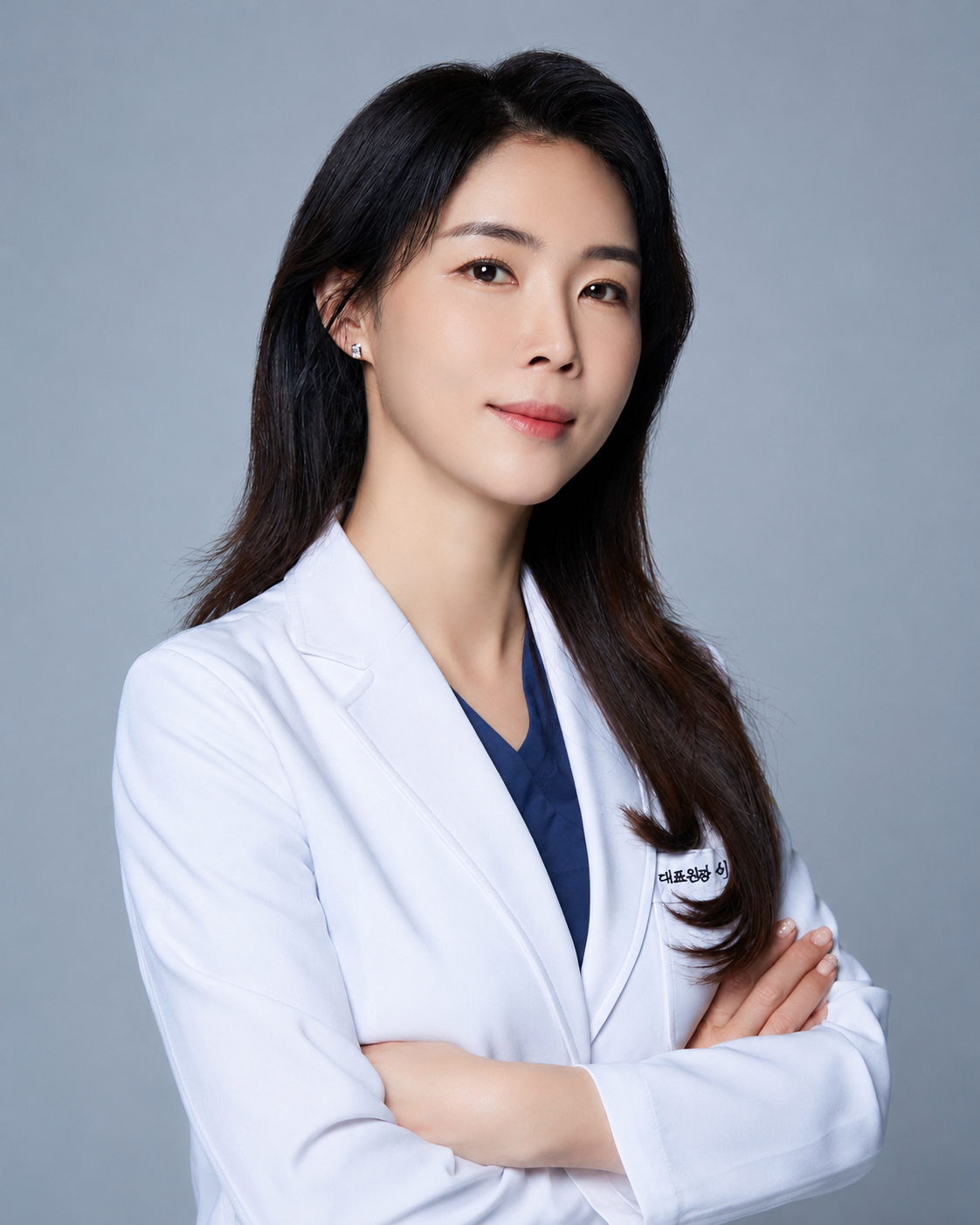
A doctor, in person, every time — never a nurse or a coordinator. JRYN Seomyeon has three doctors, and the clinic was founded by Dr. Jeong Heon Lee, who still consults here. What you actually need is decided during the consultation after your skin is examined, not from a fixed package chosen in advance.
Three doctors, one standard of care.
Every treatment plan at JRYN Seomyeon is decided and performed in person by one of our doctors — led by Dr. Jeong Heon Lee, founder of JRYN Dermatology.
From the Founder
The consultation is the treatment.
Most patients arrive asking for a specific treatment. My job is to check whether it is the right one for what they actually have. Getting that wrong is the most common mistake I correct.
Graduated from Inje University
Current Head of the JRYN Network
Current Chief Director of JRYN Seomyeon
Former Chief Director of Lin Clinic
Former Chief Director of Centum Lin Clinic
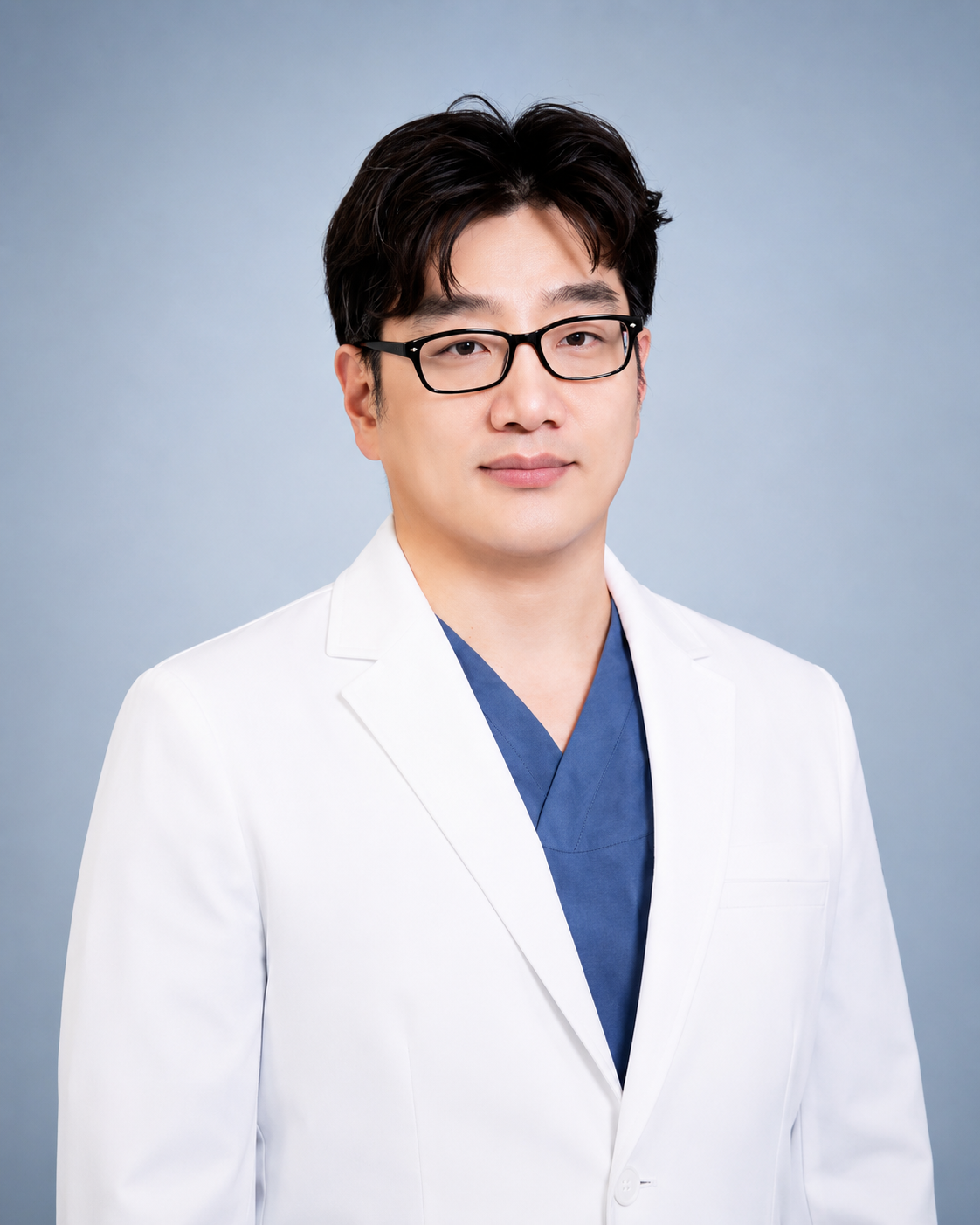
Managing Director · Seomyeon Main Branch
Dr. Yoon Jung-wook
Full Member, Korean Society of Aesthetic Plastic Surgery
Full Member, Korean Society for Aesthetic Plastic Surgery & Laser Medicine
Full Member, Korean Society of Obesity & Body Contouring
Former Neurosurgery Resident (3rd Year), Dong-A University Hospital
Former Intern, Dong-A University Hospital
Former Chief Director, Forever Plastic Surgery & Dermatology (Changwon)
Former Chief Director, Lovely Plastic Surgery & Dermatology (Changwon)
Former Director, Insta Plastic Surgery & Dermatology (Gimhae)
Former Director, Dr. Yoon Beauty Center (Vietnam)
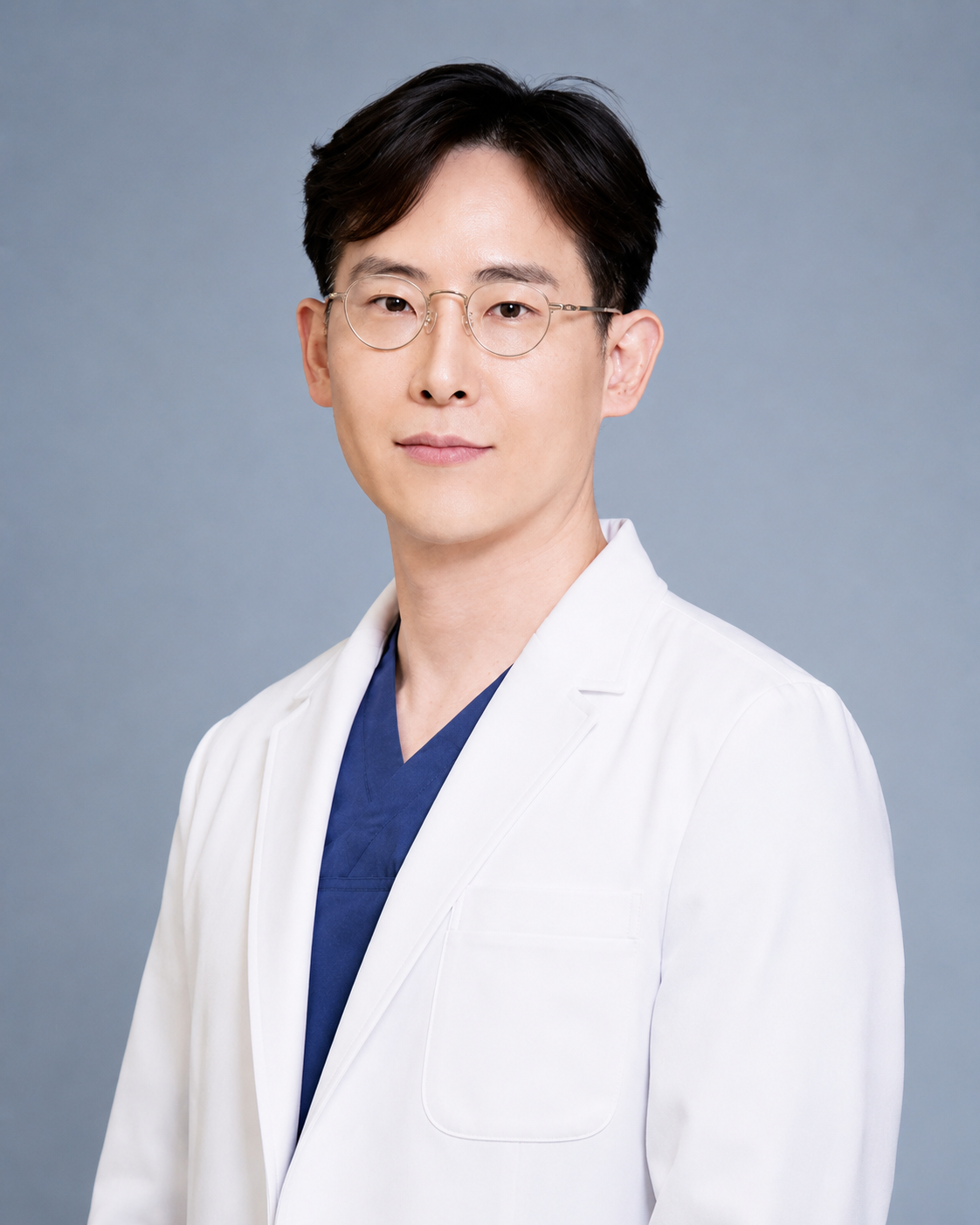
Vice Managing Director · Seomyeon Main Branch
Dr. Jin Tae-wan
Former Director of Dermatology, MediWoman Women's Clinic
Former Director of Dermatology, Hangdo Quantum Clinic
Former Chief Director, AGE Clinic (formerly Paresa Clinic)
Former Chief Director, One Clinic (Guro)
Former Director, One Clinic (Gangnam)
Former Chief Director, SKY Plastic Surgery (Jongno)
Former Visiting Physician, Guangfu Aesthetic Plastic Surgery Hospital (Dalian, China)
Former Associate Director, Tokeshi Plastic Surgery
Former Associate Director, Midam Dermatology Clinic
Former Associate Director, Noble Line Plastic Surgery
Former Associate Director, Jeniva Plastic Surgery
Former Military Flight Surgeon, ROK Army Aviation Operations Command
Former Intern & Resident, Kangdong Sacred Heart Hospital
Before You Book
Questions patients ask first.
No. They are permanent structural changes to the dermis, and treatment remodels rather than restores. Fifty to seventy per cent improvement across a course is a realistic and worthwhile target.
It requires injected local anaesthetic and produces bruising for several days afterwards. It is more involved than a laser session and reaches a problem lasers do not.
Four to six at four to six week intervals, since remodelling must complete before the next pass — see why some treatments need a course.
For shallow rolling and boxcar scars, modestly. It is gentler and slower than fractional laser and suits patients who cannot accept the downtime, with correspondingly smaller results.
Better postponed. Resurfacing needs weeks of strict sun avoidance and carries higher pigmentation risk in high-UV months — see summer: what to postpone.
Frequently, since fractional resurfacing improves overall texture. Pore appearance also has an oil component that laser does not address — see large pores.
Occasional isolated spots are workable; ongoing inflammatory acne is not. The threshold is whether the skin has been broadly quiet for several months rather than perfectly clear.
Yes, at conservative settings with longer intervals and a test pass. The plan runs more sessions at lower energy rather than fewer at higher — see PIH risk on Asian skin.
Doctor-led planning across six categories. Foreign patients pay the same as local patients — what changes a final figure is units and area, never nationality.
JRYN Seomyeon
· 4F Samjeong Tower, 672 Jungang-daero · 5 min from Seomyeon Station Exit 2 · 2 min from Seomyeon Mall Exit 16 · 6 min from Lotte Department Store Busan Main · 8 min from Jeonpo Cafe Street · inside Seomyeon Medical Street · open through lunch, seven days a week
Ready When You Are
Send your dates, get a plan before you fly.
Message us on WhatsApp with what you would like to address and when you will be in Busan. You will get an honest read in your language — including whether the treatment you have in mind is the right one.