4F, Samjeong Tower, 672 Jungang-daero, Busanjin-gu, Busan, Korea
Your Rights · Seomyeon, Busan · Foreigner-Friendly
Patient rights in Busan Seomyeon, and what you can ask for.
Consent, records, refusal and complaint. What a foreign patient is entitled to at any Korean clinic, written so you can use it here or anywhere else — including at a clinic you choose over us.
Patients from outside Korea often hesitate to ask for things they would ask for at home, on the assumption that unfamiliar surroundings mean different rules. They do not. The list below is what you are entitled to, and none of it is unusual to request.
Does This Sound Familiar?
What visitors hesitate to ask for
Can I ask to see the product before it is injected?
What if I want to stop halfway through?
Can I get my records to take home?
Who do I complain to if something goes wrong?
Is it acceptable to refuse what the doctor recommends?
All five are things you are entitled to and none of them are rude. The sections below cover each in turn.
What does informed consent actually require?
That you understand what is being done, what the alternatives are, and what can go wrong — not merely that you signed something. A consent form in Korean that you did not read is not informed consent in any meaningful sense. You are entitled to have the procedure, the alternatives and the risks explained in a language you understand before signing, and to ask questions until the answer is clear. If that is not happening, the correct response is to stop rather than proceed politely.
Can I ask to see the product before treatment?
Yes, and it is a reasonable request rather than an insult. Syringes carry lot numbers, and laser and RF cartridges carry non-resettable shot counters — neither is difficult to show. A clinic using genuine product has no reason to decline. See safety standards
for what else is worth checking at any clinic in Korea.
Can I stop or change my mind partway through?
Yes, at any point, including after numbing and including mid-procedure. Consent is ongoing rather than a single signature at the start, and withdrawing it is your decision alone. Practically, some treatments cannot be half-completed without an uneven result — stopping filler after one side, for instance — but that is a conversation about consequences rather than a refusal of your right to stop.
Am I entitled to my medical records?
Yes. Korean law gives patients access to their own medical records, and a clinic treating foreign patients should provide them in a usable form. Here that means product, lot number, dose and treated area, issued in English on request. This matters most in three situations: if you have a reaction and another doctor needs to know what was used, if you want a result repeated accurately, and if you are checking what you were charged against what you received.
Records are provided on request, in English
Can I refuse what the doctor recommends?
Yes, and doing so should not change how you are treated. A recommendation is advice rather than a condition of care, and declining part of a proposed plan while accepting the rest is entirely normal. Where a clinic responds to refusal with pressure or a changed attitude, that reaction is information about the clinic. What a doctor is entitled to do in return is decline to perform something they consider clinically unwise, and explain why.
What if I am unhappy with the result?
Raise it with the clinic first and early. Most poor outcomes are correctable and the window matters — puckering after threads, asymmetry after filler, or an uneven botox
result are all easier to fix at two weeks than at two months. Hyaluronic acid filler can be dissolved entirely. A clinic that declines to discuss a result it produced is a different problem from a result that is simply disappointing.
Where do I complain if the clinic will not help?
Korea has formal channels. The Korea Medical Dispute Mediation and Arbitration Agency handles medical disputes including those involving foreign patients, and local public health centres take complaints about clinic conduct. For treatment received under the foreign patient attraction system, the Korea Health Industry Development Institute is the relevant body. Keep your records, receipts and any messages — documentation is what makes any of these routes workable.
Does my nationality change any of this?
No. Patient rights in Korea attach to the patient rather than to citizenship or visa status, and the record access, consent and complaint routes above apply identically. What differs in practice is language, which is why written documentation matters more for foreign patients than for anyone else. Pricing is a separate question — separate foreign patient rates are legal in Korea, which is why asking directly
is worth doing.
What should I keep from every visit?
The receipt, the treatment notes, and any written estimate you were given beforehand. Photograph the treated area before and after in consistent lighting — this is the single most useful thing patients neglect, and it is what makes a later conversation about a result concrete rather than a disagreement about memory. Keep the messages too; a written aftercare exchange is a record of what you were told.
Our Medical Team
Who will actually treat you at JRYN Seomyeon?
A doctor, in person, every time — never a nurse or a coordinator. JRYN Seomyeon has three doctors, and the clinic was founded by Dr. Jeong Heon Lee, who still consults here. What you actually need is decided during the consultation after your skin is examined, not from a fixed package chosen in advance.
Three doctors, one standard of care.
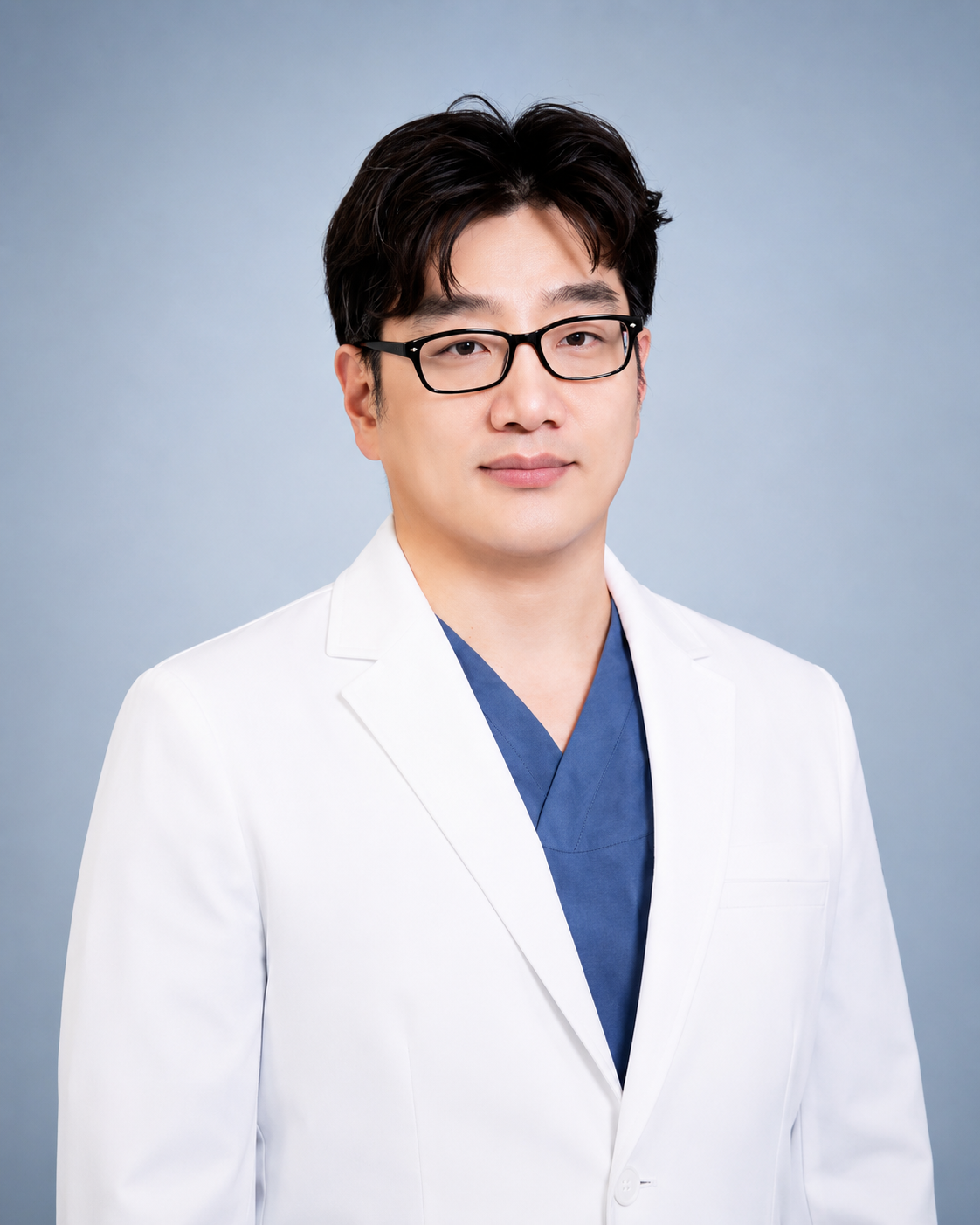
Every treatment plan at JRYN Seomyeon is decided and performed in person by one of our doctors — led by Dr. Jeong Heon Lee, founder of JRYN Dermatology.
From the Founder
The consultation is the treatment.
Most patients arrive asking for a specific treatment. My job is to check whether it is the right one for what they actually have. Getting that wrong is the most common mistake I correct.
Graduated from Inje University
Current Head of the JRYN Network
Current Chief Director of JRYN Seomyeon
Former Chief Director of Lin Clinic
Former Chief Director of Centum Lin Clinic
Managing Director · Seomyeon Main Branch
Dr. Yoon Jung-wook
Full Member, Korean Society of Aesthetic Plastic Surgery
Full Member, Korean Society for Aesthetic Plastic Surgery & Laser Medicine
Full Member, Korean Society of Obesity & Body Contouring
Former Neurosurgery Resident (3rd Year), Dong-A University Hospital
Former Intern, Dong-A University Hospital
Former Chief Director, Forever Plastic Surgery & Dermatology (Changwon)
Former Chief Director, Lovely Plastic Surgery & Dermatology (Changwon)
Former Director, Insta Plastic Surgery & Dermatology (Gimhae)
Former Director, Dr. Yoon Beauty Center (Vietnam)
Vice Managing Director · Seomyeon Main Branch
Dr. Jin Tae-wan
Former Director of Dermatology, MediWoman Women's Clinic
Former Director of Dermatology, Hangdo Quantum Clinic
Former Chief Director, AGE Clinic (formerly Paresa Clinic)
Former Chief Director, One Clinic (Guro)
Former Director, One Clinic (Gangnam)
Former Chief Director, SKY Plastic Surgery (Jongno)
Former Visiting Physician, Guangfu Aesthetic Plastic Surgery Hospital (Dalian, China)
Former Associate Director, Tokeshi Plastic Surgery
Former Associate Director, Midam Dermatology Clinic
Former Associate Director, Noble Line Plastic Surgery
Former Associate Director, Jeniva Plastic Surgery
Former Military Flight Surgeon, ROK Army Aviation Operations Command
Former Intern & Resident, Kangdong Sacred Heart Hospital
Before You Book
Questions patients ask first.
For most treatments, yes, and it is standard practice rather than a formality. What you are entitled to is understanding it first — in a language you read, with time to ask. A form pushed across a desk to sign quickly is worth slowing down.
Ask first. Korean law on recording conversations is permissive where you are a participant, but asking is courteous and a clinic with nothing to hide will generally agree. Written notes from the consultation serve the same purpose and are easier to use later.
Ask for them in writing, in your language. Aftercare instructions half-understood are where most avoidable problems start. Here they are given verbally and continue in writing on WhatsApp, LINE or KakaoTalk — see do you need a translator.
Always, and seeking one is unremarkable. Take your records and photographs to another clinic if you want a different view. A clinic that discourages it is telling you something worth listening to.
Yes, on clinical grounds — significant skin excess where threads will disappoint, active infection, pregnancy, or a request the doctor considers unwise. That is a doctor exercising judgement rather than a rights issue. Refusal on grounds unrelated to your care would be a different matter.
Consent is not valid simply because a signature exists. If you were asked to sign a Korean-language form without explanation and something has gone wrong, that fact is relevant to any complaint. Keep the form.
Formal dispute routes have their own limitation periods, and practical correction windows are much shorter — a two-week review after filler is a different conversation from one at six months. Raise concerns early rather than waiting to see whether they resolve.
Yes. Consent, record access and complaint routes are national rather than clinic-specific. This page is written so you can use it anywhere in Korea, including at a clinic you choose instead of this one.
Doctor-led planning across six categories. Foreign patients pay the same as local patients — what changes a final figure is units and area, never nationality.
JRYN Seomyeon
· 4F Samjeong Tower, 672 Jungang-daero · 5 min from Seomyeon Station Exit 2 · 2 min from Seomyeon Mall Exit 16 · 6 min from Lotte Department Store Busan Main · 8 min from Jeonpo Cafe Street · inside Seomyeon Medical Street · open through lunch, seven days a week
Ready When You Are
Send your dates, get a plan before you fly.
Message us on WhatsApp with what you would like to address and when you will be in Busan. You will get an honest read in your language — including whether the treatment you have in mind is the right one.