4F, Samjeong Tower, 672 Jungang-daero, Busanjin-gu, Busan, Korea
For SE Asian Visitors · Seomyeon, Busan · Foreigner-Friendly
A Busan Seomyeon clinic for Southeast Asian patients, and what changes for your skin.
Higher Fitzpatrick types need different laser settings, not different ambition. This covers what genuinely changes in the treatment plan, how year-round sun affects timing, and why the pigment questions matter more here than for most visitors.
Seomyeon · direct flights from most SE Asian hubs to Gimhae
On This Page
Are lasers safe on Fitzpatrick IV and V skin?
Why did my melasma come back worse?
Does Korean expertise transfer to my skin?
How does year-round sun change the plan?
What if avoiding sun afterwards is not realistic?
Which treatments suit this profile best?
What about acne and humidity?
How long a trip do I need?
Is it worth the flight?
Patients from Singapore, Malaysia, Thailand, the Philippines, Indonesia and Vietnam share a set of concerns that European and American visitors rarely raise — pigmentation that rebounds, lasers that made things worse elsewhere, and skin that has never had a winter. The plan changes accordingly.
Does This Sound Familiar?
What SE Asian visitors ask
I have Fitzpatrick IV skin. Are lasers safe for me at all?
My melasma came back darker after treatment at home.
Every clinic tells me to avoid the sun. That is not realistic where I live.
Will Korean clinics understand my skin, or do they only treat Korean skin?
Is it worth flying five hours for this?
All five come up most weeks, and the first two are connected in a way most patients are not told. The sections below take them in order.
Are lasers safe on Fitzpatrick IV and V skin?
Safe with the right settings and genuinely risky without them, which is the honest version of an answer usually given as a flat yes. Higher melanin means more chromophore competing for the laser's energy, raising the chance of post-inflammatory hyperpigmentation — the darkening that appears two to four weeks after treatment and takes months to clear. The answer is lower fluence, longer intervals and a test pass, not avoiding lasers. See skin laser
for how settings are decided.
Why did my melasma come back worse?
Almost always because the energy was too high. Melasma responds to heat and inflammation by producing more pigment, so a setting that safely clears a sun spot delivers exactly the thermal insult that triggers a rebound — lightening briefly, then returning darker and often wider within weeks. This is the most common story we hear from patients arriving from anywhere with a hot climate. The protocol that works is deliberately low-fluence and slower, which is set out on the melasma page.
Does Korean expertise transfer to my skin?
Largely yes, and the reason is structural. Korean skin sits mostly at Fitzpatrick III to IV, which overlaps substantially with Southeast Asian skin — the pigment considerations, the PIH risk and the melasma prevalence are familiar rather than exotic. What Korean clinics see less of is Fitzpatrick V and VI, so a patient at the darker end of that range should expect a test pass and conservative settings rather than assumed equivalence. Ask directly at any clinic which Fitzpatrick type they are treating you as.
How does year-round sun change the plan?
It changes sequencing more than eligibility. Recent sun exposure is a contraindication for pigment lasers regardless of where you live — four weeks without significant exposure is the usual requirement, and treating tanned skin raises the burn and PIH risk sharply. Practically, that means the trip to Busan is often the best window you get: a week away from equatorial sun, treated at the start rather than the end. Tell us what your exposure has been in the past month.
Settings are matched to skin type, not to a preset
What if avoiding sun afterwards is not realistic?
Then the treatment choice changes rather than the advice getting softer. Broad-spectrum SPF50 reapplied through the day is not negotiable after pigment work, and tinted mineral formulations matter specifically because iron oxides block visible light, which drives melasma even when UV is controlled. Where daily heavy exposure is unavoidable, we would rather recommend boosters
or lifting
that do not depend on sun avoidance than start a pigment course that will undo itself.
Which treatments suit this profile best?
Three groups. Polynucleotide boosters, which improve barrier resilience in skin stressed by heat and humidity and carry no pigment risk. Energy lifting, which is entirely independent of skin type and sun exposure. And botox
in all areas, equally unaffected. Pigment work is entirely possible but needs the sequencing above, which is why it usually goes first in the trip rather than last.
What about acne and humidity?
Persistent congestion in humid climates is common and responds well, but sequencing matters. Active acne needs controlling before scar work begins — treating scars while breakouts continue means treating a moving target, and inflamed skin at higher Fitzpatrick types carries a higher PIH risk from resurfacing. Microbotox
reduces oil production and suits this profile particularly well as a first step.
How long a trip do I need?
Four to five days is comfortable for a consultation, one or two treatments and a review window. Most Southeast Asian hubs have direct flights to Gimhae, which is forty-five minutes from Seomyeon. A single treatment fits a short trip; a pigment course does not and never will, so the useful conversation is which one-off treatment gives most value — see the five-day itinerary
for how the days are sequenced.
Is it worth the flight?
For a single small treatment, probably not. For device treatment, frequently — the eight lifting platforms
and six laser categories
here would be an unusual range in most cities, and the price for equivalent treatment is well below Singapore or Hong Kong. The honest comparison is like for like: ask both clinics for shot count or unit count rather than an area price, then add the airfare. Our figures are published in full on the price list.
Our Medical Team
Who will actually treat you at JRYN Seomyeon?
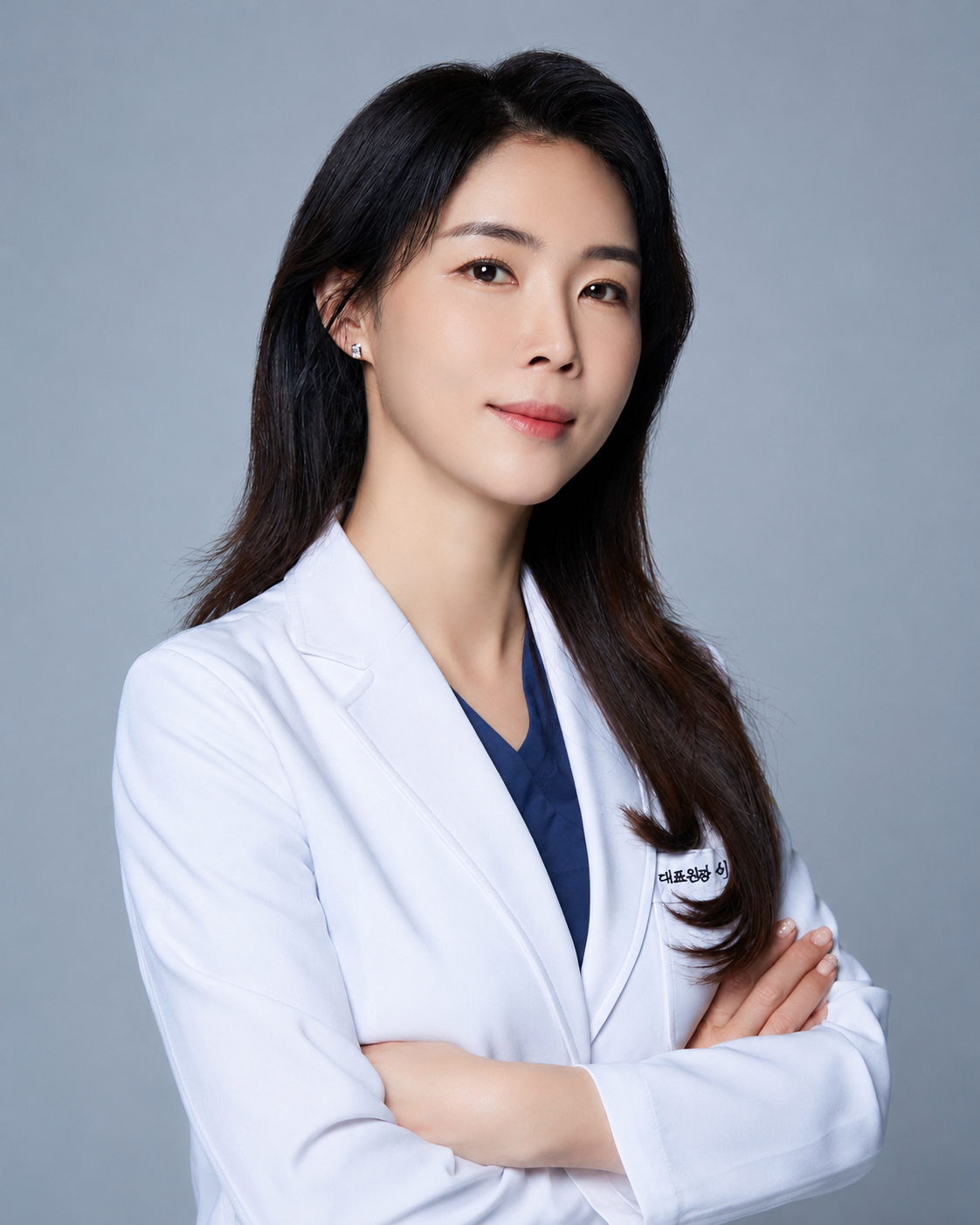
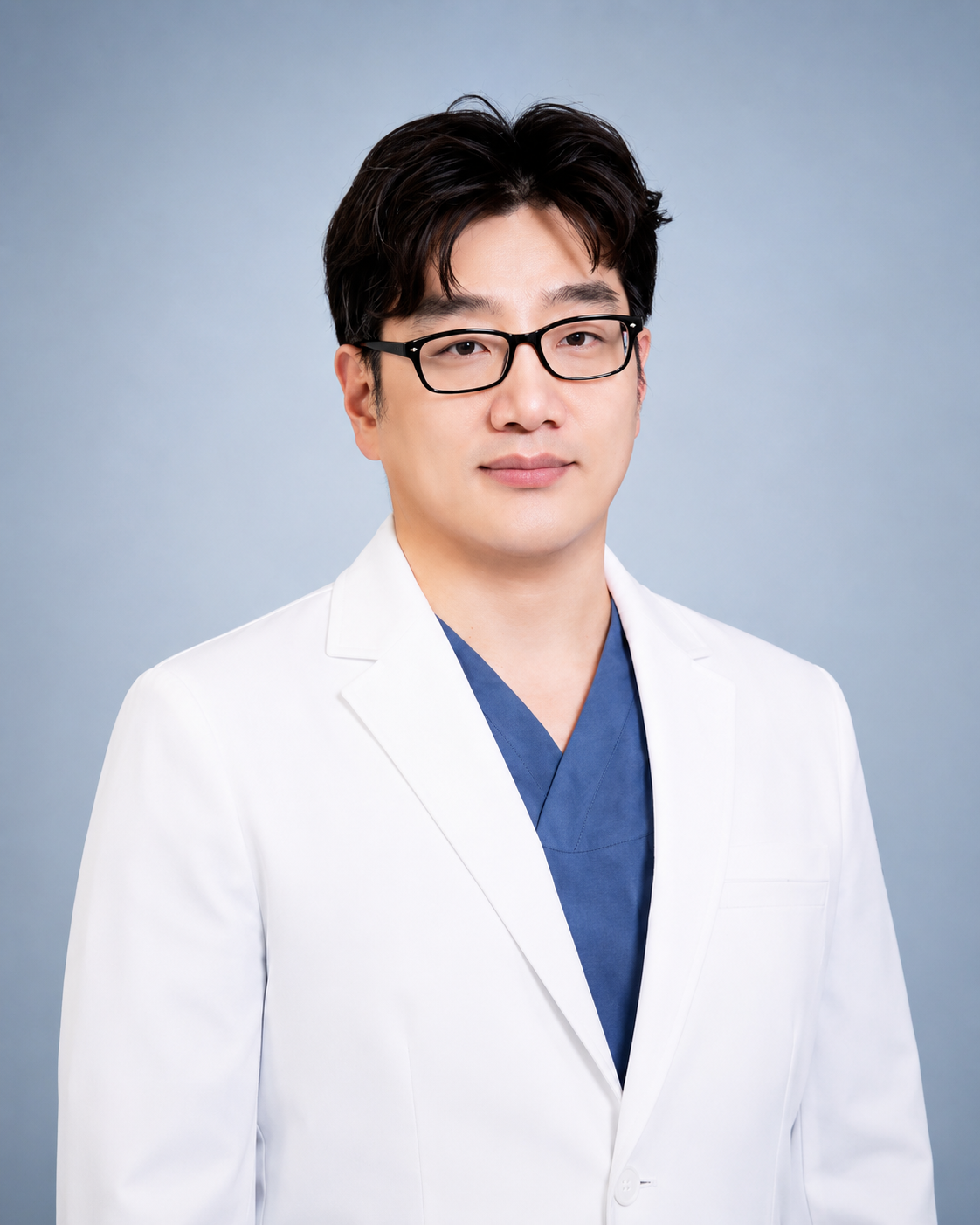
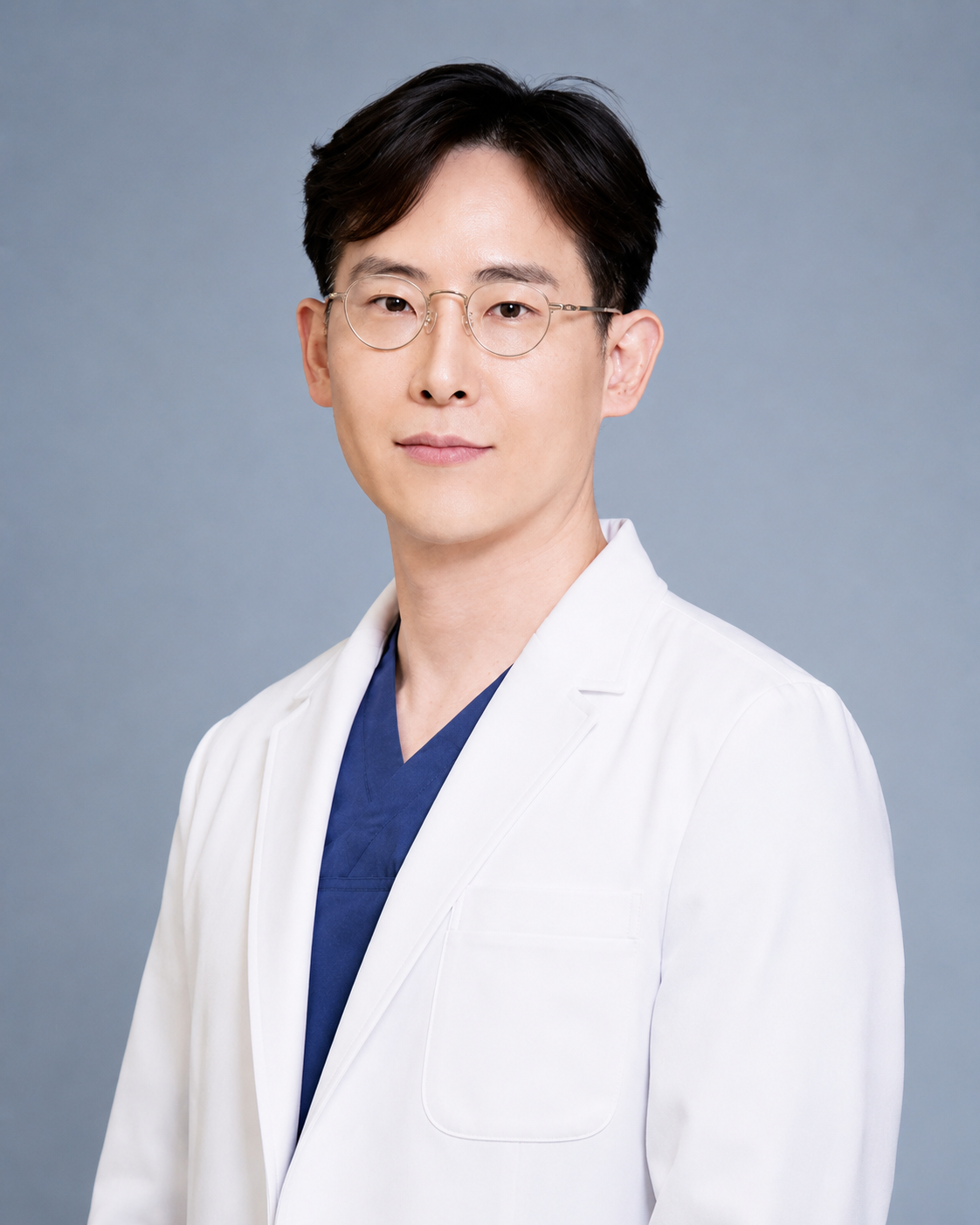
A doctor, in person, every time — never a nurse or a coordinator. JRYN Seomyeon has three doctors, and the clinic was founded by Dr. Jeong Heon Lee, who still consults here. What you actually need is decided during the consultation after your skin is examined, not from a fixed package chosen in advance.
Three doctors, one standard of care.
Every treatment plan at JRYN Seomyeon is decided and performed in person by one of our doctors — led by Dr. Jeong Heon Lee, founder of JRYN Dermatology.
From the Founder
The consultation is the treatment.
Most patients arrive asking for a specific treatment. My job is to check whether it is the right one for what they actually have. Getting that wrong is the most common mistake I correct.
Graduated from Inje University
Current Head of the JRYN Network
Current Chief Director of JRYN Seomyeon
Former Chief Director of Lin Clinic
Former Chief Director of Centum Lin Clinic
Managing Director · Seomyeon Main Branch
Dr. Yoon Jung-wook
Full Member, Korean Society of Aesthetic Plastic Surgery
Full Member, Korean Society for Aesthetic Plastic Surgery & Laser Medicine
Full Member, Korean Society of Obesity & Body Contouring
Former Neurosurgery Resident (3rd Year), Dong-A University Hospital
Former Intern, Dong-A University Hospital
Former Chief Director, Forever Plastic Surgery & Dermatology (Changwon)
Former Chief Director, Lovely Plastic Surgery & Dermatology (Changwon)
Former Director, Insta Plastic Surgery & Dermatology (Gimhae)
Former Director, Dr. Yoon Beauty Center (Vietnam)
Vice Managing Director · Seomyeon Main Branch
Dr. Jin Tae-wan
Former Director of Dermatology, MediWoman Women's Clinic
Former Director of Dermatology, Hangdo Quantum Clinic
Former Chief Director, AGE Clinic (formerly Paresa Clinic)
Former Chief Director, One Clinic (Guro)
Former Director, One Clinic (Gangnam)
Former Chief Director, SKY Plastic Surgery (Jongno)
Former Visiting Physician, Guangfu Aesthetic Plastic Surgery Hospital (Dalian, China)
Former Associate Director, Tokeshi Plastic Surgery
Former Associate Director, Midam Dermatology Clinic
Former Associate Director, Noble Line Plastic Surgery
Former Associate Director, Jeniva Plastic Surgery
Former Military Flight Surgeon, ROK Army Aviation Operations Command
Former Intern & Resident, Kangdong Sacred Heart Hospital
Before You Book
Questions patients ask first.
Yes, and the answer should be specific rather than reassuring. It determines the energy ceiling on every pigment treatment. A clinic that has not asked or assessed it before lasering higher-melanin skin is working to a preset rather than to you.
It should be for darker skin types and higher energies. Two minutes, a small area treated and observed. It is the single most useful safeguard against an adverse pigment response and it is what gets skipped when a clinic is working to a schedule.
It is treated and it does resolve, typically over two to four months with topical therapy, strict sun protection and low-energy toning once the skin has settled. Report it rather than waiting — see pico toning
for how the gentler protocol works.
For botox, toning and lifting, yes. For anything that swells or peels, no — and for pigment work specifically, flying into strong sun immediately afterwards is the worst timing available. See flying home after treatment.
Regularly, and the concerns are consistent enough that the protocols are established rather than improvised. Consultation runs in English, and Traditional and Simplified Chinese are also supported for patients who prefer them.
Partially. Korean routines are built around a climate with a dry winter, and the heavier layers translate poorly to year-round humidity. What does transfer well is the sun protection discipline, which matters more for pigment-prone skin than any product step.
Post-inflammatory marks from healed acne respond well to gentle toning, and often more easily than the texture does. Red marks are dilated vessels and need vascular laser
instead — different problem, different tool.
Retinoids and acids should pause two to three days either side of a laser session. Hydroquinone or prescribed brightening agents should be discussed rather than stopped unilaterally. Bring the products or photograph the labels — see what to bring.
Doctor-led planning across six categories. Foreign patients pay the same as local patients — what changes a final figure is units and area, never nationality.
JRYN Seomyeon
· 4F Samjeong Tower, 672 Jungang-daero · 5 min from Seomyeon Station Exit 2 · 2 min from Seomyeon Mall Exit 16 · 6 min from Lotte Department Store Busan Main · 8 min from Jeonpo Cafe Street · inside Seomyeon Medical Street · open through lunch, seven days a week
Ready When You Are
Send your dates, get a plan before you fly.
Message us on WhatsApp with what you would like to address and when you will be in Busan. You will get an honest read in your language — including whether the treatment you have in mind is the right one.