4F, Samjeong Tower, 672 Jungang-daero, Busanjin-gu, Busan, Korea
Moles · Seomyeon, Busan · Foreigner-Friendly
Mole removal in Busan Seomyeon, and which method suits which mole.
Depth decides the method. Shallow lesions come off cleanly with laser and no stitches; deep ones recur unless excised. And some moles should be assessed rather than removed, which is the part worth reading first.
Assessed before removal — appearance decides the method
On This Page
Which moles should be assessed rather than removed?
Why does assessment come before method?
How does this fit alongside other treatment?
Laser removal — what it suits
Excision — what it suits
Why do moles come back after laser?
What does the healing actually look like?
Will it scar?
Can several be done at once?
Does it hurt?
What about skin tags and other lesions?
This is a small treatment with one genuinely important precaution attached. Most moles are entirely benign and removal is straightforward; a small number should be examined properly first, and destroying a lesion with a laser removes the tissue that would have answered the question.
Does This Sound Familiar?
What patients ask about moles
Will it leave a scar?
One of mine has changed shape over the past year.
I want several removed in one visit. Is that possible?
A mole came back after it was removed elsewhere.
How long before I look normal again?
All five come up most weeks, and the second is the reason this page leads with assessment rather than with method. The sections below take them in order.
Which moles should be assessed rather than removed?
Any that have changed — in size, shape, colour or border — or that itch, bleed or fail to heal. Asymmetry, irregular borders, multiple colours, diameter over about six millimetres, and evolution over time are the recognised warning features. A lesion with any of these is examined and, where indicated, excised with tissue sent for pathology rather than vaporised with a laser, which destroys the evidence.
Why does assessment come before method?
Because laser vaporisation destroys the tissue that would answer a diagnostic question. A lesion that has changed and is simply removed with a laser leaves no specimen — and if it later mattered, that information is gone permanently. The precaution costs nothing: a mole with none of the warning features is treated the same day, and one with any of them is excised so tissue can be examined. This is the whole reason a cosmetic removal request gets looked at properly rather than taken at face value, and it is worth asking about at any clinic in Korea.
How does this fit alongside other treatment?
Independently and easily. Mole removal uses a different mechanism from anything else offered here and does not interact with botox, filler
or lifting, so it is frequently added to a visit for something else. Where it does need coordination is with pigment treatment
on the same area — healing sites should be fully settled before toning passes over them, which usually means a gap of four to six weeks rather than combining in one session.
Laser removal — what it suits
Shallow, benign, raised or flat moles sitting largely in the epidermis and upper dermis. CO2 laser
vaporises the lesion precisely with minimal thermal spread to surrounding skin, takes seconds per mole, needs a small injection of local anaesthetic and leaves no stitches. It is what most patients have and it works well within its depth limit.
Excision — what it suits
Deep moles with a substantial dermal component, anything that has recurred after laser, and any lesion where pathology is wanted. A small elliptical excision removes the full depth and closes with sutures, leaving a fine linear scar rather than a round one. It is a bigger procedure with a better answer for deep lesions, and the only route that provides a tissue diagnosis.
Scabs for one to two weeks, then strict sun protection
Why do moles come back after laser?
Because pigment cells remaining below the treated depth repopulate. A mole extending deeper than the laser reached looks gone at three weeks and reappears over months — this is the most common story from patients arriving after removal elsewhere. It is not a technical failure so much as a depth misjudgement, and the answer for a recurrent lesion is excision rather than a second laser attempt.
What does the healing actually look like?
A small crater immediately, then a scab forming within a day or two that separates at seven to fourteen days. Underneath is pink skin that fades over two to three months. Make-up can go on once the scab has separated. The area must be protected from sun throughout that pink phase, since new skin pigments readily — see sun protection.
Will it scar?
Something remains where a lesion was removed, and the useful question is what kind. Laser on a shallow mole typically leaves a flat mark that fades to near-invisible over months. Excision leaves a fine line. What produces a poor scar is treating too deep with a laser, picking the scab, or sun exposure during healing — the last two are within your control and matter more than the method.
Can several be done at once?
Yes, and it is the usual pattern — patients frequently have five to fifteen removed in a single visit. Each takes seconds and the anaesthetic is placed individually. The practical limit is how many healing sites you want simultaneously, since each carries a scab for one to two weeks — see no-downtime treatments.
Does it hurt?
The injection is the uncomfortable part and lasts a second or two per lesion. After that the laser is felt as pressure and warmth rather than pain. For patients having many removed, the cumulative injections are the least pleasant part of the appointment — see numbing and anaesthesia.
What about skin tags and other lesions?
Skin tags, seborrhoeic keratoses and milia are removed with the same laser and heal faster than moles since they are more superficial. They are different lesions from moles and worth distinguishing — a raised brown growth on the trunk in an older patient is more often a seborrhoeic keratosis than a mole, and both are benign. Mention everything you want assessed rather than only what you assumed was treatable.
Our Medical Team
Who will actually treat you at JRYN Seomyeon?
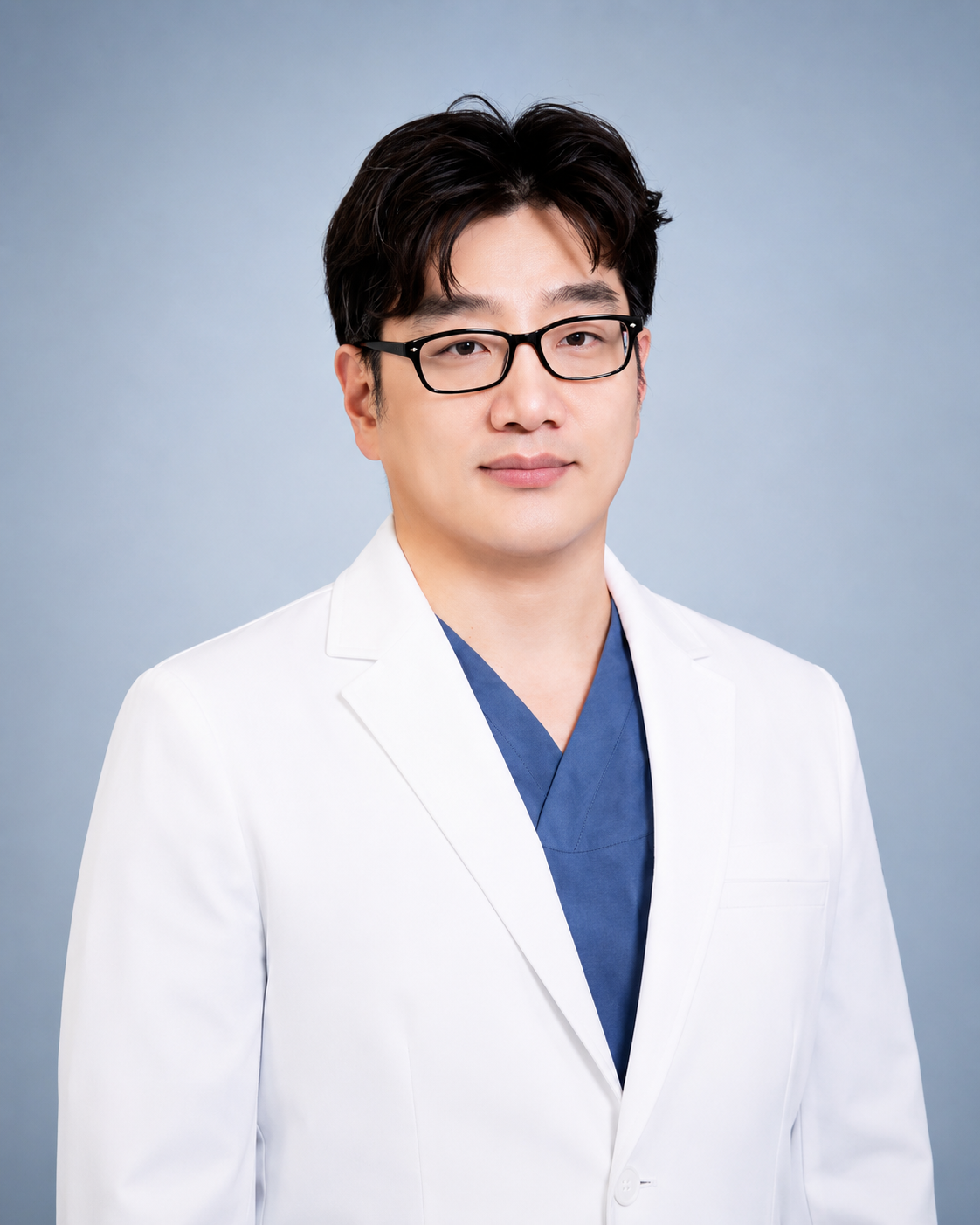
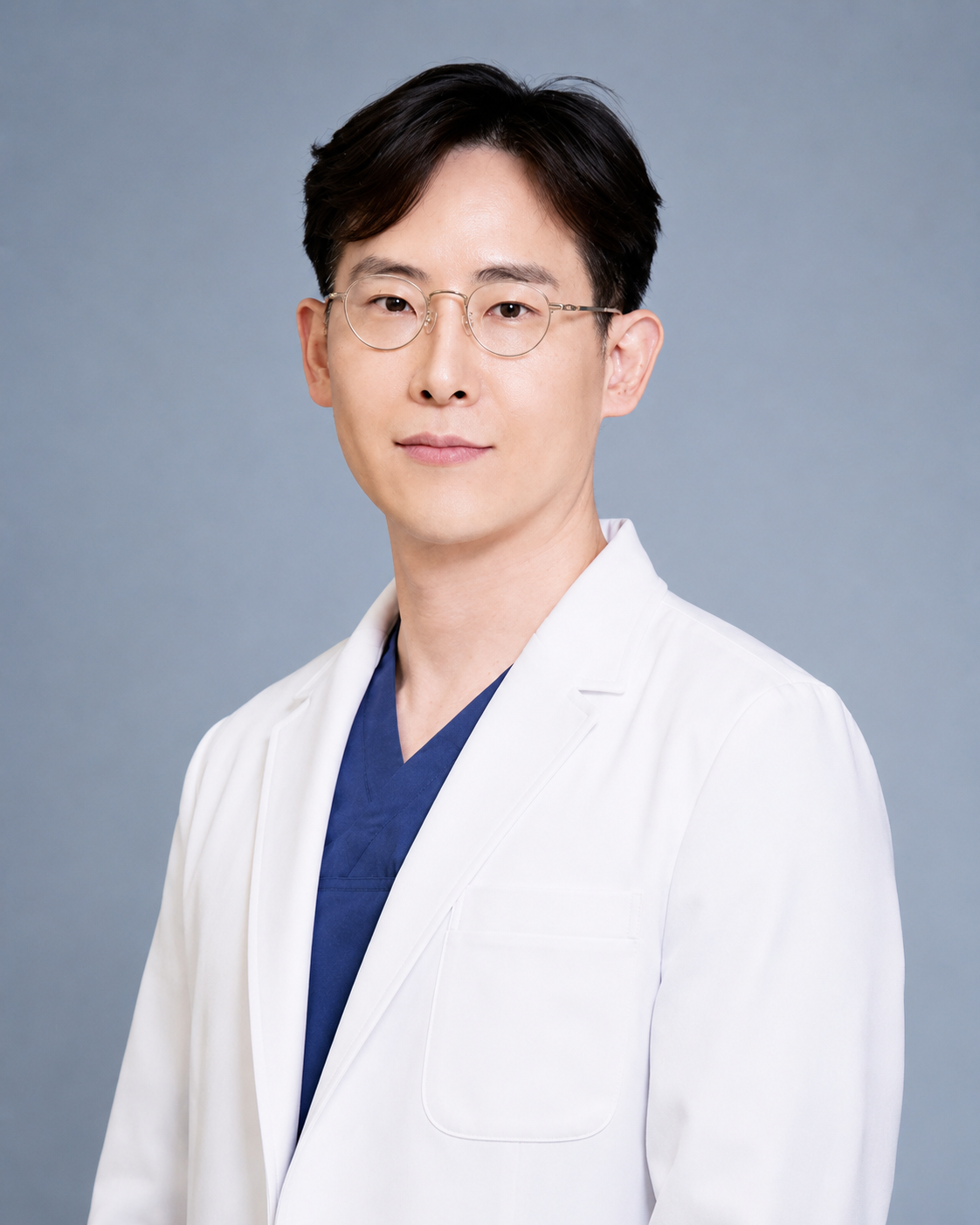
A doctor, in person, every time — never a nurse or a coordinator. JRYN Seomyeon has three doctors, and the clinic was founded by Dr. Jeong Heon Lee, who still consults here. What you actually need is decided during the consultation after your skin is examined, not from a fixed package chosen in advance.
Three doctors, one standard of care.
Every treatment plan at JRYN Seomyeon is decided and performed in person by one of our doctors — led by Dr. Jeong Heon Lee, founder of JRYN Dermatology.
From the Founder
The consultation is the treatment.
Most patients arrive asking for a specific treatment. My job is to check whether it is the right one for what they actually have. Getting that wrong is the most common mistake I correct.
Graduated from Inje University
Current Head of the JRYN Network
Current Chief Director of JRYN Seomyeon
Former Chief Director of Lin Clinic
Former Chief Director of Centum Lin Clinic
Managing Director · Seomyeon Main Branch
Dr. Yoon Jung-wook
Full Member, Korean Society of Aesthetic Plastic Surgery
Full Member, Korean Society for Aesthetic Plastic Surgery & Laser Medicine
Full Member, Korean Society of Obesity & Body Contouring
Former Neurosurgery Resident (3rd Year), Dong-A University Hospital
Former Intern, Dong-A University Hospital
Former Chief Director, Forever Plastic Surgery & Dermatology (Changwon)
Former Chief Director, Lovely Plastic Surgery & Dermatology (Changwon)
Former Director, Insta Plastic Surgery & Dermatology (Gimhae)
Former Director, Dr. Yoon Beauty Center (Vietnam)
Vice Managing Director · Seomyeon Main Branch
Dr. Jin Tae-wan
Former Director of Dermatology, MediWoman Women's Clinic
Former Director of Dermatology, Hangdo Quantum Clinic
Former Chief Director, AGE Clinic (formerly Paresa Clinic)
Former Chief Director, One Clinic (Guro)
Former Director, One Clinic (Gangnam)
Former Chief Director, SKY Plastic Surgery (Jongno)
Former Visiting Physician, Guangfu Aesthetic Plastic Surgery Hospital (Dalian, China)
Former Associate Director, Tokeshi Plastic Surgery
Former Associate Director, Midam Dermatology Clinic
Former Associate Director, Noble Line Plastic Surgery
Former Associate Director, Jeniva Plastic Surgery
Former Military Flight Surgeon, ROK Army Aviation Operations Command
Former Intern & Resident, Kangdong Sacred Heart Hospital
Before You Book
Questions patients ask first.
Priced individually with size affecting the figure — see the price list. Removing several at once does not change the per-lesion price but saves repeat visits.
Yes. The sites are small and covered, and cabin conditions do not affect healing. You will travel with visible scabs for a week or so — see flying home after treatment.
Once the scab has separated, usually seven to fourteen days. Applying over a scab risks infection and delays healing.
Where a lesion is excised, yes — tissue is sent for examination. Laser vaporisation destroys the tissue, which is why suspicious lesions are excised rather than lasered.
Not if removed to full depth. Recurrence indicates residual pigment cells below the treated level, which is addressed by excision rather than repeat laser.
Yes, and body sites heal more slowly than the face given lower blood supply. The back and chest are also more prone to raised scarring, which is worth discussing before treating.
If you have many moles, a history of significant sun exposure, or a family history of skin cancer, a proper dermatological examination is worth having rather than removing lesions cosmetically — see safety standards.
Marginal. Scabs separate at seven to fourteen days and pink skin remains afterwards. Two to three weeks is more comfortable — see timing around an event.
Doctor-led planning across six categories. Foreign patients pay the same as local patients — what changes a final figure is units and area, never nationality.
JRYN Seomyeon
· 4F Samjeong Tower, 672 Jungang-daero · 5 min from Seomyeon Station Exit 2 · 2 min from Seomyeon Mall Exit 16 · 6 min from Lotte Department Store Busan Main · 8 min from Jeonpo Cafe Street · inside Seomyeon Medical Street · open through lunch, seven days a week
Ready When You Are
Send your dates, get a plan before you fly.
Message us on WhatsApp with what you would like to address and when you will be in Busan. You will get an honest read in your language — including whether the treatment you have in mind is the right one.