4F, Samjeong Tower, 672 Jungang-daero, Busanjin-gu, Busan, Korea
Comparison · Seomyeon, Busan · Foreigner-Friendly
Toning or resurfacing in Busan Seomyeon, and which your skin actually needs.
One treats colour and leaves nothing visible; the other treats texture and peels for a week. Both are lasers, both are sold as skin renewal, and choosing wrongly means either downtime you did not need or a result that never arrives.
Colour or texture — the distinction decides everything
On This Page
The fingertip test
What toning does
What resurfacing does
Which treats what, specifically?
Why not just do resurfacing for everything?
Why not just do toning for everything?
Why do these two get confused so often?
Where do these sit alongside other treatment?
Which is riskier on Asian skin?
How many sessions does each need?
Can they be combined?
Ask yourself one question before reading further: can you feel the problem with your fingertips, or only see it? That single check separates these two treatments more reliably than any comparison of wavelengths.
Does This Sound Familiar?
What patients ask when comparing
I have marks and rough texture. Which one treats both?
Is toning strong enough or am I wasting sessions?
I cannot take a week off for peeling.
Which one is safer for my skin type?
Someone said I need fractional but I only have pigmentation.
All five come up most weeks, and the last one describes an expensive mismatch. The sections below separate the two.
The fingertip test
If you can feel the irregularity — indentations, raised areas, roughness — it is texture and needs resurfacing. If you can only see it — brown marks, uneven tone, dullness, red patches — it is colour and needs toning
or vascular laser. Most patients have some of each, and the ratio decides where treatment starts.
What toning does
Delivers very short pulses at low fluence to fragment pigment without heating surrounding tissue significantly. The fragments are cleared by the body over two to four weeks. Because energy is low and the epidermis is largely spared, there is no visible downtime and it can be repeated every two to four weeks — which is why it is the workhorse for Asian skin, where higher energy carries pigmentation risk.
What resurfacing does
Creates controlled columns of thermal injury through the epidermis into the dermis, leaving untreated skin between them to drive healing. New collagen forms as those columns repair, remodelling texture over four to six weeks. That mechanism is why it works on indentations and why it peels — the effect and the downtime come from the same thing and cannot be separated.
Which treats what, specifically?
Toning: freckles, sun spots, melasma, post-inflammatory marks, general dullness and uneven tone. Resurfacing: acne scarring, enlarged pores where texture is irregular, fine etched lines, and sun-damaged skin with roughness. Where a patient has pigment sitting over scarred texture, both are used — pigment first, texture afterwards.
Why not just do resurfacing for everything?
Because it is a much larger intervention for a problem that may not need it. Resurfacing peels for three to seven days, stays pink for weeks, requires strict sun avoidance and carries meaningfully higher pigmentation risk on higher Fitzpatrick types. Using it for pigment that toning would clear means accepting all of that for no additional benefit — and the pigment risk of resurfacing can leave you worse off.
Settings matter more than the platform name
Why not just do toning for everything?
Because it does not touch texture. Low fluence spares the tissue precisely so that nothing is remodelled, which is the point for pigment and the limitation for scarring. Patients who run ten toning sessions hoping to smooth an indented scar are the mirror image of the mismatch above — spending money on a treatment whose mechanism does not reach the problem.
Why do these two get confused so often?
Because both are described as laser skin renewal and both are sold from the same laser
menu. Patients researching a marked, uneven complexion find pages for each, notice that both mention brightening and smoothing, and reasonably conclude they are versions of the same thing at different strengths. They are not — the mechanisms are unrelated, and the stronger one is not a more thorough version of the weaker. Asking which of colour or texture a treatment targets is the question that separates them, and it applies at any clinic.
Where do these sit alongside other treatment?
As the surface layer of a plan rather than its structure. Neither addresses volume, which is filler, and neither affects laxity, which is lifting. What they change is the quality of what sits on top — and a face with restored contour but uneven, rough skin reads as improved without looking rested. Where the skin itself is thin or depleted rather than marked, boosters
belong alongside, since neither laser adds density.
Which is riskier on Asian skin?
Resurfacing, clearly. The controlled injury that produces the result is also an inflammatory trigger, and higher melanin responds to inflammation with pigment. That is why resurfacing here runs at conservative settings, with longer intervals and a test pass, and why it is scheduled into the cooler months — see winter: the safest window. Toning at low fluence carries much less risk, which is why it is the default.
How many sessions does each need?
Toning three to ten depending on the target — three to five for discrete sun spots, eight to fifteen for melasma. Resurfacing three to five, at four to six week intervals since remodelling must complete before the next pass. Neither works as a single session, and a clinic promising clearance in one is describing something other than what these lasers do — see why some treatments need a course.
Can they be combined?
Sequentially rather than simultaneously. Where pigment and texture are both present, toning usually goes first — clearing the colour often reveals that less texture work is needed than the initial assessment suggested, since uneven pigment exaggerates the appearance of irregular surface. Resurfacing follows once tone is even, ideally in a low-UV month — see combining treatments.
Our Medical Team
Who will actually treat you at JRYN Seomyeon?
A doctor, in person, every time — never a nurse or a coordinator. JRYN Seomyeon has three doctors, and the clinic was founded by Dr. Jeong Heon Lee, who still consults here. What you actually need is decided during the consultation after your skin is examined, not from a fixed package chosen in advance.
Three doctors, one standard of care.
Every treatment plan at JRYN Seomyeon is decided and performed in person by one of our doctors — led by Dr. Jeong Heon Lee, founder of JRYN Dermatology.
From the Founder
The consultation is the treatment.
Most patients arrive asking for a specific treatment. My job is to check whether it is the right one for what they actually have. Getting that wrong is the most common mistake I correct.
Graduated from Inje University
Current Head of the JRYN Network
Current Chief Director of JRYN Seomyeon
Former Chief Director of Lin Clinic
Former Chief Director of Centum Lin Clinic
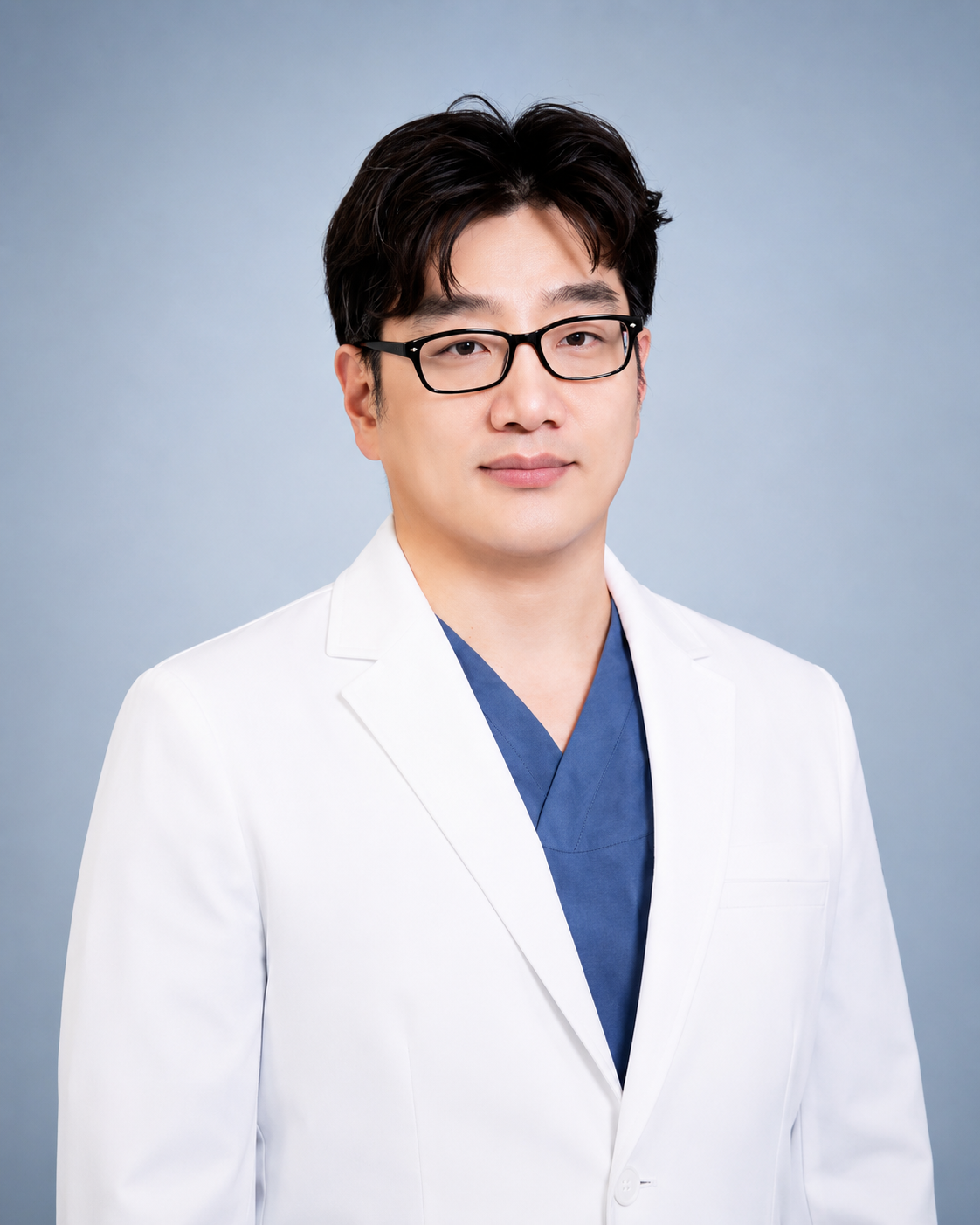
Managing Director · Seomyeon Main Branch
Dr. Yoon Jung-wook
Full Member, Korean Society of Aesthetic Plastic Surgery
Full Member, Korean Society for Aesthetic Plastic Surgery & Laser Medicine
Full Member, Korean Society of Obesity & Body Contouring
Former Neurosurgery Resident (3rd Year), Dong-A University Hospital
Former Intern, Dong-A University Hospital
Former Chief Director, Forever Plastic Surgery & Dermatology (Changwon)
Former Chief Director, Lovely Plastic Surgery & Dermatology (Changwon)
Former Director, Insta Plastic Surgery & Dermatology (Gimhae)
Former Director, Dr. Yoon Beauty Center (Vietnam)
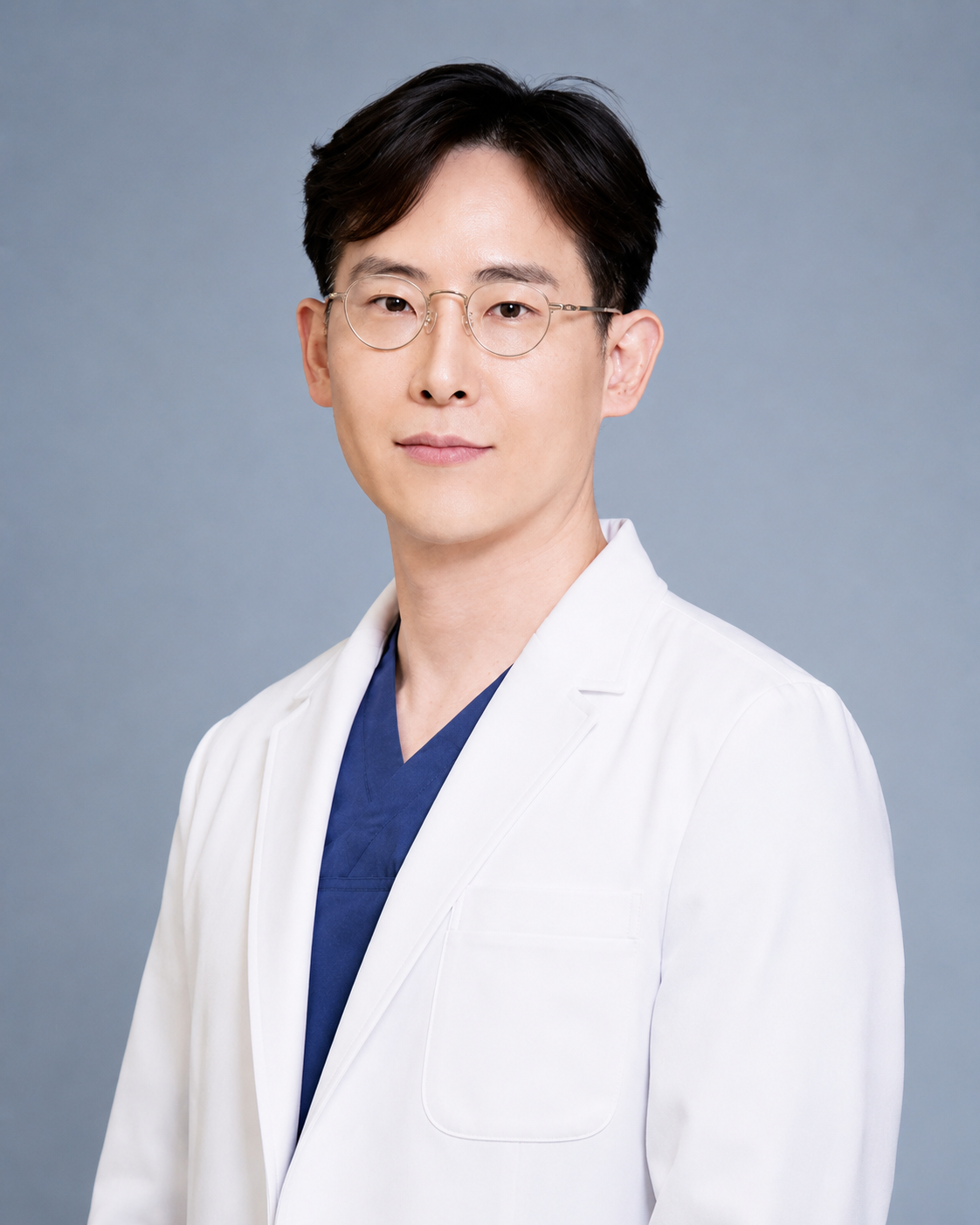
Vice Managing Director · Seomyeon Main Branch
Dr. Jin Tae-wan
Former Director of Dermatology, MediWoman Women's Clinic
Former Director of Dermatology, Hangdo Quantum Clinic
Former Chief Director, AGE Clinic (formerly Paresa Clinic)
Former Chief Director, One Clinic (Guro)
Former Director, One Clinic (Gangnam)
Former Chief Director, SKY Plastic Surgery (Jongno)
Former Visiting Physician, Guangfu Aesthetic Plastic Surgery Hospital (Dalian, China)
Former Associate Director, Tokeshi Plastic Surgery
Former Associate Director, Midam Dermatology Clinic
Former Associate Director, Noble Line Plastic Surgery
Former Associate Director, Jeniva Plastic Surgery
Former Military Flight Surgeon, ROK Army Aviation Operations Command
Former Intern & Resident, Kangdong Sacred Heart Hospital
Before You Book
Questions patients ask first.
Toning per session, resurfacing per course given fewer sessions. Figures for both are on the price list
so the comparison is direct rather than by category.
Mild warmth and slight redness for an hour or two, make-up the same day. Existing pigment spots may darken temporarily for three to ten days before flaking — visible up close and worth knowing before a photograph.
Three to seven days of peeling, then pink skin for two to four weeks that make-up covers. Plan it away from events and away from a beach holiday — see timing around an event.
For pigment on darker skin, generally yes — shorter pulses fragment pigment with less heat diffusion, which lowers the risk that matters most here. It is a genuine advantage rather than only a marketing one.
Toning yes, at low energy and provided you are not recently tanned. Resurfacing is better postponed — see summer: what to postpone.
Some, as a by-product of remodelling. It is not the right tool for pigment alone and carries risk that toning does not, so it is chosen for texture and any pigment benefit is incidental.
Toning, since it needs no recovery and produces a visible change. Resurfacing is worth planning a trip around rather than squeezing into one — see the five-day itinerary.
Resurfacing meaningfully, toning marginally. Pore appearance is texture and oil rather than colour — see large pores.
Doctor-led planning across six categories. Foreign patients pay the same as local patients — what changes a final figure is units and area, never nationality.
JRYN Seomyeon
· 4F Samjeong Tower, 672 Jungang-daero · 5 min from Seomyeon Station Exit 2 · 2 min from Seomyeon Mall Exit 16 · 6 min from Lotte Department Store Busan Main · 8 min from Jeonpo Cafe Street · inside Seomyeon Medical Street · open through lunch, seven days a week
Ready When You Are
Send your dates, get a plan before you fly.
Message us on WhatsApp with what you would like to address and when you will be in Busan. You will get an honest read in your language — including whether the treatment you have in mind is the right one.