4F, Samjeong Tower, 672 Jungang-daero, Busanjin-gu, Busan, Korea
For US Visitors · Seomyeon, Busan · Foreigner-Friendly
A Busan Seomyeon clinic for American patients, and what differs from home.
Same devices, same products in most cases, a fraction of the price and a consultation that works differently. This sets out what genuinely differs from a US dermatology visit, including the parts that take Americans by surprise.
Seomyeon Medical Street · dozens of clinics in a few blocks
On This Page
Is it the same product I get at home?
Why is it so much cheaper?
Do I need separate consultation and treatment appointments?
Is MFDS approval the same as FDA approval?
Who performs the injection?
How does the consultation itself differ?
Will my insurance cover any of this?
What happens if I have a problem once I am home?
What should I be careful about?
American patients arrive with a set of expectations formed by a system that works very differently — separate appointments, insurance intermediaries, and a price structure where the same syringe costs several times more. Most of the differences work in your favour. A few are worth knowing before you sit down.
Does This Sound Familiar?
What American visitors ask
Is the botox here the same product I get at home?
Why is it a quarter of the price? What is the catch?
Do I need a separate appointment for the consultation?
Is MFDS approval the same as FDA approval?
What happens if I have a problem back in the States?
All five come up most weeks, and the second one has a longer answer than "labour costs". The sections below take them in order.
Is it the same product I get at home?
Frequently yes, and sometimes better-suited. Allergan botox, Juvederm, Restylane, Ultherapy and Thermage are the same products under the same names — Ultherapy Prime
and Thermage FLX
are identical machines to the ones in a US practice. What is additional here is a domestic range with no US equivalent: Korean toxins, polynucleotide boosters, PDLLA
and RF platforms like Oligio. Those are MFDS-approved rather than FDA-approved, which is a different thing from unapproved.
Why is it so much cheaper?
Volume, competition and structure rather than a shortcut. Korean clinics perform far more injectable procedures per doctor than US practices, which drives both cost down and technical skill up. Districts like Seomyeon have dozens of clinics within a few blocks competing directly on published prices. Domestic manufacture of products and devices removes an import margin. And there is no insurance layer, no facility fee and no separate consultation charge — the published price
is the price.
Do I need separate consultation and treatment appointments?
No, and this is the difference Americans notice most. Consultation and treatment happen in the same visit as standard here rather than as an exception — you are examined, the plan is agreed, and the treatment follows immediately if you want it to. The consultation is free and there is no deposit, so a visit that ends without treatment costs nothing. See same-day treatment
for what fits one visit.
Is MFDS approval the same as FDA approval?
Different regulator, comparable function, not interchangeable. The Korean Ministry of Food and Drug Safety reviews products for the indication they are sold under and enforces manufacturing standards, in the same way the FDA does. Some products carry both — Skinvive
and Ultherapy for instance. Others are approved in Korea only, which is not a deficiency but does mean the clinical record outside Korea is shorter. Where a product carries one and not the other, we say so rather than blurring it.
Consultation and treatment usually happen in one visit
Who performs the injection?
A doctor, in person, every time. In the US a nurse practitioner or physician assistant injecting is routine and regulated; in Korea practice varies more and delegation is common at some clinics without being disclosed. Asking who will perform your treatment is a reasonable question anywhere — see what nobody tells you
for what else is worth asking in this market.
How does the consultation itself differ?
It is shorter and more direct, and Americans occasionally read that as brusque. A Korean consultation focuses on the examination and the plan rather than on rapport-building, and disagreement is expressed more indirectly than you may be used to. What that means practically is to ask explicitly rather than wait for the doctor to volunteer alternatives — "what else could this be" and "what would you not recommend" both get direct answers when asked.
Will my insurance cover any of this?
Elective cosmetic treatment, almost certainly not, in Korea or at home. Korean medical receipts are issued for every treatment and are accepted for claims where a policy does cover something, and some travel policies cover unrelated illness or injury during the trip. Read your wording rather than assuming either way. There is no insurance billing here — payment is direct, after treatment, on a foreign-issued Visa, Mastercard, JCB or AMEX.
What happens if I have a problem once I am home?
You are given a direct contact rather than a general line, and follow-up continues on WhatsApp in English. Treatment notes recording product, lot, dose and area are provided so a US dermatologist can act on them — that documentation matters more for international patients than for anyone else. For hyaluronic acid filler specifically, the product is reversible and any US practice with hyaluronidase can dissolve it if that ever became necessary.
What should I be careful about?
Three things. Package pricing that only makes sense if you commit on the day, which is common in this market and worth stepping away from. Separate pricing for foreign patients, which is legal in Korea and exists — ask directly. And treating on your departure day, which works for botox
and lifting
but not for filler
or threads. See flying home after treatment
for the full sort.
Our Medical Team
Who will actually treat you at JRYN Seomyeon?
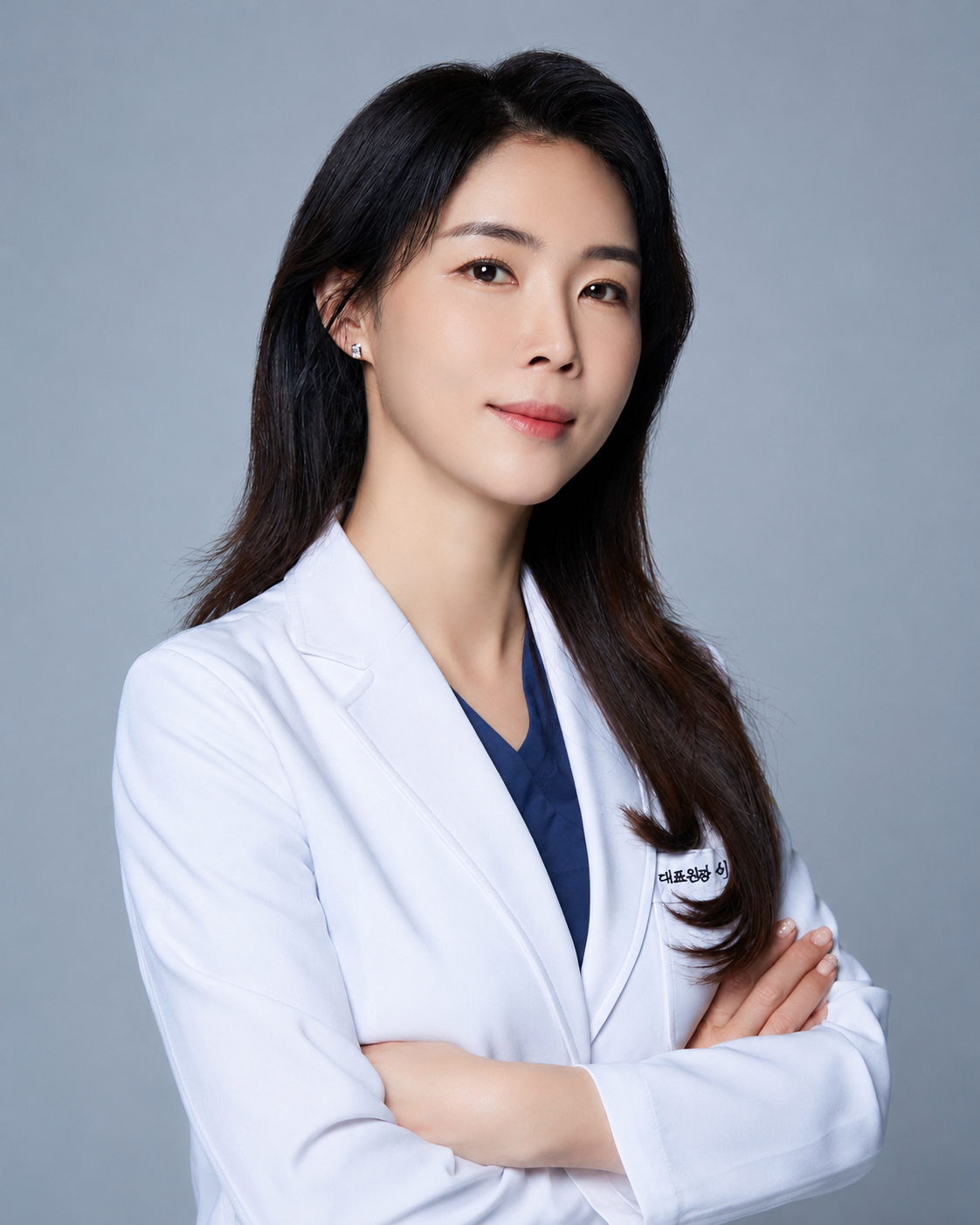
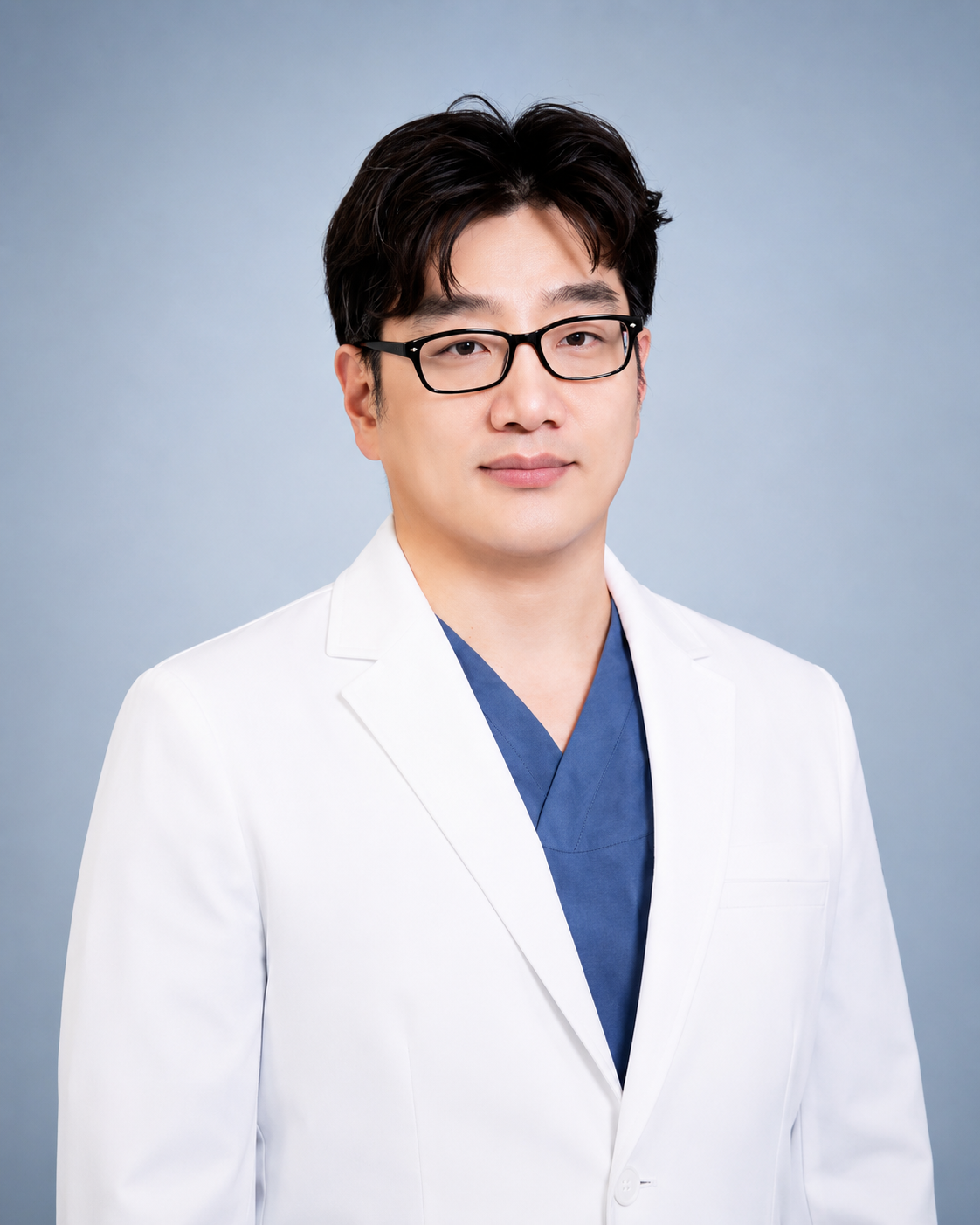
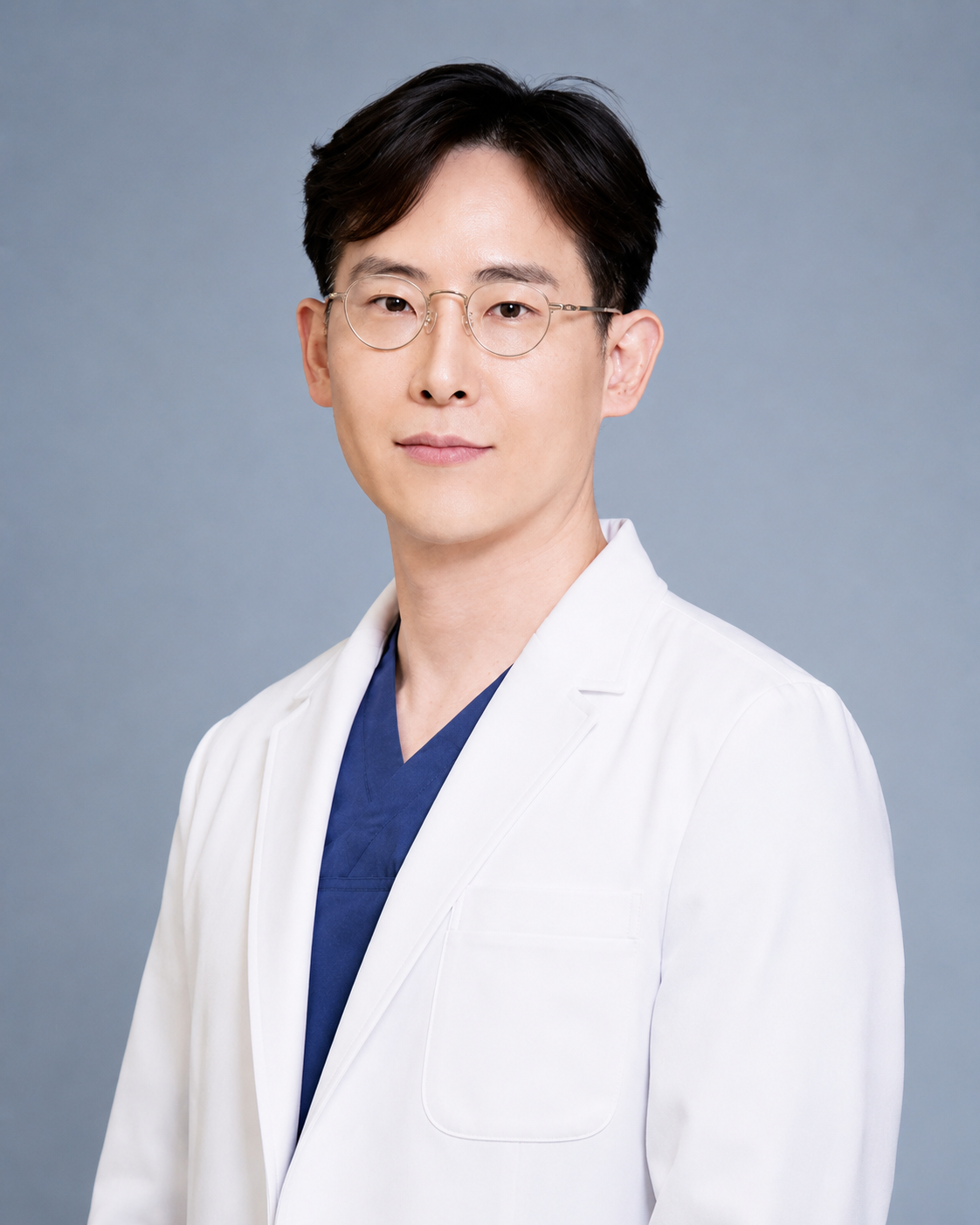
A doctor, in person, every time — never a nurse or a coordinator. JRYN Seomyeon has three doctors, and the clinic was founded by Dr. Jeong Heon Lee, who still consults here. What you actually need is decided during the consultation after your skin is examined, not from a fixed package chosen in advance.
Three doctors, one standard of care.
Every treatment plan at JRYN Seomyeon is decided and performed in person by one of our doctors — led by Dr. Jeong Heon Lee, founder of JRYN Dermatology.
From the Founder
The consultation is the treatment.
Most patients arrive asking for a specific treatment. My job is to check whether it is the right one for what they actually have. Getting that wrong is the most common mistake I correct.
Graduated from Inje University
Current Head of the JRYN Network
Current Chief Director of JRYN Seomyeon
Former Chief Director of Lin Clinic
Former Chief Director of Centum Lin Clinic
Managing Director · Seomyeon Main Branch
Dr. Yoon Jung-wook
Full Member, Korean Society of Aesthetic Plastic Surgery
Full Member, Korean Society for Aesthetic Plastic Surgery & Laser Medicine
Full Member, Korean Society of Obesity & Body Contouring
Former Neurosurgery Resident (3rd Year), Dong-A University Hospital
Former Intern, Dong-A University Hospital
Former Chief Director, Forever Plastic Surgery & Dermatology (Changwon)
Former Chief Director, Lovely Plastic Surgery & Dermatology (Changwon)
Former Director, Insta Plastic Surgery & Dermatology (Gimhae)
Former Director, Dr. Yoon Beauty Center (Vietnam)
Vice Managing Director · Seomyeon Main Branch
Dr. Jin Tae-wan
Former Director of Dermatology, MediWoman Women's Clinic
Former Director of Dermatology, Hangdo Quantum Clinic
Former Chief Director, AGE Clinic (formerly Paresa Clinic)
Former Chief Director, One Clinic (Guro)
Former Director, One Clinic (Gangnam)
Former Chief Director, SKY Plastic Surgery (Jongno)
Former Visiting Physician, Guangfu Aesthetic Plastic Surgery Hospital (Dalian, China)
Former Associate Director, Tokeshi Plastic Surgery
Former Associate Director, Midam Dermatology Clinic
Former Associate Director, Noble Line Plastic Surgery
Former Associate Director, Jeniva Plastic Surgery
Former Military Flight Surgeon, ROK Army Aviation Operations Command
Former Intern & Resident, Kangdong Sacred Heart Hospital
Before You Book
Questions patients ask first.
Different in unit potency, onset and diffusion rather than weaker. Korean toxins are MFDS-approved and used routinely across the market; they require the doctor to dose to the product rather than assume equivalence. Allergan carries the longest clinical record and is available here at a Korean price — see botox
for the brand comparison.
Yes, and it helps. Bring a medication list and any record of previous treatment — product, dose and date. Isotretinoin history matters for laser timing, and blood thinners change bruising risk. See what to bring.
No. Tipping is not part of Korean service culture in any setting, including medical, and attempting it creates awkwardness rather than goodwill. The price you agree is the total.
Varies by treatment, but a factor of three to five on injectables is typical against US metro pricing, and larger on device treatments. The full price list
is published so you can compare directly rather than requesting a quote.
It exists in the region and is the honest explanation for pricing that looks impossible. The defence is the same one you would use anywhere: ask to see the box, the lot number and the cartridge shot counter before treatment.
Consultation runs in English with a coordinator alongside the doctor. Message before travelling and read the reply — a response written in fluent prose answering your specific question is a reasonable preview. See do you need a translator.
A realistic range from photographs, yes. An exact figure, no, because dose depends on anatomy. The range is enough to plan around and the exact figure is confirmed at consultation before anything is opened.
Anything needing a course you cannot complete — melasma
at eight to fifteen sessions, or acne scarring
at four to six. We will say so rather than starting something you cannot finish.
Doctor-led planning across six categories. Foreign patients pay the same as local patients — what changes a final figure is units and area, never nationality.
JRYN Seomyeon
· 4F Samjeong Tower, 672 Jungang-daero · 5 min from Seomyeon Station Exit 2 · 2 min from Seomyeon Mall Exit 16 · 6 min from Lotte Department Store Busan Main · 8 min from Jeonpo Cafe Street · inside Seomyeon Medical Street · open through lunch, seven days a week
Ready When You Are
Send your dates, get a plan before you fly.
Message us on WhatsApp with what you would like to address and when you will be in Busan. You will get an honest read in your language — including whether the treatment you have in mind is the right one.