4F, Samjeong Tower, 672 Jungang-daero, Busanjin-gu, Busan, Korea
Comparison · Seomyeon, Busan · Foreigner-Friendly
Botox or filler in Busan Seomyeon, and the test that tells you which.
They do opposite things and are constantly confused. One relaxes a muscle that is creasing skin; the other replaces volume that has gone. A single mirror test sorts most concerns correctly.
Movement or volume — the distinction decides the treatment
On This Page
What each one actually does
The test that sorts most concerns
Which concerns are clearly botox?
Which concerns are clearly filler?
Where does it get genuinely confusing?
Why does choosing wrongly feel like the treatment failed?
How does this fit with the rest of what is available?
Which is safer?
Can you have both?
Which is better value?
What if you are told you need both when you asked for one?
These two account for most of what gets injected worldwide and they solve different problems. Choosing wrongly does not usually cause harm; it causes a result that changes nothing and a conclusion that treatment does not work.
Does This Sound Familiar?
What patients ask when comparing
I do not know which one I need for these lines.
Someone told me I need filler but I thought botox was for wrinkles.
Which one is safer?
Can I have both, or does that look overdone?
Which lasts longer for the money?
All five come up most weeks, and the first has a two-second answer you can get in a mirror. The sections below explain it.
What each one actually does
Botox
blocks the signal from nerve to muscle, so a muscle that has been folding the skin above it stops doing so. Filler
is a gel placed under the skin to replace volume that has been lost or to add projection where there was none. One removes an action; the other adds substance. Nothing about either does the other one's job.
The test that sorts most concerns
Look in a mirror with a relaxed face. If the line is not there at rest and appears only when you move — frowning, raising your brows, smiling — it is dynamic and belongs to botox. If it is visible with your face completely still, it is static and needs volume, resurfacing or both. That single check gets most patients to the right answer before any consultation.
Which concerns are clearly botox?
Frown lines between the brows, forehead lines that appear on raising, crow's feet on smiling, a wide jaw from masseter bulk, and excessive sweating. All of these are muscle or gland activity — see wrinkle botox
and jaw botox. Filler in any of these areas either does nothing or produces an odd result.
Which concerns are clearly filler?
A flat cheek, a recessed chin, thin lips, a hollow under the eye, and a nose profile needing projection. All of these are volume or structure — see chin filler
and cheek filler. Botox in these areas addresses nothing, because no muscle is causing the appearance.
Where does it get genuinely confusing?
The nasolabial fold and the marionette lines. Both look like creases and both are frequently attributed to muscle, but they are produced by tissue descent and lost volume above them — see nasolabial folds. The other confusing case is a line that started dynamic and became static over years, where botox stops it deepening and something else is needed to soften what is already etched.
Many faces need both, in a specific order
Why does choosing wrongly feel like the treatment failed?
Because both treatments do exactly what they are supposed to and neither addresses the concern. Filler placed for a dynamic frown line sits in the crease while the muscle keeps folding over it — the line reappears within days and the patient concludes filler does not work. Botox given for a hollow cheek relaxes muscle that was not causing the hollow, so nothing changes at all. In both cases the product performed correctly. That is why the diagnostic step matters more than the choice of brand, and why a consultation that jumps straight to a price has skipped the part that determines the outcome.
How does this fit with the rest of what is available?
These two are the first question rather than the whole answer. Where the concern is skin quality rather than lines or volume, neither is right and boosters
or laser
belong instead. Where it is descent rather than deflation, energy lifting
or threads
do what neither injectable can. A face presenting with all four components is common past forty, which is why the ranking conversation matters more than the botox-or-filler framing suggests.
Which is safer?
Different risk profiles rather than one being safer. Botox risks are dose-related and temporary — heaviness, asymmetry, an unwanted change in expression, all resolving in three to four months. Filler risks include bruising and asymmetry, and rarely but seriously vascular occlusion, which is why who injects matters. Filler is reversible within days; botox is not reversible but is self-limiting. Neither of those makes one categorically safer.
Can you have both?
Frequently, and the combination is often what produces a natural result rather than an overdone one. Ageing presents as lost volume and increased creasing together, and treating one alone leaves the result incomplete. The order matters — botox
first, then filler, so volume is placed into a face whose movement has already been softened. See combining treatments.
Which is better value?
Depends on the concern rather than on the product. Botox is cheaper per session and lasts three to six months. Filler costs more and lasts twelve to eighteen in structural areas. Per month of effect they are closer than the headline prices suggest — and neither is good value if it is treating the wrong thing, which remains the more important variable.
What if you are told you need both when you asked for one?
Ask which matters more and why. A genuine combination recommendation ranks the two, explains what the second adds, and remains straightforward to decline. An unranked pairing presented at a package price is a different structure — see what a no-upsell policy means. Both treatments are common enough that suggesting both is often correct, which is exactly why the ranking question is worth asking.
Our Medical Team
Who will actually treat you at JRYN Seomyeon?
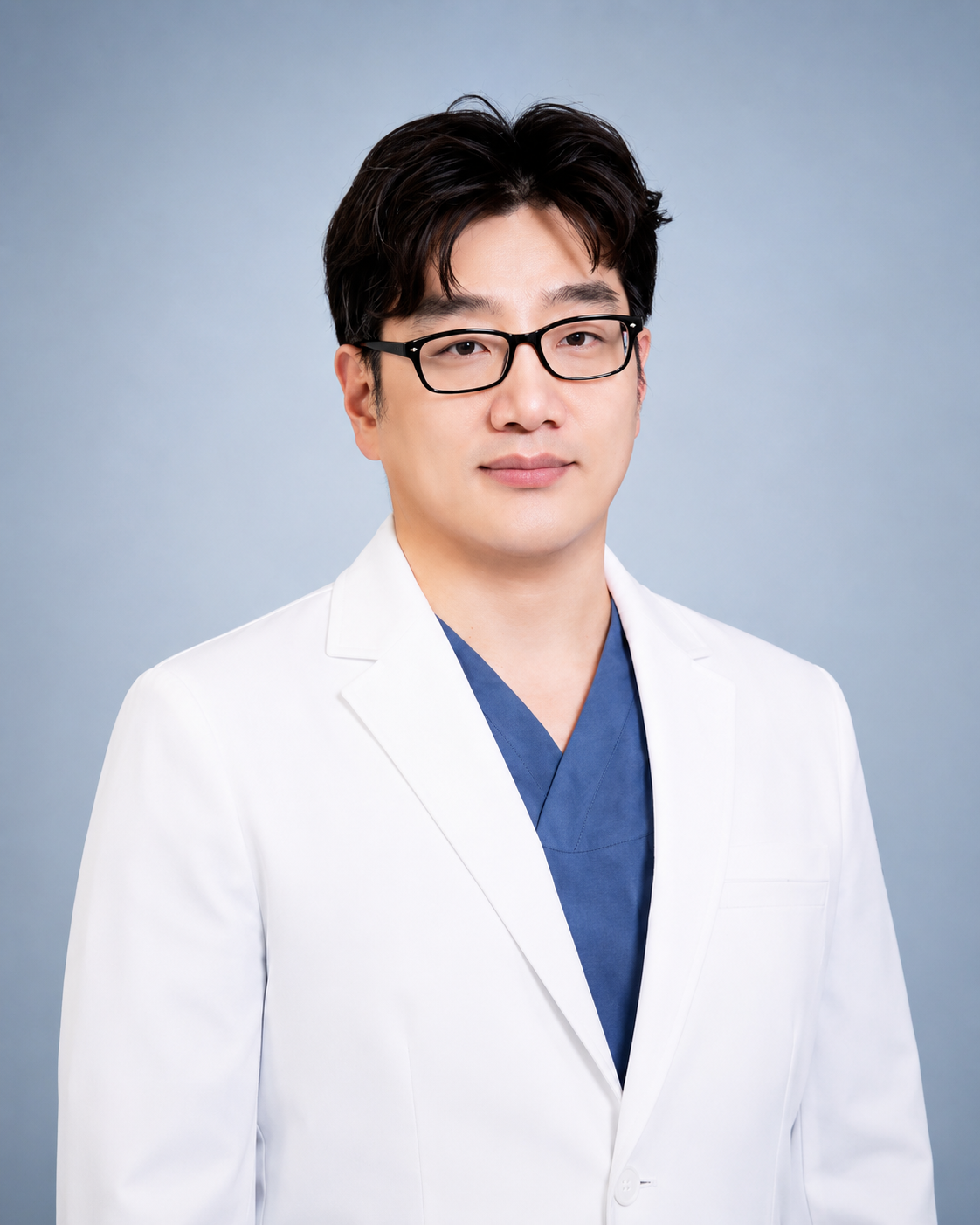
A doctor, in person, every time — never a nurse or a coordinator. JRYN Seomyeon has three doctors, and the clinic was founded by Dr. Jeong Heon Lee, who still consults here. What you actually need is decided during the consultation after your skin is examined, not from a fixed package chosen in advance.
Three doctors, one standard of care.
Every treatment plan at JRYN Seomyeon is decided and performed in person by one of our doctors — led by Dr. Jeong Heon Lee, founder of JRYN Dermatology.
From the Founder
The consultation is the treatment.
Most patients arrive asking for a specific treatment. My job is to check whether it is the right one for what they actually have. Getting that wrong is the most common mistake I correct.
Graduated from Inje University
Current Head of the JRYN Network
Current Chief Director of JRYN Seomyeon
Former Chief Director of Lin Clinic
Former Chief Director of Centum Lin Clinic
Managing Director · Seomyeon Main Branch
Dr. Yoon Jung-wook
Full Member, Korean Society of Aesthetic Plastic Surgery
Full Member, Korean Society for Aesthetic Plastic Surgery & Laser Medicine
Full Member, Korean Society of Obesity & Body Contouring
Former Neurosurgery Resident (3rd Year), Dong-A University Hospital
Former Intern, Dong-A University Hospital
Former Chief Director, Forever Plastic Surgery & Dermatology (Changwon)
Former Chief Director, Lovely Plastic Surgery & Dermatology (Changwon)
Former Director, Insta Plastic Surgery & Dermatology (Gimhae)
Former Director, Dr. Yoon Beauty Center (Vietnam)
Vice Managing Director · Seomyeon Main Branch
Dr. Jin Tae-wan
Former Director of Dermatology, MediWoman Women's Clinic
Former Director of Dermatology, Hangdo Quantum Clinic
Former Chief Director, AGE Clinic (formerly Paresa Clinic)
Former Chief Director, One Clinic (Guro)
Former Director, One Clinic (Gangnam)
Former Chief Director, SKY Plastic Surgery (Jongno)
Former Visiting Physician, Guangfu Aesthetic Plastic Surgery Hospital (Dalian, China)
Former Associate Director, Tokeshi Plastic Surgery
Former Associate Director, Midam Dermatology Clinic
Former Associate Director, Noble Line Plastic Surgery
Former Associate Director, Jeniva Plastic Surgery
Former Military Flight Surgeon, ROK Army Aviation Operations Command
Former Intern & Resident, Kangdong Sacred Heart Hospital
Before You Book
Questions patients ask first.
For dynamic lines yes, since removing the folding action removes the line. For static lines no — the crease exists independently of movement and needs volume or resurfacing.
With static creases yes, placed to support the skin. With dynamic lines it works poorly, since the muscle continues folding whatever is beneath it.
Filler is immediate, allowing for swelling that settles over two weeks. Botox begins at three to five days and peaks at fourteen. For an event, that difference matters — see timing around an event.
Filler generally, since more product is placed and numbing is required. Most botox needs no numbing at all — see numbing and anaesthesia.
Yes, and it is often the better approach on a first visit. Treating conservatively and reassessing at two weeks shows how much of the concern the first treatment addressed.
No adverse interaction. Sequencing matters for precision rather than safety — botox before filler in the same session, since assessing volume in a face still making full expressions is less accurate.
Botox by volume of treatments, filler by revenue. Both are among the most requested treatments, and roughly half of patients treated with one are also treated with the other over time.
Botox, usually — cheaper, reversible by expiry, and nothing is added to your face. It is the standard entry point for patients uncertain about starting.
Doctor-led planning across six categories. Foreign patients pay the same as local patients — what changes a final figure is units and area, never nationality.
JRYN Seomyeon
· 4F Samjeong Tower, 672 Jungang-daero · 5 min from Seomyeon Station Exit 2 · 2 min from Seomyeon Mall Exit 16 · 6 min from Lotte Department Store Busan Main · 8 min from Jeonpo Cafe Street · inside Seomyeon Medical Street · open through lunch, seven days a week
Ready When You Are
Send your dates, get a plan before you fly.
Message us on WhatsApp with what you would like to address and when you will be in Busan. You will get an honest read in your language — including whether the treatment you have in mind is the right one.