4F, Samjeong Tower, 672 Jungang-daero, Busanjin-gu, Busan, Korea
Midface · Seomyeon, Busan · Foreigner-Friendly
Nasolabial folds in Busan Seomyeon, and why the fold is not the problem.
Filling the line directly is the most requested and least effective approach to this concern. The fold is a symptom of what happened above it, and treating the cause produces a lighter result with less product.
This is the single most common request that gets redirected during consultation, and the redirection usually costs less rather than more. Understanding why takes two minutes and changes what you ask for at any clinic.
Does This Sound Familiar?
What patients say about smile lines
The lines from my nose to my mouth have got much deeper.
I had filler there and my face looks heavy now.
It shows in photographs even when I am not smiling.
Is this from smiling too much?
How much filler would it take to smooth them out?
All five come up most weeks, and the second describes exactly what this page exists to prevent. The sections below explain the mechanism.
Why does the fold deepen?
Because the tissue above it descended and the fat compartment behind the cheek emptied. The nasolabial fold is an anatomical boundary that exists in every face — what changes with age is how much tissue is sitting on the upper side of it. As midface volume is lost and skin support weakens, that tissue falls toward the fold, deepening the crease from above rather than from within.
Why does filling the line fail?
Because it adds weight to the heavy side of the boundary. Product placed directly into the fold lifts the crease slightly and adds volume to a lower face that is already carrying descended tissue — producing the puffy, heavy result patients describe as looking filled. It also tends to require repeat volume, since the underlying cause continues while the symptom is being masked. See filler
for how placement is planned instead.
Where does volume actually belong?
Higher and further back — on the cheekbone and in the deep midface compartments where the loss occurred. Restoring support there lifts the tissue away from the fold, softening it indirectly and often more completely than direct injection achieves. It also restores the light reflection across the cheek that reads as a younger face, which filling a crease does not. See cheek and forehead filler.
How much difference does indirect treatment make?
Usually enough, and with less product than direct filling requires. Two to four cc placed across the midface typically softens the fold substantially while improving the whole middle third of the face. Direct filling of the fold alone can use a similar volume to achieve less and produce a heavier result. The arithmetic favours treating the cause even before considering how it looks.
Why is this the most redirected request we see?
Because the fold is where the eye lands and the cheek is where the change happened. Patients look in a mirror, see a line, and reasonably ask for the line to be filled — the same logic that leads people to ask for under-eye filler
for pigmentation. In both cases the visible symptom sits a centimetre or two from the actual cause, and in both cases the requested treatment is the more expensive of the two options. Redirecting the plan usually reduces the quote rather than increasing it, which is worth noting given how these conversations are sometimes assumed to go.
Assessed lying down to separate descent from volume loss
How does the rest of the face factor in?
A deepening fold rarely arrives alone. The same midface volume loss that produced it also flattens the cheek, softens the jawline as tissue descends, and often accompanies early laxity
and declining skin quality. Treating the fold in isolation therefore addresses one visible consequence of a broader change — which is why a plan built around the midface tends to improve several things the patient had not specifically mentioned. That is a genuine combination rather than an upsell, and the distinction is whether it is ranked and explained.
Is the fold ever treated directly?
Occasionally, and always after the midface has been addressed. Where a deep static crease remains once support has been restored, a small amount of soft product placed superficially can soften what is left. That is a finishing step of perhaps 0.2 to 0.5cc rather than the primary treatment, and it works because the load above it has already been reduced.
What if it is descent rather than volume loss?
The test is lying down. If the fold softens markedly when you are horizontal, gravity and laxity are contributing significantly and volume alone will underdeliver. In that case energy lifting
or threads
address the descent and volume follows afterwards, usually in a smaller amount than the initial assessment suggested — see combining treatments.
Does smiling cause it?
No, though repeated folding contributes to the static line over decades. The depth patients notice in their forties is structural rather than expressive — the same fold at twenty-five appears only on smiling and disappears at rest. When it is visible at rest, that is volume and support rather than muscle activity, which is why botox
is not the answer here.
What if I already have filler in the fold?
It is assessable and reversible. Hyaluronic acid dissolves within a day or two, and the midface can be reassessed a fortnight later once everything has settled. Patients frequently find that the heaviness they disliked resolves and that considerably less product is needed once it is placed correctly. Bring whatever records you have — product and volume if known.
What are the honest limits?
A very deep static fold in skin that has lost most of its elastic recoil will soften rather than disappear, regardless of where the volume goes. Where descent is advanced, non-surgical treatment improves the appearance without matching what surgery achieves. Being told which category you are in before starting is the difference between a good result and a disappointing course — see how a consultation works.
Our Medical Team
Who will actually treat you at JRYN Seomyeon?
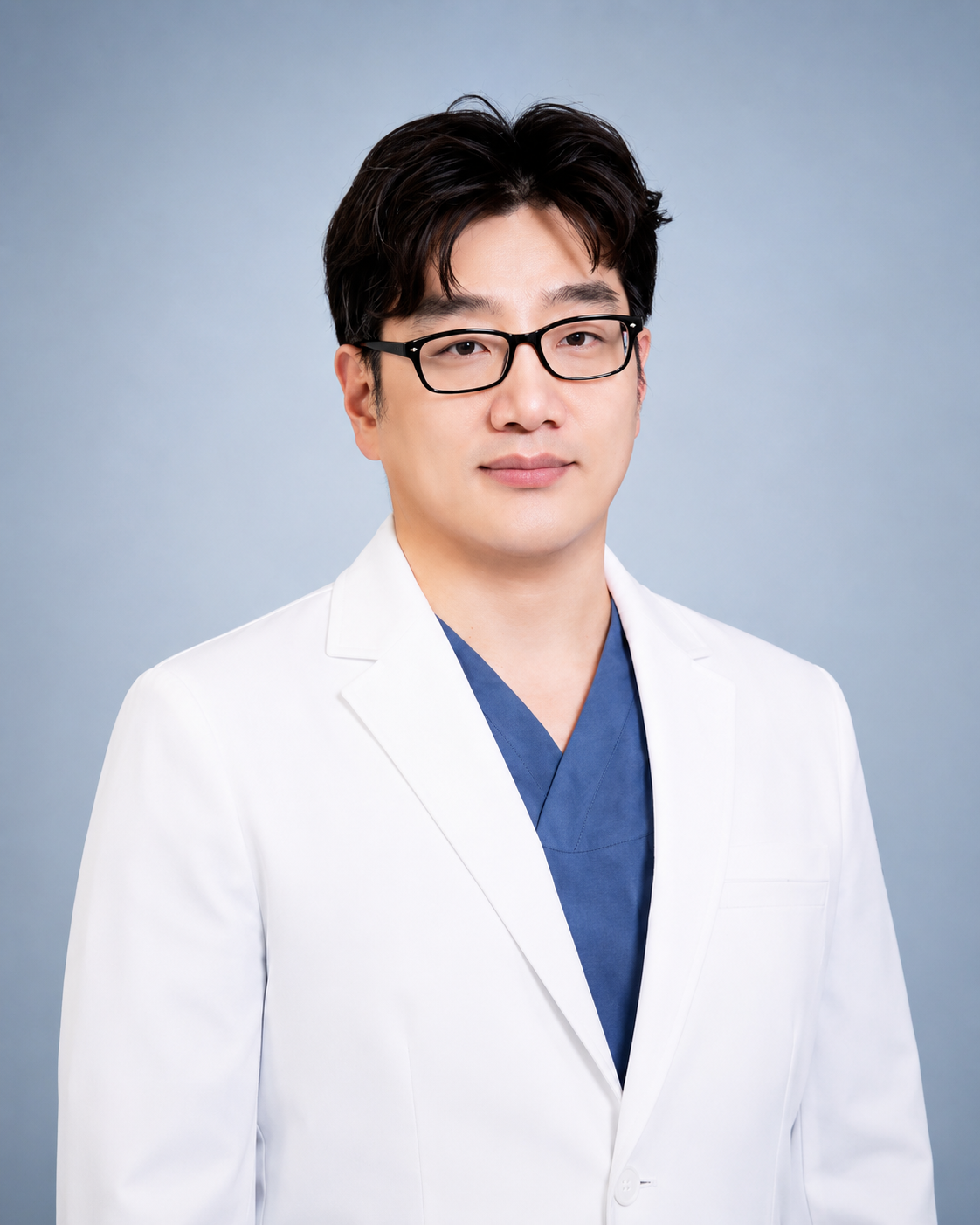
A doctor, in person, every time — never a nurse or a coordinator. JRYN Seomyeon has three doctors, and the clinic was founded by Dr. Jeong Heon Lee, who still consults here. What you actually need is decided during the consultation after your skin is examined, not from a fixed package chosen in advance.
Three doctors, one standard of care.
Every treatment plan at JRYN Seomyeon is decided and performed in person by one of our doctors — led by Dr. Jeong Heon Lee, founder of JRYN Dermatology.
From the Founder
The consultation is the treatment.
Most patients arrive asking for a specific treatment. My job is to check whether it is the right one for what they actually have. Getting that wrong is the most common mistake I correct.
Graduated from Inje University
Current Head of the JRYN Network
Current Chief Director of JRYN Seomyeon
Former Chief Director of Lin Clinic
Former Chief Director of Centum Lin Clinic
Managing Director · Seomyeon Main Branch
Dr. Yoon Jung-wook
Full Member, Korean Society of Aesthetic Plastic Surgery
Full Member, Korean Society for Aesthetic Plastic Surgery & Laser Medicine
Full Member, Korean Society of Obesity & Body Contouring
Former Neurosurgery Resident (3rd Year), Dong-A University Hospital
Former Intern, Dong-A University Hospital
Former Chief Director, Forever Plastic Surgery & Dermatology (Changwon)
Former Chief Director, Lovely Plastic Surgery & Dermatology (Changwon)
Former Director, Insta Plastic Surgery & Dermatology (Gimhae)
Former Director, Dr. Yoon Beauty Center (Vietnam)
Vice Managing Director · Seomyeon Main Branch
Dr. Jin Tae-wan
Former Director of Dermatology, MediWoman Women's Clinic
Former Director of Dermatology, Hangdo Quantum Clinic
Former Chief Director, AGE Clinic (formerly Paresa Clinic)
Former Chief Director, One Clinic (Guro)
Former Director, One Clinic (Gangnam)
Former Chief Director, SKY Plastic Surgery (Jongno)
Former Visiting Physician, Guangfu Aesthetic Plastic Surgery Hospital (Dalian, China)
Former Associate Director, Tokeshi Plastic Surgery
Former Associate Director, Midam Dermatology Clinic
Former Associate Director, Noble Line Plastic Surgery
Former Associate Director, Jeniva Plastic Surgery
Former Military Flight Surgeon, ROK Army Aviation Operations Command
Former Intern & Resident, Kangdong Sacred Heart Hospital
Before You Book
Questions patients ask first.
Usually two to four cc across the midface for a meaningful change, less if laxity is treated alongside. An exact figure comes from examination since it depends on how much volume has been lost — see how to read a price list.
Placed on the cheekbone rather than in the fold, no — it reads as a fuller midface rather than as treatment. What looks obvious is a filled lower face, which is the result this page is written to avoid.
Twelve to eighteen months for structural midface filler, which sits on bone and moves little. Product placed in the fold itself lasts less, since that area creases constantly.
Yes, and it suits diffuse midface loss well — particularly after weight loss. It builds over three months rather than showing immediately, which some patients prefer — see Sculptra.
For the descent component, sometimes. Threads reposition tissue that has fallen, which addresses the fold from a different direction. They do not restore lost volume, so the two are frequently combined.
Considerably, since midface fat is lost preferentially. Patients who lose weight rapidly often notice the fold deepen without any other change — see weight loss and facial volume.
Not the structure. Skin quality treatment improves the surface and the light reflection, which helps marginally, but a fold produced by lost volume needs volume rather than topical treatment.
Where the volume will be placed and why. A clinic proposing to inject the fold directly as a primary treatment is treating the symptom — that question alone tells you a great deal.
Doctor-led planning across six categories. Foreign patients pay the same as local patients — what changes a final figure is units and area, never nationality.
JRYN Seomyeon
· 4F Samjeong Tower, 672 Jungang-daero · 5 min from Seomyeon Station Exit 2 · 2 min from Seomyeon Mall Exit 16 · 6 min from Lotte Department Store Busan Main · 8 min from Jeonpo Cafe Street · inside Seomyeon Medical Street · open through lunch, seven days a week
Ready When You Are
Send your dates, get a plan before you fly.
Message us on WhatsApp with what you would like to address and when you will be in Busan. You will get an honest read in your language — including whether the treatment you have in mind is the right one.