4F, Samjeong Tower, 672 Jungang-daero, Busanjin-gu, Busan, Korea
Comparison · Seomyeon, Busan · Foreigner-Friendly
Threads or energy lifting in Busan Seomyeon, and which your face is ready for.
One physically moves tissue and shows the result immediately; the other stimulates collagen and shows it over months. The choice depends on how much descent there is and how much downtime you can accept.
Immediate repositioning against gradual tightening
On This Page
What each mechanism actually does
Which shows results faster?
Which involves downtime?
Which suits which stage?
Do threads look unnatural?
Which lasts longer?
Why is descent measured lying down?
Where does volume fit into this choice?
Can they be combined?
What are the honest limits of each?
Which would we suggest first for an uncertain patient?
These two get compared as if one is better, when they work by entirely different mechanisms and suit different stages. The useful question is not which is superior but which matches the amount of descent in front of the doctor.
Does This Sound Familiar?
What patients ask when comparing
I want to see a change immediately, not in three months.
I cannot take a week off. Is one of these no-downtime?
Someone said threads pull the skin and it looks unnatural.
Which one lasts longer?
I have quite a lot of sagging. Will either be enough?
All five come up most weeks, and the last one deserves the most honest answer. The sections below take them in order.
What each mechanism actually does
Threads
are absorbable sutures with barbs or cogs, placed along vectors and used to physically reposition tissue upward — the lift is mechanical and visible on the table. Energy devices
deposit heat that contracts existing collagen and stimulates new formation, so tissue tightens in place over two to three months. One moves tissue; the other shrinks it.
Which shows results faster?
Threads, immediately, though the immediate appearance is exaggerated by swelling for the first week. The settled result is visible from around day ten and continues to improve as collagen forms along each thread over three months. Energy shows some immediate tightening and the genuine change at two to three months — judging it at four weeks is the most common reason patients conclude nothing happened.
Which involves downtime?
Threads clearly. Five to ten days of visible swelling and bruising, plus two to three weeks of restrictions — no wide mouth opening, no face-down sleeping, no dental work, no facial massage. Energy lifting
has none at all: make-up the same day, flights the same day, nothing visible at any point. For patients who cannot be seen recovering, that difference decides it — see no-downtime treatments.
Which suits which stage?
Early laxity with good skin quality does well with energy alone, because there is little to reposition and collagen responds strongly. Moderate descent with reasonable skin elasticity is where threads earn their place — tissue has fallen far enough that tightening in position leaves it in the wrong place. Advanced descent with significant skin excess is beyond both.
Do threads look unnatural?
Placed correctly, no — the vectors follow the direction tissue actually fell and the result reads as a restored contour. What produces an unnatural look is over-tightening, too many threads, or vectors chosen for maximum visible pull rather than anatomical accuracy. Puckering along the entry line in the first fortnight is normal and settles; puckering that persists past three weeks should be reported.
Both have an honest ceiling — assessed before booking
Which lasts longer?
Comparable, with different tails. PDO threads
hold twelve to eighteen months and Aptos
around two years. Ultherapy
twelve to eighteen and Thermage
up to twenty-four. In both cases what fades is the collagen rather than the treatment itself — see how long results last.
Why is descent measured lying down?
Because it separates the two mechanisms cleanly. If the contour improves markedly when you are horizontal, gravity is doing the work and tissue has genuinely fallen — which is the picture threads address, since repositioning is exactly what has to happen. If it looks much the same lying down, the appearance comes from skin quality and volume rather than descent, and tightening in place is the right approach. That thirty-second check does more to decide between these two treatments than any comparison of specifications.
Where does volume fit into this choice?
Often before either of them. Tissue descends partly because the support beneath it emptied, so restoring midface volume
lifts tissue from above and reduces how much repositioning or tightening the lower face needs. Patients who treat volume first frequently find the thread count or shot count they were quoted was higher than what they end up needing. Treating descent while ignoring the deflation that caused it is the same error as filling a fold instead of the cheek above it — see nasolabial folds.
Can they be combined?
Yes, weeks apart rather than in one session. Energy over the same area as recently placed threads risks affecting them while tissue is still integrating, so a gap of four to six weeks is standard. The usual sequence is energy first, since tightening reduces how much repositioning is needed and often reduces the number of threads required — see combining treatments.
What are the honest limits of each?
Threads cannot create skin that is not there — pulling tissue upward in a face with substantial excess produces bunching rather than a lift, and the result descends again within months. Energy cannot reposition tissue that has already fallen past where tightening reaches. Where both fall short, surgery does more, and being told that at consultation is better than after three sessions — see jowls and the jawline.
Which would we suggest first for an uncertain patient?
Energy, in most cases. It has no downtime, nothing is placed in the face, the effect wears off gradually rather than requiring removal, and the result tells you how your collagen responds before committing to anything more invasive. Threads are the more decisive intervention and suit patients who know what they want and can accommodate the recovery.
Our Medical Team
Who will actually treat you at JRYN Seomyeon?
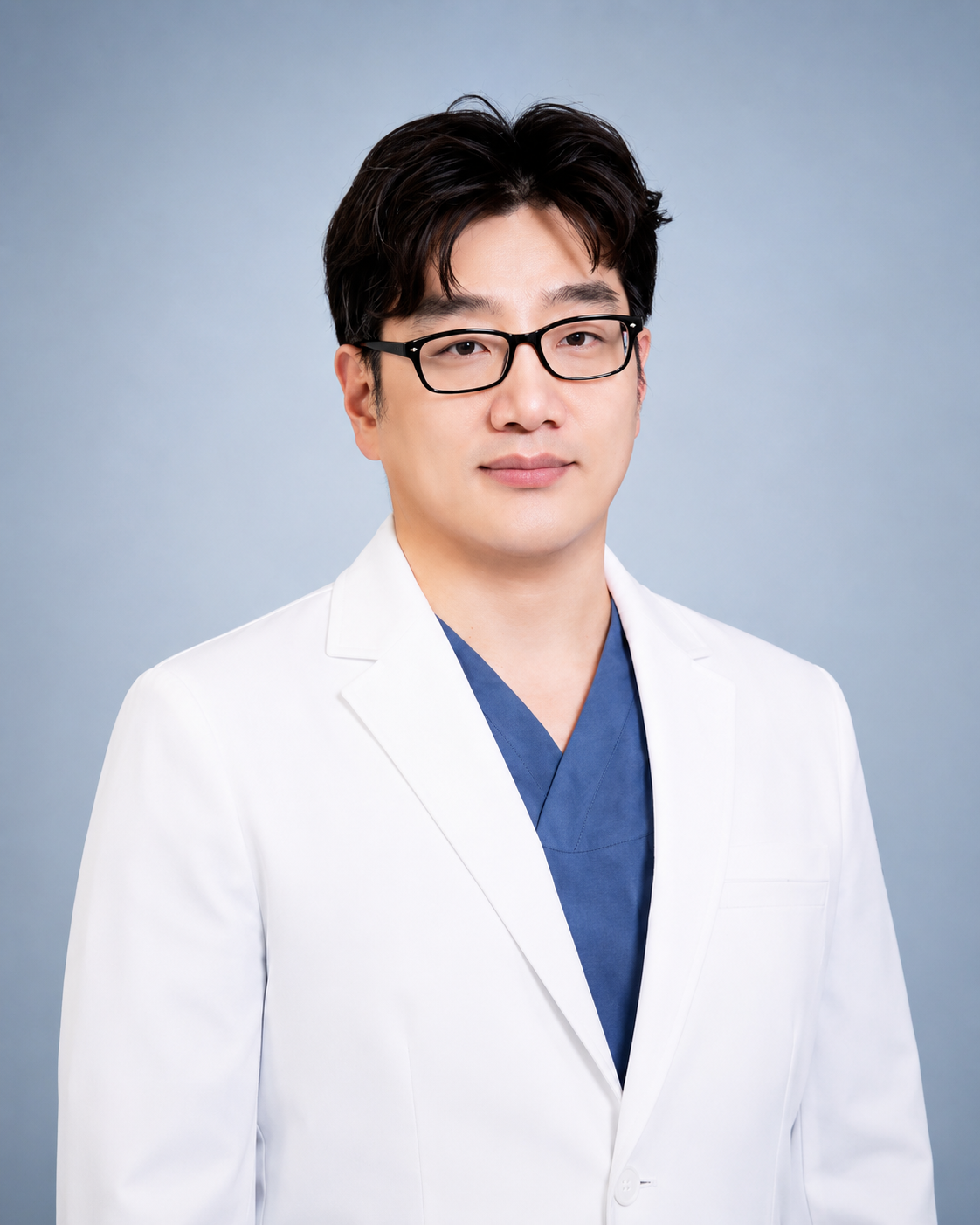
A doctor, in person, every time — never a nurse or a coordinator. JRYN Seomyeon has three doctors, and the clinic was founded by Dr. Jeong Heon Lee, who still consults here. What you actually need is decided during the consultation after your skin is examined, not from a fixed package chosen in advance.
Three doctors, one standard of care.
Every treatment plan at JRYN Seomyeon is decided and performed in person by one of our doctors — led by Dr. Jeong Heon Lee, founder of JRYN Dermatology.
From the Founder
The consultation is the treatment.
Most patients arrive asking for a specific treatment. My job is to check whether it is the right one for what they actually have. Getting that wrong is the most common mistake I correct.
Graduated from Inje University
Current Head of the JRYN Network
Current Chief Director of JRYN Seomyeon
Former Chief Director of Lin Clinic
Former Chief Director of Centum Lin Clinic
Managing Director · Seomyeon Main Branch
Dr. Yoon Jung-wook
Full Member, Korean Society of Aesthetic Plastic Surgery
Full Member, Korean Society for Aesthetic Plastic Surgery & Laser Medicine
Full Member, Korean Society of Obesity & Body Contouring
Former Neurosurgery Resident (3rd Year), Dong-A University Hospital
Former Intern, Dong-A University Hospital
Former Chief Director, Forever Plastic Surgery & Dermatology (Changwon)
Former Chief Director, Lovely Plastic Surgery & Dermatology (Changwon)
Former Director, Insta Plastic Surgery & Dermatology (Gimhae)
Former Director, Dr. Yoon Beauty Center (Vietnam)
Vice Managing Director · Seomyeon Main Branch
Dr. Jin Tae-wan
Former Director of Dermatology, MediWoman Women's Clinic
Former Director of Dermatology, Hangdo Quantum Clinic
Former Chief Director, AGE Clinic (formerly Paresa Clinic)
Former Chief Director, One Clinic (Guro)
Former Director, One Clinic (Gangnam)
Former Chief Director, SKY Plastic Surgery (Jongno)
Former Visiting Physician, Guangfu Aesthetic Plastic Surgery Hospital (Dalian, China)
Former Associate Director, Tokeshi Plastic Surgery
Former Associate Director, Midam Dermatology Clinic
Former Associate Director, Noble Line Plastic Surgery
Former Associate Director, Jeniva Plastic Surgery
Former Military Flight Surgeon, ROK Army Aviation Operations Command
Former Intern & Resident, Kangdong Sacred Heart Hospital
Before You Book
Questions patients ask first.
No — PDO and PLLA threads absorb over six to nine months, with the collagen formed along them carrying the result beyond that. Nothing remains in the face long term.
Threads, and they require injected local anaesthetic along each vector rather than topical cream. Energy is uncomfortable during treatment but needs no injection — see numbing and anaesthesia.
Not straightforwardly once tissue has integrated around them, which is a genuine difference from filler. This is a reason for conservative first treatment and for choosing a doctor rather than a package.
Depends on scale — a modest thread lift costs less than a full-face Ultherapy session, and an extensive one costs more. Figures for both are published on the price list
so the comparison is direct.
Partially, and less predictably than on the mid-face. Neck skin is thin with little to anchor into, so energy is usually the better tool there — see neck and hands.
Four to eight cog threads per side for a mid-face lift is typical, more for a full-face protocol. The count is set at consultation by how much repositioning is required rather than sold as a package.
You can, though swelling peaks over the first days and the no-wide-mouth-opening restriction applies on board. Four to five days is more comfortable — see flying home after treatment.
Then energy is the answer and the expectation adjusts accordingly — genuine tightening and gradual improvement rather than immediate repositioning. That is a real result and a different one.
Doctor-led planning across six categories. Foreign patients pay the same as local patients — what changes a final figure is units and area, never nationality.
JRYN Seomyeon
· 4F Samjeong Tower, 672 Jungang-daero · 5 min from Seomyeon Station Exit 2 · 2 min from Seomyeon Mall Exit 16 · 6 min from Lotte Department Store Busan Main · 8 min from Jeonpo Cafe Street · inside Seomyeon Medical Street · open through lunch, seven days a week
Ready When You Are
Send your dates, get a plan before you fly.
Message us on WhatsApp with what you would like to address and when you will be in Busan. You will get an honest read in your language — including whether the treatment you have in mind is the right one.