4F, Samjeong Tower, 672 Jungang-daero, Busanjin-gu, Busan, Korea
Safety · Seomyeon, Busan · Foreigner-Friendly
Checking product in Busan Seomyeon, and the four things to ask to see.
Counterfeit toxin, grey-market filler and refilled laser cartridges circulate regionally. None of the defences require expertise — they are physical checks anyone can make in under a minute, at any clinic in any country.
Box, lot and counter — shown before anything is opened
On This Page
Approval says nothing about the box in front of you
Check one — see the box and the lot number
Check two — see it opened in front of you
Check three — the cartridge counter
Why do these checks work when expertise does not?
Which treatments carry the most exposure?
Check four — the price floor
Is asking rude?
What does counterfeit product actually risk?
Does this happen in Korea specifically?
What we do about it here
This is uncomfortable to write about and more uncomfortable to discover afterwards. The checks below cost nothing, take a minute, and are the only defence that works regardless of what a website claims.
Does This Sound Familiar?
What visitors worry about
I found a price that seems impossibly low.
How would I even know if the product was genuine?
Is it rude to ask to see the box?
Someone said HIFU cartridges get refilled.
Does MFDS approval mean what is in front of me is real?
All five come up most weeks, and the last one has an answer worth understanding before the rest. The sections below cover it.
Approval says nothing about the box in front of you
This is the point that makes the rest necessary. MFDS approval
certifies a product line, not the specific unit being used on you. Counterfeits enter outside the legitimate supply chain, so a clinic can honestly describe an approved product while using something that never came from the manufacturer. Regulatory status and physical authenticity are separate questions, and only the second one can be checked in the room.
Check one — see the box and the lot number
Ask before anything is opened. Every genuine syringe and vial carries batch and lot identifiers, and a clinic using real product has no reason to decline. Here the product and lot are recorded in your notes as routine. What you are looking for is not expertise in packaging design — it is whether the request is met without hesitation.
Check two — see it opened in front of you
A sealed unit unwrapped in the room rather than a pre-loaded syringe brought from elsewhere. This is standard practice at any properly run clinic, and it removes the entire category of concern about what was in the syringe before it arrived. A pre-drawn syringe is not necessarily a problem, and asking why it was drawn in advance is entirely reasonable.
Check three — the cartridge counter
For HIFU and RF, genuine cartridges carry non-resettable shot counters. That is precisely why refilling exists as a practice and why the counter is the check that catches it. Ask to see the number before the session starts and after it finishes — the difference should match the shot count you paid for. This one check addresses both counterfeiting and under-delivery at the same time.
Why do these checks work when expertise does not?
Because they test the clinic's willingness rather than your ability to identify a forgery. Nobody without manufacturing knowledge can reliably distinguish a good counterfeit box from a real one by looking at it — that is what makes counterfeits viable. What a patient can assess is whether a request to see packaging, a lot number and a shot counter is met immediately and without comment. A clinic with nothing to hide finds the question unremarkable, and one that hesitates has told you something no inspection of the box would have.
The request is routine, not an accusation
Which treatments carry the most exposure?
Imported toxin
and imported filler, because the price gap against domestic equivalents creates the margin that makes faking worthwhile. Energy consumables sit close behind, since HIFU and RF cartridges
are expensive per unit and refilling is cheaper than counterfeiting from scratch. Laser
treatment carries the least exposure of the four, since the main cost is the device rather than a consumable — though tips and handpieces are not immune.
Check four — the price floor
An imported approved product has a wholesale cost, and a clinic cannot sell below it indefinitely. A price substantially under the market floor for a named imported brand is either a loss leader, a different product than described, or a supply chain problem. Korean-manufactured products are genuinely cheaper without being suspect — the warning applies to imported brands priced as if they were domestic — see cheap or premium.
Is asking rude?
No, and a clinic that treats it as an accusation has answered a more important question. Patients from outside Korea sometimes hesitate because they worry about giving offence in an unfamiliar setting. The request takes ten seconds, is met without comment at any properly run clinic, and is one of the few things a patient can verify independently — see patient rights.
What does counterfeit product actually risk?
Unpredictable potency in either direction, contamination, and unknown ingredients in the case of filler. Under-dosed counterfeit toxin produces a disappointing result and wasted money; over-dosed produces excessive weakness. Counterfeit filler is the more serious concern, since a substance that is not what it claims cannot be dissolved with hyaluronidase — which removes the safety net that makes hyaluronic acid forgiving — see what can go wrong.
Does this happen in Korea specifically?
Korea is well regulated and enforcement covers the legitimate supply chain. What circulates regionally rather than domestically is grey-market product entering outside that chain, which is a distribution problem rather than a national one — the same issue exists in most markets with high demand and price competition. The checks are worth making anywhere rather than being a Korea-specific precaution.
What we do about it here
Product and lot recorded in your notes for every treatment, packaging shown on request without being asked twice, cartridge counters visible before and after energy sessions, and every product named openly on its treatment page rather than described as premium. None of that is unusual and all of it is checkable — see safety standards.
Our Medical Team
Who will actually treat you at JRYN Seomyeon?
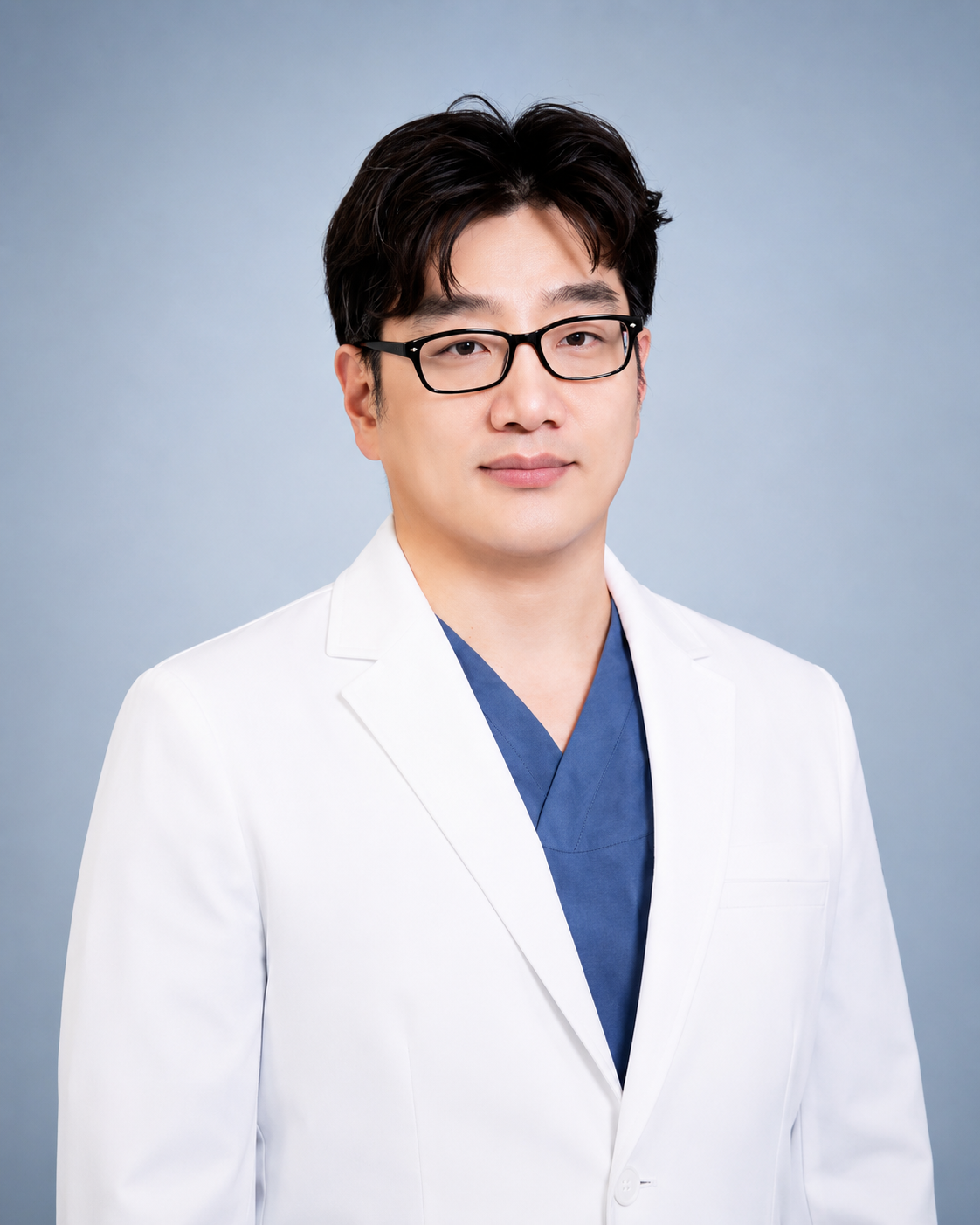
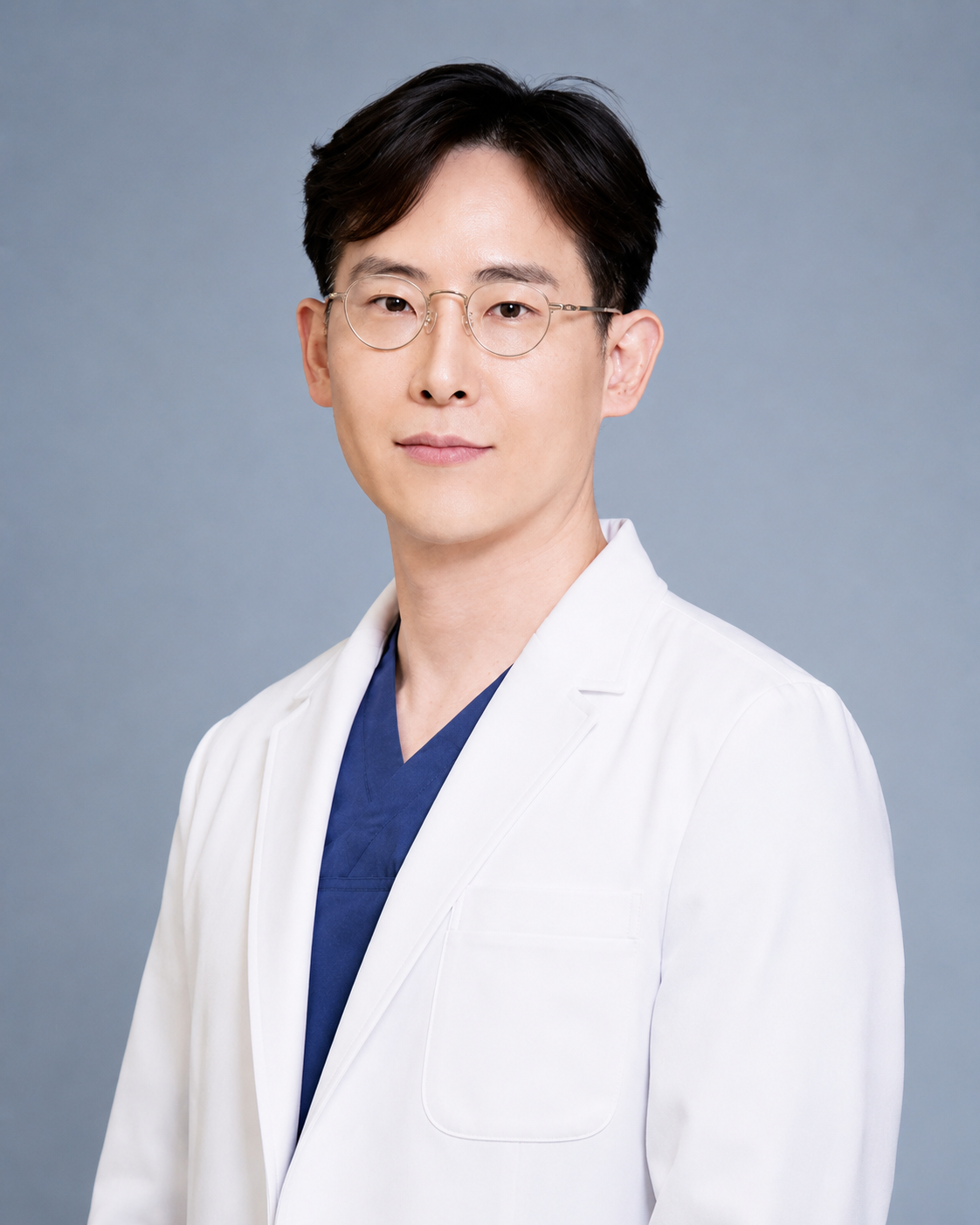
A doctor, in person, every time — never a nurse or a coordinator. JRYN Seomyeon has three doctors, and the clinic was founded by Dr. Jeong Heon Lee, who still consults here. What you actually need is decided during the consultation after your skin is examined, not from a fixed package chosen in advance.
Three doctors, one standard of care.
Every treatment plan at JRYN Seomyeon is decided and performed in person by one of our doctors — led by Dr. Jeong Heon Lee, founder of JRYN Dermatology.
From the Founder
The consultation is the treatment.
Most patients arrive asking for a specific treatment. My job is to check whether it is the right one for what they actually have. Getting that wrong is the most common mistake I correct.
Graduated from Inje University
Current Head of the JRYN Network
Current Chief Director of JRYN Seomyeon
Former Chief Director of Lin Clinic
Former Chief Director of Centum Lin Clinic
Managing Director · Seomyeon Main Branch
Dr. Yoon Jung-wook
Full Member, Korean Society of Aesthetic Plastic Surgery
Full Member, Korean Society for Aesthetic Plastic Surgery & Laser Medicine
Full Member, Korean Society of Obesity & Body Contouring
Former Neurosurgery Resident (3rd Year), Dong-A University Hospital
Former Intern, Dong-A University Hospital
Former Chief Director, Forever Plastic Surgery & Dermatology (Changwon)
Former Chief Director, Lovely Plastic Surgery & Dermatology (Changwon)
Former Director, Insta Plastic Surgery & Dermatology (Gimhae)
Former Director, Dr. Yoon Beauty Center (Vietnam)
Vice Managing Director · Seomyeon Main Branch
Dr. Jin Tae-wan
Former Director of Dermatology, MediWoman Women's Clinic
Former Director of Dermatology, Hangdo Quantum Clinic
Former Chief Director, AGE Clinic (formerly Paresa Clinic)
Former Chief Director, One Clinic (Guro)
Former Director, One Clinic (Gangnam)
Former Chief Director, SKY Plastic Surgery (Jongno)
Former Visiting Physician, Guangfu Aesthetic Plastic Surgery Hospital (Dalian, China)
Former Associate Director, Tokeshi Plastic Surgery
Former Associate Director, Midam Dermatology Clinic
Former Associate Director, Noble Line Plastic Surgery
Former Associate Director, Jeniva Plastic Surgery
Former Military Flight Surgeon, ROK Army Aviation Operations Command
Former Intern & Resident, Kangdong Sacred Heart Hospital
Before You Book
Questions patients ask first.
Yes, and it is reasonable to do so. It also gives you a record of exactly what was used if a question arises later.
Leave. There is no legitimate reason to decline, and a refusal is more informative than any answer you would have received.
You often cannot by inspection alone, which is why the meaningful signal is whether the request is met readily rather than your own assessment of the packaging.
Genuine ones cannot be reset, which is the point. What happens is refilling of used cartridges, and the counter is what exposes it — see HIFU devices compared.
No — the opposite, since domestic products cost less and there is correspondingly less margin in faking them. Imported premium brands are the more common target.
Product name, lot number, dose or volume, and treated area. Ask for them in English if you may need another doctor to act on them — see patient rights.
To consumables like cartridges and tips, yes. The device itself is a capital item and not realistically counterfeited — the concern is what is attached to it.
No. Korean-manufactured products are legitimately cheaper, and a clinic in a low-rent district charges less for the same treatment. The warning is specific to imported brands priced below their own cost.
Doctor-led planning across six categories. Foreign patients pay the same as local patients — what changes a final figure is units and area, never nationality.
JRYN Seomyeon
· 4F Samjeong Tower, 672 Jungang-daero · 5 min from Seomyeon Station Exit 2 · 2 min from Seomyeon Mall Exit 16 · 6 min from Lotte Department Store Busan Main · 8 min from Jeonpo Cafe Street · inside Seomyeon Medical Street · open through lunch, seven days a week
Ready When You Are
Send your dates, get a plan before you fly.
Message us on WhatsApp with what you would like to address and when you will be in Busan. You will get an honest read in your language — including whether the treatment you have in mind is the right one.