4F, Samjeong Tower, 672 Jungang-daero, Busanjin-gu, Busan, Korea
Culture & First Visits
Korean clinic etiquette, explained before your first visit.
Shoes, photographs, small talk, tipping and what counts as rude — the unwritten rules of a Korean clinic visit, explained plainly before your first one.
The unwritten rules take two minutes to learn — and most of your worries are not rules at all.
On This Page
Do you take your shoes off at a Korean clinic?
Is tipping expected — or insulting?
Why is the doctor so brief — is that rudeness?
Can you say no without being rude?
What is the deal with photographs?
What should you do about being late, early or lost?
How should you handle small talk and personal questions?
Which behaviours are the real offences?
What small behaviours genuinely help your visit?
Nobody hands you the rulebook. First-time foreign patients tell us the treatment was the easy part — the anxiety was everything around it: whether to take shoes off, whether refusing a product is rude, why the doctor was so brief, whether to tip, whether photographs were being taken and why. This guide is that missing rulebook, written honestly: the etiquette that actually matters in a Korean dermatology clinic, the things you might misread as rudeness that are nothing of the kind, and the handful of behaviours that genuinely do help your visit go well — none of which require a word of Korean.
Does This Sound Familiar?
It is not the needle you are nervous about.
You have hovered at a clinic door wondering if your shoes were about to commit an offence.
You worry that declining an add-on or asking for time to think will read as rude.
A brisk, efficient doctor somewhere once left you wondering what you did wrong.
You do not know if tipping is expected, insulting, or both depending on the day.
You have questions about consent photos and would rather ask before the gown is on.
All five are the quiet worries that arrive in our inbox dressed as treatment questions. Here are the actual rules — shorter and kinder than you expect.
Do you take your shoes off at a Korean clinic?
The honest answer: watch the floor, not the guidebook. Most modern dermatology clinics, ours included, are shoes-on throughout — you walk in from the street as you would at any office. Some treatment rooms and most procedure beds use disposable covers instead of shoe removal, and where slippers are wanted, they will be sitting unmistakably at a step up in the floor with staff gesturing toward them.
The rule underneath the rule: a raised floor edge or a visible rack of slippers means change; a flat floor means walk on. Nobody expects a foreigner to intuit this, and nobody is offended by a glance and a raised eyebrow at the desk — the universal question that receives a universal answer. Your first visit
will not be derailed by footwear.
Is tipping expected — or insulting?
Neither expected nor accepted, anywhere in the process. Korea runs a firm no-tipping culture across medicine, and a clinic is the strongest case of it: the published price
is the entire transaction, for the doctor, the nurses and the front desk alike. Attempting to tip creates a small, kind, awkward standoff that ends with your money returned.
If you want to express appreciation, the currencies that actually register are different: a review in English, a referral, a photo consent for the before-and-after archive, or simply coming back for your two-week review. Gratitude is welcome; gratuity is not — and no staff member will ever hint otherwise.
Why is the doctor so brief — is that rudeness?
It is the opposite: it is respect for your time, expressed in a dialect you may not have met before. Korean consultations are dense rather than long — assessment, plan, prices, questions — because the culture treats efficiency as care. The warmth is in the precision: a doctor who examines closely, answers directly and does not pad the appointment is giving you the full professional version, as how a Korean consultation works
explains.
What never gets sacrificed is your question time. Ask everything — brevity is the doctor's habit, not a gate on yours, and the questions worth asking
are welcomed here precisely because confident clinics enjoy them. If you prefer a slower pace, say so; the pace is a default, not a rule.
Can you say no without being rude?
Yes — and you should know that declining is culturally unremarkable. "I'll think about it" is a complete, polite, normal sentence in a Korean clinic, and at ours it is structurally protected: the no-upsell policy
means the plan you are quoted is the plan, with nothing riding on your yes. No one loses face when you defer, decline or downsize.
The same applies mid-treatment: asking to pause, asking what a product is, asking the price again before agreeing — all ordinary. What Korean clinic culture genuinely dislikes is not refusal but ambush disputes at the payment desk, which is why everything here is priced in writing first, per reading a Korean price menu.
Efficiency is a form of respect in Korean clinics; brevity is not coldness.
What is the deal with photographs?
Two kinds exist, and only one involves you by default. Clinical photos — standardised before-and-after shots — are taken for your own record and treatment tracking; they stay in your file. Marketing use is a separate, explicit, written consent that you are free to decline without consequence, and declining is common. Nothing goes to the public archive
without that signature.
Your own photography follows simple lines: selfies of yourself, fine; photographing staff, other patients or price boards for forums, ask first. And the reverse courtesy — reading other clinics' galleries critically
— is a skill worth bringing to every clinic you ever visit, including ours.
What should you do about being late, early or lost?
Message — that is the entire etiquette. Korean clinics run tight schedules, so a WhatsApp note that you are ten minutes behind is received as courtesy, not confession; silence is the only version that inconveniences anyone. Early arrivals simply wait in reception with everyone else, no awkwardness attached.
Lost happens weekly and bothers nobody: send your location on WhatsApp
and the desk talks you in — we are five minutes from Seomyeon Station Exit 2, two from Seomyeon Mall Exit 16, six from Lotte Department Store's main Busan branch, eight from Jeonpo Cafe Street, inside Seomyeon Medical Street. The clinic runs open through lunch, seven days a week, so rescheduling around a missed window is painless.
How should you handle small talk and personal questions?
Expect a little, and read it correctly. Front-desk questions — where you are from, how long in Korea, how you found the clinic — are hospitality and logistics, not surveillance; they calibrate language and follow-up, and one-word answers are perfectly acceptable. Nobody requires your life story, and the registration form covered in what to bring
is as personal as paperwork gets.
In the treatment room, the questions turn clinical and deserve full answers: medications, allergies, prior treatments, pregnancy status. Cultural softening helps nobody here — the informed-consent standard
works on accurate information, and the doctor would always rather hear the awkward detail than treat around a hidden one.
Which behaviours are the real offences?
A short, honest list. Haggling at the desk — prices are published precisely so the visit contains no bazaar, and treating the list
as an opening bid lands badly. Filming staff without asking. Arriving intoxicated for a procedure, which will get you rescheduled kindly but firmly. And demanding a treatment against the doctor's stated judgment — the refusal culture documented in when not to treat
runs both directions.
That is genuinely the whole list. Accent, imperfect Korean, cash confusion, wrong-door entrances, over-bowing, under-bowing — none of it registers as rudeness anywhere in this building. The clinic is registered Foreigner-Friendly and sees first-timers daily; the bar you imagine is far higher than the bar that exists.
What small behaviours genuinely help your visit?
Five, none requiring Korean. Message photos before you come — the plan drafts itself and your visit shortens, per the same-day flow. Arrive with a bare face if injections or laser are likely; it saves a cleansing step. Bring your medication list. Mention your flight or event date unprompted — it drives the whole timing calculus. And say what bothers you in your own words rather than a treatment name; diagnosis is the doctor's job, as your first treatment plan
explains.
Beyond that, come as you are. The Knowledge Center
holds the deeper guides if preparation calms you, and the front desk holds everything else. Etiquette, it turns out, was never the obstacle — it was just the last unknown, and now it is not.
Our Medical Team
Who will actually treat you at JRYN Seomyeon?
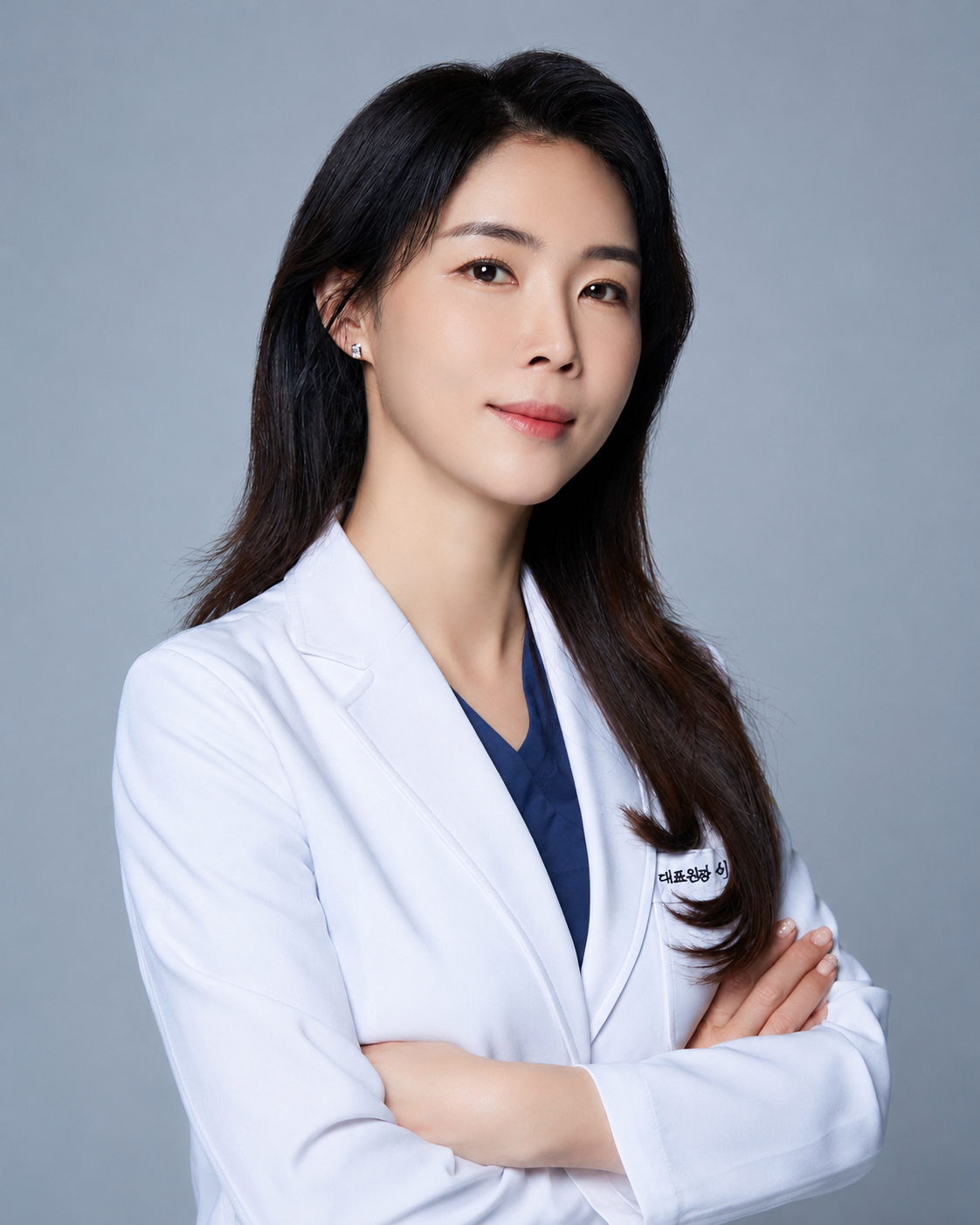
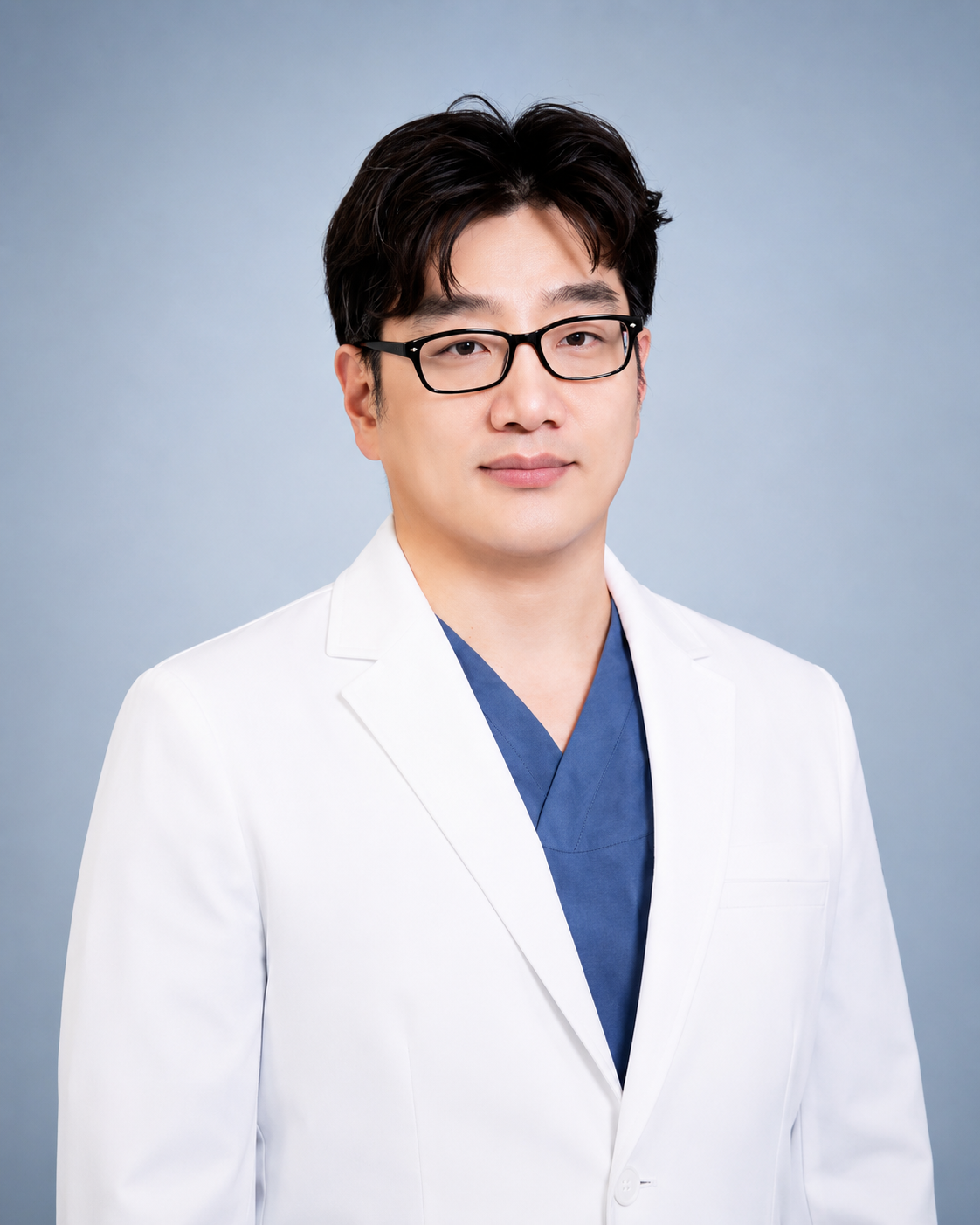
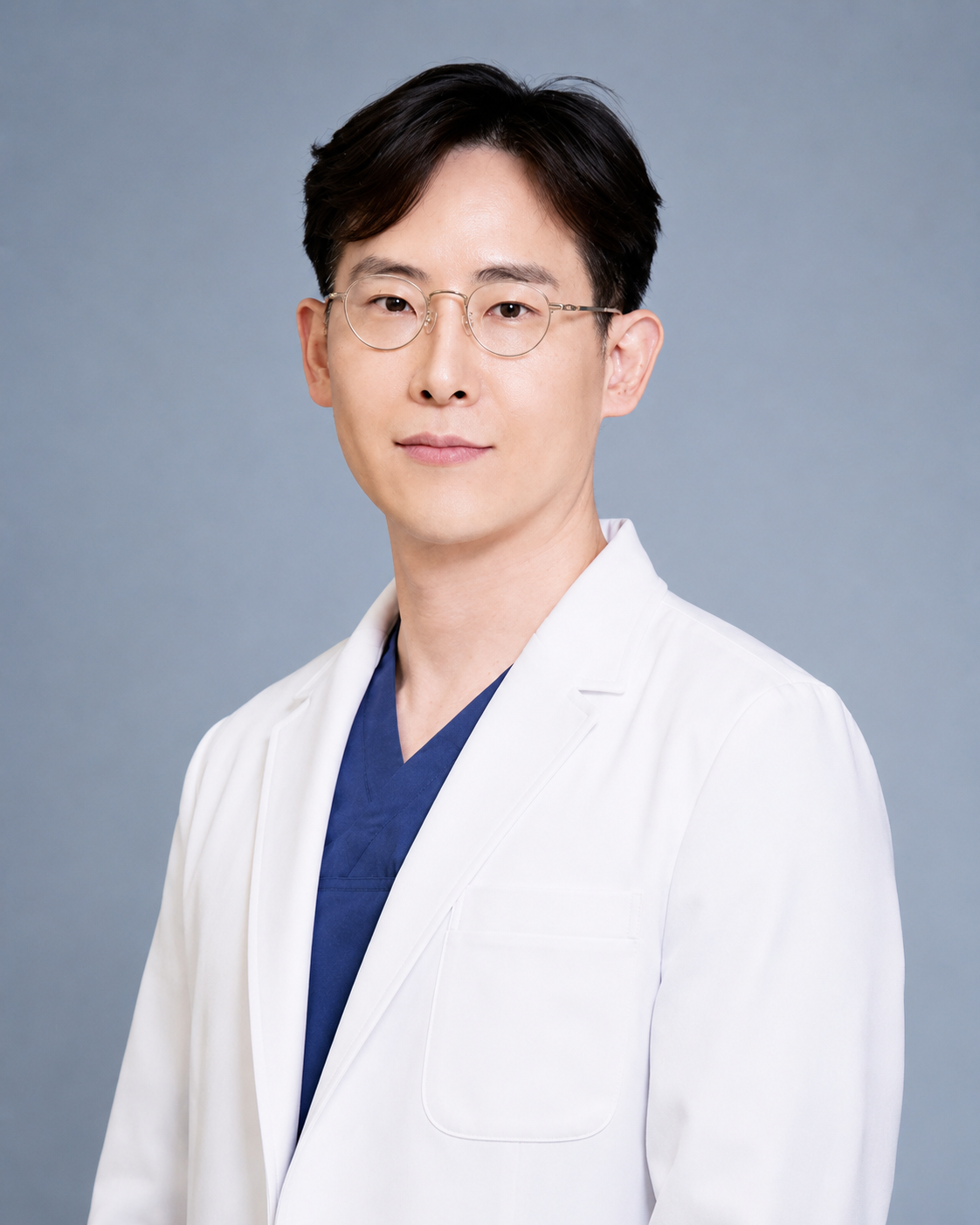
A doctor, in person, every time — never a nurse or a coordinator. JRYN Seomyeon has three doctors, and the clinic was founded by Dr. Jeong Heon Lee, who still consults here. What you actually need is decided during the consultation after your skin is examined, not from a fixed package chosen in advance.
Three doctors, one standard of care.
Every treatment plan at JRYN Seomyeon is decided and performed in person by one of our doctors — led by Dr. Jeong Heon Lee, founder of JRYN Dermatology.
From the Founder
The consultation is the treatment.
Most patients arrive asking for a specific treatment. My job is to check whether it is the right one for what they actually have. Getting that wrong is the most common mistake I correct.
Graduated from Inje University
Current Head of the JRYN Network
Current Chief Director of JRYN Seomyeon
Former Chief Director of Lin Clinic
Former Chief Director of Centum Lin Clinic
Managing Director · Seomyeon Main Branch
Dr. Yoon Jung-wook
Full Member, Korean Society of Aesthetic Plastic Surgery
Full Member, Korean Society for Aesthetic Plastic Surgery & Laser Medicine
Full Member, Korean Society of Obesity & Body Contouring
Former Neurosurgery Resident (3rd Year), Dong-A University Hospital
Former Intern, Dong-A University Hospital
Former Chief Director, Forever Plastic Surgery & Dermatology (Changwon)
Former Chief Director, Lovely Plastic Surgery & Dermatology (Changwon)
Former Director, Insta Plastic Surgery & Dermatology (Gimhae)
Former Director, Dr. Yoon Beauty Center (Vietnam)
Vice Managing Director · Seomyeon Main Branch
Dr. Jin Tae-wan
Former Director of Dermatology, MediWoman Women's Clinic
Former Director of Dermatology, Hangdo Quantum Clinic
Former Chief Director, AGE Clinic (formerly Paresa Clinic)
Former Chief Director, One Clinic (Guro)
Former Director, One Clinic (Gangnam)
Former Chief Director, SKY Plastic Surgery (Jongno)
Former Visiting Physician, Guangfu Aesthetic Plastic Surgery Hospital (Dalian, China)
Former Associate Director, Tokeshi Plastic Surgery
Former Associate Director, Midam Dermatology Clinic
Former Associate Director, Noble Line Plastic Surgery
Former Associate Director, Jeniva Plastic Surgery
Former Military Flight Surgeon, ROK Army Aviation Operations Command
Former Intern & Resident, Kangdong Sacred Heart Hospital
Before You Book
Questions patients ask first.
Usually no — most modern clinics including ours are shoes-on, with disposable covers used where needed. Where slippers are wanted, a raised floor edge and a visible rack make it unmistakable, and staff will gesture. A questioning glance at the desk always gets a friendly answer.
No — tipping is neither expected nor accepted anywhere in Korean medicine, and it will be politely returned. The published price is the entire transaction. A review, a referral or returning for your follow-up are the appreciated currencies.
No. Korean consultations are dense rather than long; efficiency is treated as respect for your time. Question time is never rationed, though — ask everything, and request a slower pace if you prefer one.
Not at all. "I'll think about it" is a normal, polite, complete answer, and under a no-upsell policy nothing rides on your yes. Deferring, declining or downsizing costs you no goodwill whatsoever.
Only with separate written consent, which you are free to decline — and many patients do. Standard clinical photos exist for your own record and stay in your file. Nothing reaches the public gallery without your signature.
Just message on WhatsApp — a heads-up is received as courtesy, and the desk will talk you in with directions from Seomyeon Station. Rescheduling is painless since the clinic runs seven days a week.
Yes — where you are from and how long you have been in Korea calibrate language and follow-up, nothing more. Short answers are fine. Clinical questions in the treatment room, however, deserve complete honesty: medications, allergies, pregnancy status.
A short list: haggling over published prices, filming staff without permission, arriving intoxicated, and demanding treatment against the doctor's judgment. Accent, imperfect Korean and first-timer confusion register as nothing at all.
Doctor-led planning across six categories. Foreign patients pay the same as local patients — what changes a final figure is units and area, never nationality.
JRYN Seomyeon
· 4F Samjeong Tower, 672 Jungang-daero · 5 min from Seomyeon Station Exit 2 · 2 min from Seomyeon Mall Exit 16 · 6 min from Lotte Department Store Busan Main · 8 min from Jeonpo Cafe Street · inside Seomyeon Medical Street · open through lunch, seven days a week
Ready When You Are
Send your dates, get a plan before you fly.
Message us on WhatsApp with what you would like to address and when you will be in Busan. You will get an honest read in your language — including whether the treatment you have in mind is the right one.