Correcting previous treatment in Busan Seomyeon, and what can actually be fixed.
A meaningful share of consultations here are corrections rather than first treatments. Most outcomes are fixable, some need to wear off, and a few are permanent — knowing which is which comes first.
Patients arriving after treatment they regret often expect a difficult conversation and a complicated fix. Usually neither applies — hyaluronic acid dissolves, botox expires, and the main task is deciding what to rebuild rather than how to repair.
Does This Sound Familiar?
What patients arrive with
My under-eyes look puffy and slightly blue since filler.
My face looks fuller than it should and I cannot say why.
One brow sits lower than the other after botox.
There is a lump where the filler went two years ago.
I do not know what product was used or how much.
All five come up regularly, and only one of them is difficult. The sections below sort them.
What dissolves
Any hyaluronic acid filler, within a day or two, using hyaluronidase. That covers the great majority of what patients want undone — overfilled midface, lips
beyond their proportion, under-eye puffiness
and the blue Tyndall cast from superficial placement. Reassessment happens a fortnight later once everything has settled, and rebuilding follows if wanted — see under-eye treatment options.
What wears off
Botulinum toxin, entirely, over three to four months. Nothing reverses it, so an over-treated forehead or an unwanted heaviness resolves with time rather than intervention. What can be done meanwhile is partial rebalancing — a few units into an opposing muscle sometimes lifts a heavy brow — see forehead lines and heavy brows.
What is difficult
Non-hyaluronic products. Collagen stimulators
cannot be dissolved and an overbuilt result waits for turnover. Permanent fillers — not used here — present the hardest cases, sometimes years after placement, and may require surgical removal. Threads
that have integrated cannot be simply withdrawn, though puckering and extrusion are manageable.
What is permanent
Scarring from an over-aggressive laser, tissue loss from a vascular event, and structural change from surgery. These are uncommon and they are the reason the safety pages on this site exist — see what can go wrong. Even here, improvement is usually possible; restoration to the previous state is not.
Why the sequence is dissolve, wait, reassess
Because a face carrying product that is being removed cannot be assessed accurately. Dissolving first and reviewing a fortnight later shows what is genuinely there rather than what is left over — and patients frequently find that considerably less rebuilding is needed than they expected, since the original problem was often overfilling rather than deficiency.
Dissolving first, reassessing second, rebuilding third
Why is overfilling the most common correction?
Because it is the failure mode that every incentive points toward. A patient asking for more is easy to satisfy, a full syringe is a cleaner sale than half of one, and the result looks impressive at two weeks before the face around it continues changing. Add that volume placed repeatedly over years accumulates in ways no single session reveals, and the picture patients describe as looking not like themselves arrives gradually rather than from one appointment. Almost none of it involves anything having gone wrong — see what a no-upsell policy means.
What happens after the correction?
A rebuild if you want one, planned from a clean baseline rather than layered onto what was there. That is frequently the useful part of the whole process — a face assessed without existing product often needs a different plan from the one it has been receiving, and several layers may turn out to matter more than the one being repeatedly treated — see why faces age. Some patients dissolve, reassess and decide they want nothing further, which is also a legitimate outcome.
What to bring
Whatever records exist — product name, volume or units, date, and the clinic. If you have none, say roughly what and roughly when; knowing there was filler in an area two years ago changes the plan even without a brand name. Photographs from before the original treatment are the most useful single item, since they show what you are trying to return to — see what to bring.
If you do not know what was used
It is workable and it limits precision rather than preventing treatment. Ultrasound can locate filler
and indicate its distribution. Response to hyaluronidase confirms whether a product is hyaluronic acid. What cannot be recovered is the exact volume and depth, which is why treatment proceeds more cautiously than it would with full records.
Will you criticise the previous clinic?
No, and it is rarely useful. Most poor outcomes come from a technique or dose decision rather than negligence, and the same doctor produces good results on other faces. What matters is what is in front of us now and what you want changed — whether that turns out to involve lifting, skin quality work
or nothing further at all. Where something was genuinely unsafe, we say so plainly — but that is a different conversation from a result you dislike.
How long does a correction take?
Dissolving takes minutes and settles over a day or two. Reassessment at a fortnight. Rebuilding, if wanted, at that appointment or later. For botox, three to four months of waiting with a review at the end. Most patients complete a full correction and rebuild within two months, which is faster than they expect walking in — see the two-week review. For visitors that timeline usually means two trips rather than one, and where only a single visit is possible the dissolving is done and the rebuild deferred rather than compressed into the same week.
Our Medical Team
Who will actually treat you at JRYN Seomyeon?
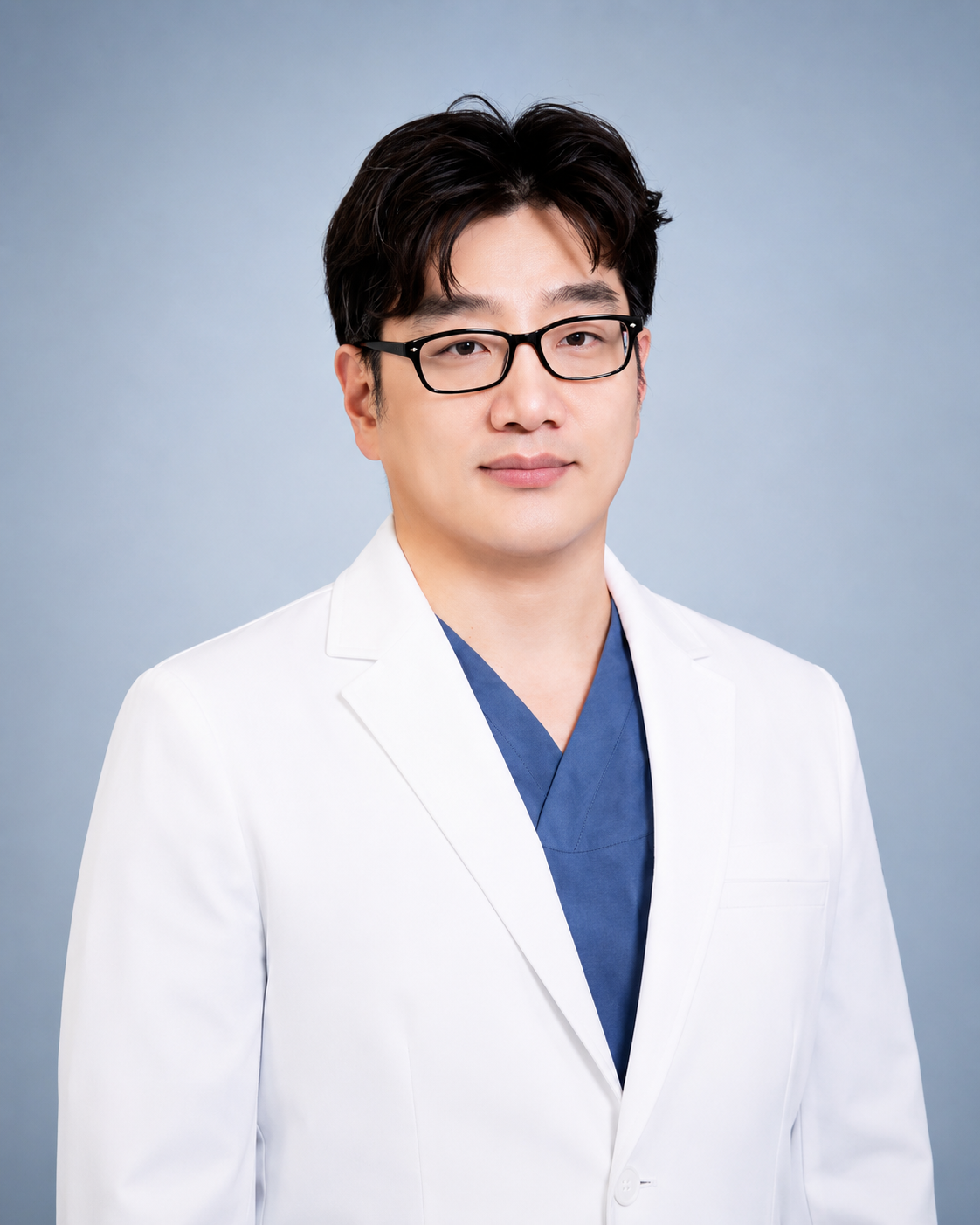
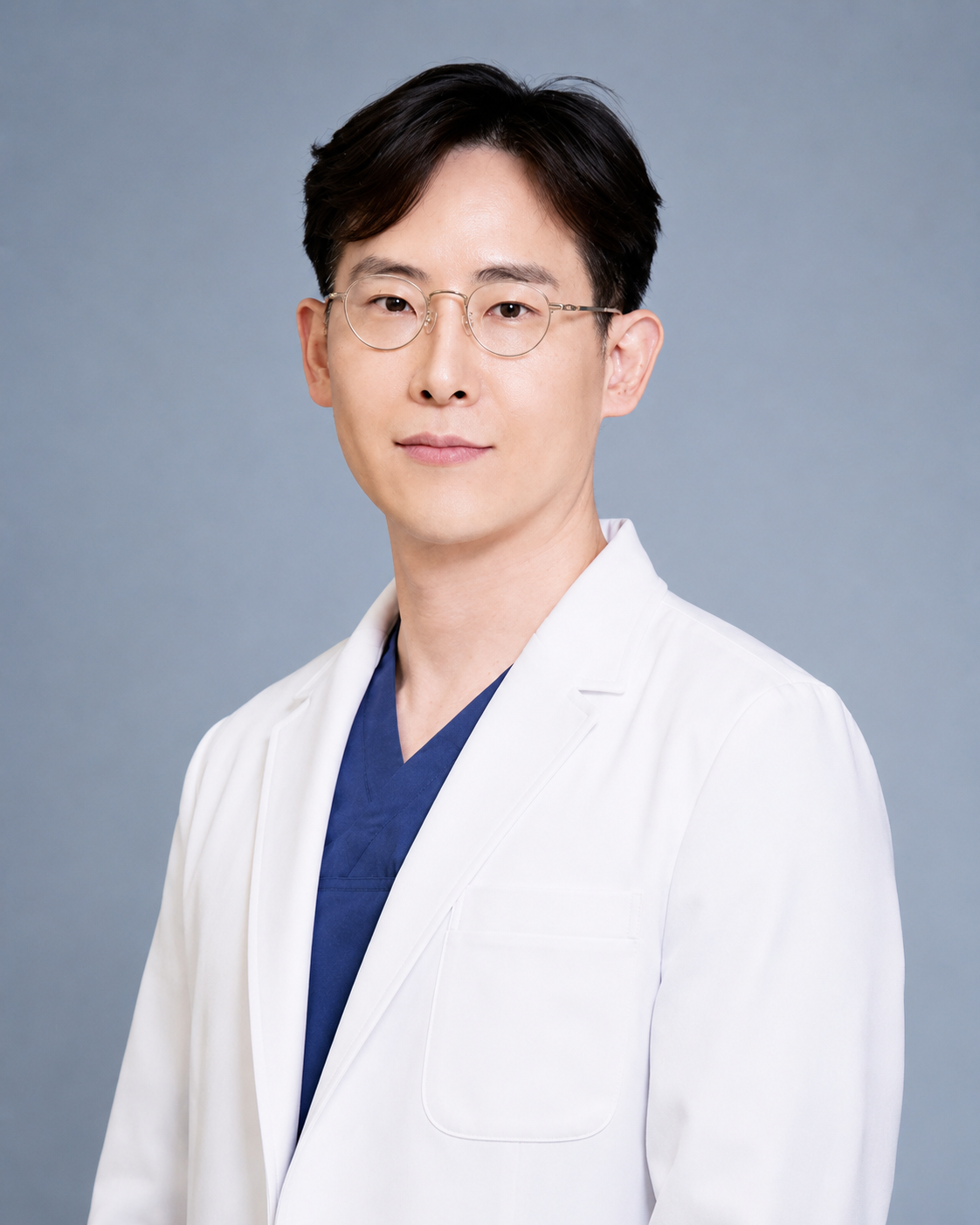
A doctor, in person, every time — never a nurse or a coordinator. JRYN Seomyeon has three doctors, and the clinic was founded by Dr. Jeong Heon Lee, who still consults here. What you actually need is decided during the consultation after your skin is examined, not from a fixed package chosen in advance.
Three doctors, one standard of care.
Every treatment plan at JRYN Seomyeon is decided and performed in person by one of our doctors — led by Dr. Jeong Heon Lee, founder of JRYN Dermatology.
From the Founder
The consultation is the treatment.
Most patients arrive asking for a specific treatment. My job is to check whether it is the right one for what they actually have. Getting that wrong is the most common mistake I correct.
Graduated from Inje University
Current Head of the JRYN Network
Current Chief Director of JRYN Seomyeon
Former Chief Director of Lin Clinic
Former Chief Director of Centum Lin Clinic
Managing Director · Seomyeon Main Branch
Dr. Yoon Jung-wook
Full Member, Korean Society of Aesthetic Plastic Surgery
Full Member, Korean Society for Aesthetic Plastic Surgery & Laser Medicine
Full Member, Korean Society of Obesity & Body Contouring
Former Neurosurgery Resident (3rd Year), Dong-A University Hospital
Former Intern, Dong-A University Hospital
Former Chief Director, Forever Plastic Surgery & Dermatology (Changwon)
Former Chief Director, Lovely Plastic Surgery & Dermatology (Changwon)
Former Director, Insta Plastic Surgery & Dermatology (Gimhae)
Former Director, Dr. Yoon Beauty Center (Vietnam)
Vice Managing Director · Seomyeon Main Branch
Dr. Jin Tae-wan
Former Director of Dermatology, MediWoman Women's Clinic
Former Director of Dermatology, Hangdo Quantum Clinic
Former Chief Director, AGE Clinic (formerly Paresa Clinic)
Former Chief Director, One Clinic (Guro)
Former Director, One Clinic (Gangnam)
Former Chief Director, SKY Plastic Surgery (Jongno)
Former Visiting Physician, Guangfu Aesthetic Plastic Surgery Hospital (Dalian, China)
Former Associate Director, Tokeshi Plastic Surgery
Former Associate Director, Midam Dermatology Clinic
Former Associate Director, Noble Line Plastic Surgery
Former Associate Director, Jeniva Plastic Surgery
Former Military Flight Surgeon, ROK Army Aviation Operations Command
Former Intern & Resident, Kangdong Sacred Heart Hospital
Before You Book
Questions patients ask first.
Comparable to the original injection, with topical numbing. It is a small volume and takes a few minutes.
Hyaluronidase acts on hyaluronic acid, including a small amount of the naturally occurring form, which recovers within days. It does not affect collagen, fat or muscle.
Yes, and it is often what is done — reducing an overfilled area rather than clearing it entirely. Partial dissolving is less predictable than full and is done in stages.
That is a legitimate reason to seek correction and it does not require anything to have gone wrong. A result correctly delivered can still be one you dislike.
Usually, with an interval that depends on what was done. Recent filler, threads or laser changes what can safely be added and when — disclose it rather than omitting it.
Yes, by dissolving. Migration is more common with large volumes and superficial placement, particularly around the lips and under-eye — see lip filler.
Adjustment at the two-week review is included. Beyond that, and for work done elsewhere, treatment is charged normally — see the price list.
For the first two weeks after any injectable, yes — that is normal settling. Beyond a fortnight, waiting rarely changes anything and correction is easier sooner.
Doctor-led planning across six categories. Foreign patients pay the same as local patients — what changes a final figure is units and area, never nationality.
JRYN Seomyeon
· 4F Samjeong Tower, 672 Jungang-daero · 5 min from Seomyeon Station Exit 2 · 2 min from Seomyeon Mall Exit 16 · 6 min from Lotte Department Store Busan Main · 8 min from Jeonpo Cafe Street · inside Seomyeon Medical Street · open through lunch, seven days a week
Ready When You Are
Send your dates, get a plan before you fly.
Message us on WhatsApp with what you would like to address and when you will be in Busan. You will get an honest read in your language — including whether the treatment you have in mind is the right one.