PIH risk on Asian skin in Busan Seomyeon, and how it is actually prevented.
Post-inflammatory hyperpigmentation is the complication that matters most on Fitzpatrick III to V skin, and it is largely preventable. This explains the mechanism, which treatments carry the risk, and what to do if it appears anyway.
Settings matched to Fitzpatrick type, not to a preset
On This Page
What is PIH and why does it happen?
Why does higher melanin raise the risk?
Which treatments carry the risk?
How is the risk actually reduced?
Why does recent sun exposure matter so much?
How do I know my own risk beforehand?
What if it happens anyway?
Is melasma the same thing?
What should I ask before any pigment treatment?
A darkening that appears two to four weeks after a treatment and takes months to clear is the single most common reason patients with Asian skin regret a laser session. It is also avoidable more often than not, and understanding why makes every consultation you have more useful.
Does This Sound Familiar?
What patients ask about pigmentation risk
My skin went darker after a laser somewhere else. What happened?
I have Fitzpatrick IV skin. Should I avoid lasers entirely?
How long does it take to clear if it happens?
Does it happen with filler and botox too?
Is there a way to know my risk before treatment?
All five come up most weeks, and the first is the one patients arrive with rather than ask in advance. The sections below take them in order.
What is PIH and why does it happen?
Post-inflammatory hyperpigmentation is the skin producing extra melanin in response to injury. Any inflammation — a laser pass, a burn, a spot, a scratch — signals melanocytes to increase pigment production in the affected area, and on skin that already produces melanin readily that response is stronger and lasts longer. It typically appears two to four weeks after the trigger rather than immediately, which is why patients often do not connect it to the treatment.
Why does higher melanin raise the risk?
Two reasons that compound. Melanin absorbs laser energy, so on darker skin more of the energy is taken up by the epidermis rather than reaching the intended target — producing more surface heat and more inflammation for the same setting. And the melanocytes themselves are more reactive, so the same amount of inflammation produces a larger pigment response. This is why a setting that safely clears a freckle on Fitzpatrick II can cause weeks of darkening on Fitzpatrick IV.
Which treatments carry the risk?
Anything that creates controlled injury. Fractional resurfacing
carries the highest risk, followed by high-energy pigment work and acne scar treatment. Pico toning
at low fluence carries much less, which is why it is the workhorse for Asian skin. Mole removal
carries a localised risk at each site. What carries essentially none is botox, filler
and energy lifting
— no epidermal injury, no pigment response.
How is the risk actually reduced?
Four measures, all of them procedural rather than product-based. Lower fluence than would be used on lighter skin, accepting a slower result. Longer intervals between sessions so inflammation resolves fully. A test pass on a small area, observed before continuing — two minutes that is the single most useful safeguard. And absolute strictness with sun protection afterwards, since UV compounds the response. Picosecond platforms help because the shorter pulse reduces heat diffusion, but settings matter more than the machine.
A test pass takes two minutes and prevents months of correction
Why does recent sun exposure matter so much?
Because the laser cannot distinguish target pigment from a tan. Treating recently tanned skin means the epidermis absorbs far more energy than intended, sharply raising both burn and PIH risk. Four weeks without significant exposure is the usual requirement, and treatment is postponed rather than performed at reduced settings — the risk is not linear enough for that to be a safe compromise. Plan pigment work at the start of a Busan trip rather than after beach days.
How do I know my own risk beforehand?
Your Fitzpatrick type, your history of marks after spots or scratches, and your ethnicity together give a reasonable picture. If acne or a minor injury reliably leaves a brown mark that takes months to fade, you are prone to PIH and settings should reflect that. Tell the doctor at consultation — it is more useful information than anything a photograph shows, and a clinic that has not asked before lasering higher-melanin skin is working from a preset.
What if it happens anyway?
It is treated and it does resolve — this is the important part. Topical therapy, strict sun protection and low-energy toning
once the skin has settled clear it over two to four months in most cases. What makes it worse is treating it aggressively out of impatience, which triggers the same inflammatory cycle again. Report it rather than waiting to see whether it fades on its own, and expect a slower protocol than the one that caused it.
Is melasma the same thing?
Related but distinct, and confusing them leads to the wrong treatment. Melasma is a chronic condition driven by hormones, heat and UV, symmetrical and blotchy across the cheeks and forehead. PIH follows a specific injury and sits where that injury was. Both punish aggressive treatment, both need low-energy protocols, and many patients have both — see melasma treatment
for how the two are managed together.
What should I ask before any pigment treatment?
Three questions. What Fitzpatrick type are you treating me as. Will there be a test pass. And what are the intervals between sessions. A clinic with immediate answers is working from your skin; one that treats the questions as unusual is working from a schedule. Ask them here as well as elsewhere — see safety standards
for the rest of the list.
Our Medical Team
Who will actually treat you at JRYN Seomyeon?
A doctor, in person, every time — never a nurse or a coordinator. JRYN Seomyeon has three doctors, and the clinic was founded by Dr. Jeong Heon Lee, who still consults here. What you actually need is decided during the consultation after your skin is examined, not from a fixed package chosen in advance.
Three doctors, one standard of care.
Every treatment plan at JRYN Seomyeon is decided and performed in person by one of our doctors — led by Dr. Jeong Heon Lee, founder of JRYN Dermatology.
From the Founder
The consultation is the treatment.
Most patients arrive asking for a specific treatment. My job is to check whether it is the right one for what they actually have. Getting that wrong is the most common mistake I correct.
Graduated from Inje University
Current Head of the JRYN Network
Current Chief Director of JRYN Seomyeon
Former Chief Director of Lin Clinic
Former Chief Director of Centum Lin Clinic
Managing Director · Seomyeon Main Branch
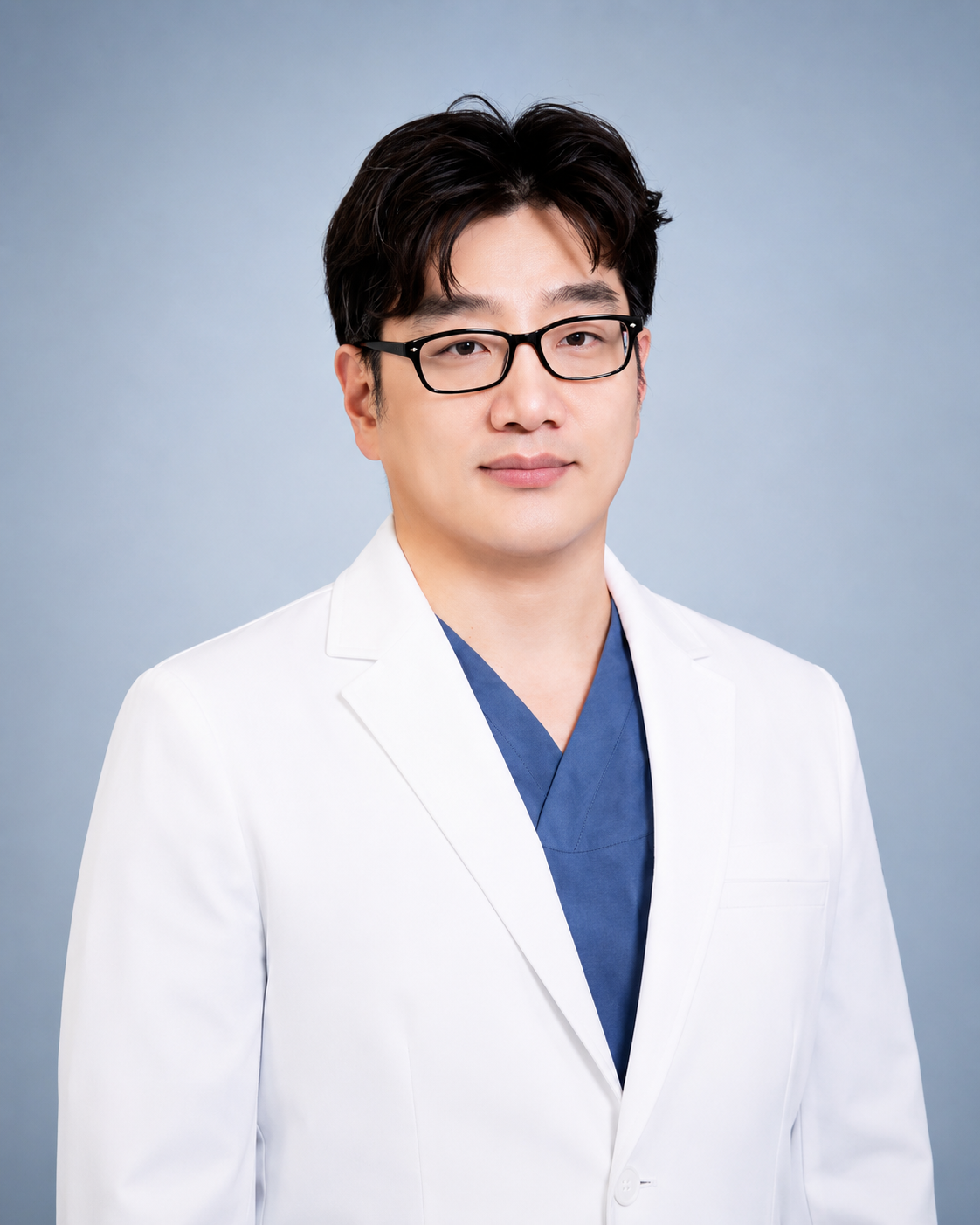
Dr. Yoon Jung-wook
Full Member, Korean Society of Aesthetic Plastic Surgery
Full Member, Korean Society for Aesthetic Plastic Surgery & Laser Medicine
Full Member, Korean Society of Obesity & Body Contouring
Former Neurosurgery Resident (3rd Year), Dong-A University Hospital
Former Intern, Dong-A University Hospital
Former Chief Director, Forever Plastic Surgery & Dermatology (Changwon)
Former Chief Director, Lovely Plastic Surgery & Dermatology (Changwon)
Former Director, Insta Plastic Surgery & Dermatology (Gimhae)
Former Director, Dr. Yoon Beauty Center (Vietnam)
Vice Managing Director · Seomyeon Main Branch
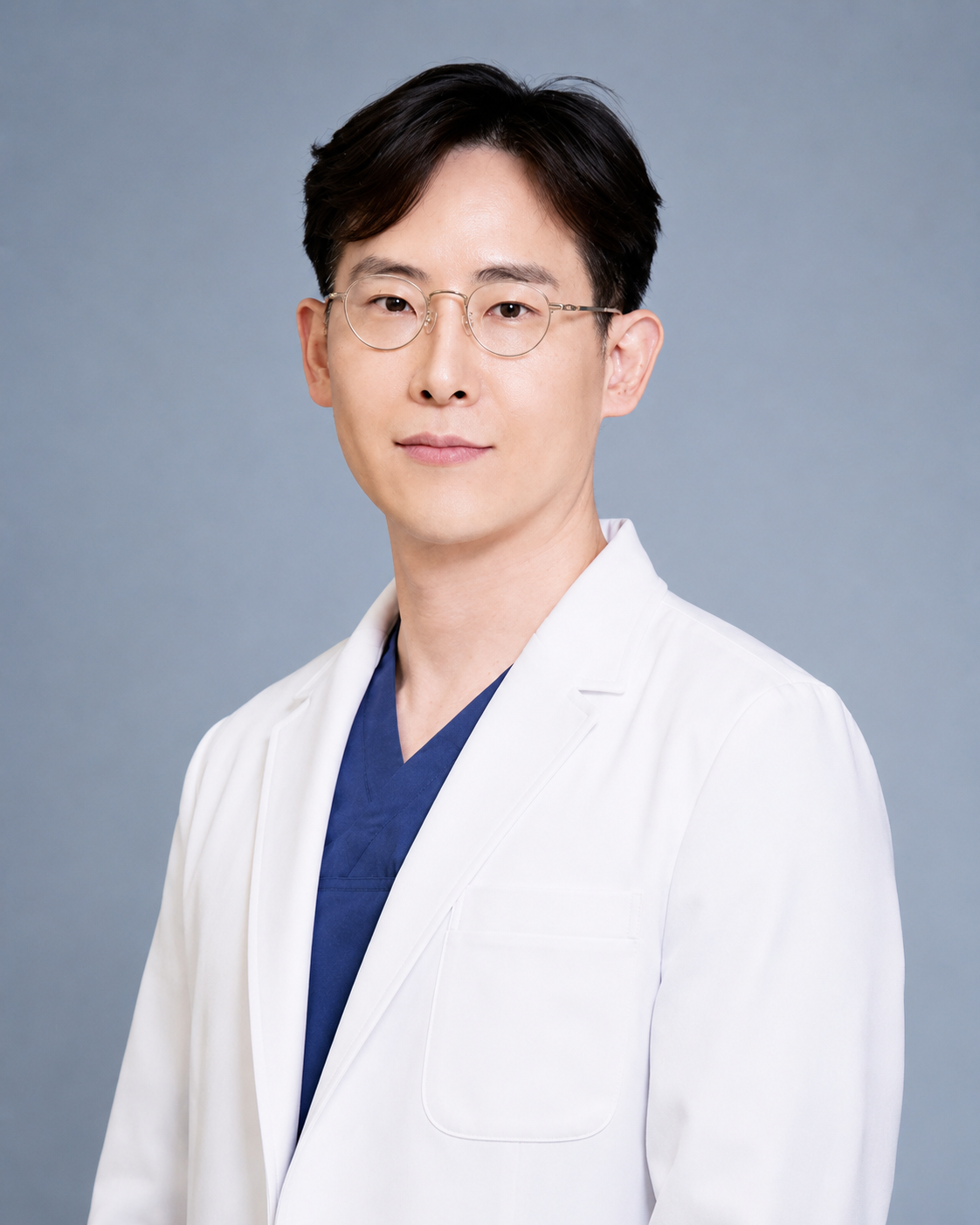
Dr. Jin Tae-wan
Former Director of Dermatology, MediWoman Women's Clinic
Former Director of Dermatology, Hangdo Quantum Clinic
Former Chief Director, AGE Clinic (formerly Paresa Clinic)
Former Chief Director, One Clinic (Guro)
Former Director, One Clinic (Gangnam)
Former Chief Director, SKY Plastic Surgery (Jongno)
Former Visiting Physician, Guangfu Aesthetic Plastic Surgery Hospital (Dalian, China)
Former Associate Director, Tokeshi Plastic Surgery
Former Associate Director, Midam Dermatology Clinic
Former Associate Director, Noble Line Plastic Surgery
Former Associate Director, Jeniva Plastic Surgery
Former Military Flight Surgeon, ROK Army Aviation Operations Command
Former Intern & Resident, Kangdong Sacred Heart Hospital
Before You Book
Questions patients ask first.
Rarely. Most cases clear within two to four months with appropriate management, and the great majority within a year. Persistent cases are usually ones where sun exposure continued or where repeated aggressive treatment kept retriggering the response.
Yes, and more than any product step. Broad-spectrum SPF50 reapplied through the day, and tinted mineral formulations specifically, since iron oxides block visible light which drives pigment even when UV is controlled. Patients who skip this and report the laser failed have usually undone it themselves.
Prescribed topical therapy has a role and is often started alongside a pigment course rather than after a problem. Over-the-counter brightening products vary enormously and some irritate, which is counterproductive — irritation is exactly the trigger you are trying to avoid.
Frequently, and it is the most common cause overall. Marks left by healed spots are PIH rather than scarring, and they respond to gentle toning more readily than texture does. Active acne needs controlling first — see acne scar treatment.
It should be for higher Fitzpatrick types and higher energies. It is not universal, and it is what gets skipped when a clinic is working to a schedule rather than to the skin in front of it. Ask.
Differently rather than less effectively — lower energy across more sessions reaches the same endpoint more slowly. What would be a failure is treating cautiously and then not completing the course, which leaves you with cost and no result.
Season more than age. Summer treatment carries higher risk because of ambient UV and because compliance with sun avoidance is harder. Late autumn through early spring is the safer window for pigment work in Korea.
Usually yes, once the existing pigment has stabilised, and often the low-energy protocol treats both the original concern and the mark. What is avoided is aggressive treatment over active PIH, which reliably makes it worse.
Doctor-led planning across six categories. Foreign patients pay the same as local patients — what changes a final figure is units and area, never nationality.
JRYN Seomyeon
· 4F Samjeong Tower, 672 Jungang-daero · 5 min from Seomyeon Station Exit 2 · 2 min from Seomyeon Mall Exit 16 · 6 min from Lotte Department Store Busan Main · 8 min from Jeonpo Cafe Street · inside Seomyeon Medical Street · open through lunch, seven days a week
Ready When You Are
Send your dates, get a plan before you fly.
Message us on WhatsApp with what you would like to address and when you will be in Busan. You will get an honest read in your language — including whether the treatment you have in mind is the right one.