Excessive sweating treatment in Busan Seomyeon, and what each option actually does.
Underarms, palms and soles respond differently, and the treatment ladder runs from topical to surgical. This sets out what each step achieves, how long it lasts, and which cases genuinely need the next rung.
A functional treatment with unusually high satisfaction
On This Page
Step one — topical antiperspirants
Step two — botulinum toxin
Why do underarms last so much longer?
What is involved for palms?
Why do people wait so long to treat this?
How does this compare with other functional treatment?
Step three — oral medication
Step four — surgery
Does treatment cause sweating elsewhere?
Is it harmful to stop sweating in one area?
What should a first consultation cover?
This is the treatment patients here are least ambivalent about, because the motivation is functional rather than cosmetic. It is also the one people delay longest, often having managed around it for years without knowing it is straightforwardly treatable.
Does This Sound Familiar?
What patients say about sweating
I have ruined shirts and I plan outfits around it.
My hands are wet enough that shaking hands is awkward.
Prescription antiperspirant made my skin raw and did not work.
Is surgery the only real solution?
How long does one treatment actually last?
All five come up most weeks, and the fourth has an answer that saves people from an operation they may not need. The sections below work up the ladder.
Step one — topical antiperspirants
Aluminium-based prescription antiperspirants block the sweat duct mechanically and are the reasonable first step for mild to moderate underarm sweating. They work for a proportion of patients and irritate a substantial minority, producing the raw, itchy skin many people describe. They do very little for palms and soles, where the skin is too thick for meaningful penetration.
Step two — botulinum toxin
Blocks the nerve signal to the sweat glands in the treated area, stopping production rather than blocking the duct. Underarm treatment
produces six to eight months of dryness from one session, which is the longest-lasting effect of any botox area. Palms and soles respond equally well and last four to six months, since the tissue is more active.
Why do underarms last so much longer?
Because eccrine glands regenerate their nerve supply slowly and the underarm area is relatively protected from mechanical stress. Palms and soles are in constant use and turn over faster. That is why an underarm patient often treats once or twice a year while a palm patient treats two to three times — a difference worth planning around rather than discovering.
What is involved for palms?
A nerve block, because palms are among the most sensitive areas on the body and topical cream does not reach adequately. Local anaesthetic placed at the wrist numbs the whole hand, which makes the treatment comfortable and adds about thirty minutes to the appointment. The block wears off over several hours, so fine hand control is reduced for the rest of the day — worth planning around — see numbing and anaesthesia.
Why do people wait so long to treat this?
Because it rarely feels like a medical problem. Patients describe fifteen or twenty years of choosing dark shirts, carrying spares, avoiding handshakes and declining situations where their hands would be noticed — an accumulation of small adjustments that never quite reaches the threshold of booking an appointment. It is also not widely known that a straightforward treatment exists, since botox
is marketed almost entirely as cosmetic. Of everything offered here, this is the treatment where the gap between how much it improves daily life and how little it is discussed is widest.
Palms need a nerve block — worth knowing beforehand
How does this compare with other functional treatment?
It sits alongside masseter treatment for grinding
and trapezius treatment for shoulder tension
as the three cases where the same molecule is used for a problem rather than an appearance. All three have unusually high satisfaction rates for the same reason — the patient can tell whether it worked without looking in a mirror. Patients who arrive for one of the three frequently ask about the others once they realise the same mechanism applies, and combining them in one visit is straightforward since the areas do not interact.
Step three — oral medication
Anticholinergics reduce sweating systemically and are prescribed where the problem is generalised rather than localised. They work, and the side effects — dry mouth, blurred vision, constipation — mean many patients stop. They are a reasonable option for widespread sweating that no localised treatment can reach, and a poor first choice for a problem confined to two areas.
Step four — surgery
Endoscopic thoracic sympathectomy cuts the sympathetic nerve chain and permanently stops sweating in the treated distribution. It works, and the recognised complication is compensatory sweating elsewhere on the body, which a significant proportion of patients find worse than the original problem. It is the last rung for a reason, and patients who have not tried botulinum toxin should generally do so before considering it.
Does treatment cause sweating elsewhere?
Not with botulinum toxin, which is one of its advantages over surgery. Only the treated glands are affected and the body does not compensate by redirecting sweat to other areas. Compensatory sweating is a specifically surgical complication arising from cutting the nerve chain rather than from blocking glands locally.
Is it harmful to stop sweating in one area?
No. The underarms and palms account for a very small proportion of total sweat production and the body regulates temperature perfectly well without them. Patients occasionally worry that suppressed sweat is being trapped or redirected internally, which is not what happens — the glands simply do not produce.
What should a first consultation cover?
Which areas are affected and how severely, what has already been tried, whether sweating is generalised or localised, and whether it began suddenly — sudden onset in adulthood occasionally has a medical cause worth investigating rather than treating cosmetically. Where the picture is straightforward primary hyperhidrosis, treatment is same-day — see same-day treatment.
Our Medical Team
Who will actually treat you at JRYN Seomyeon?
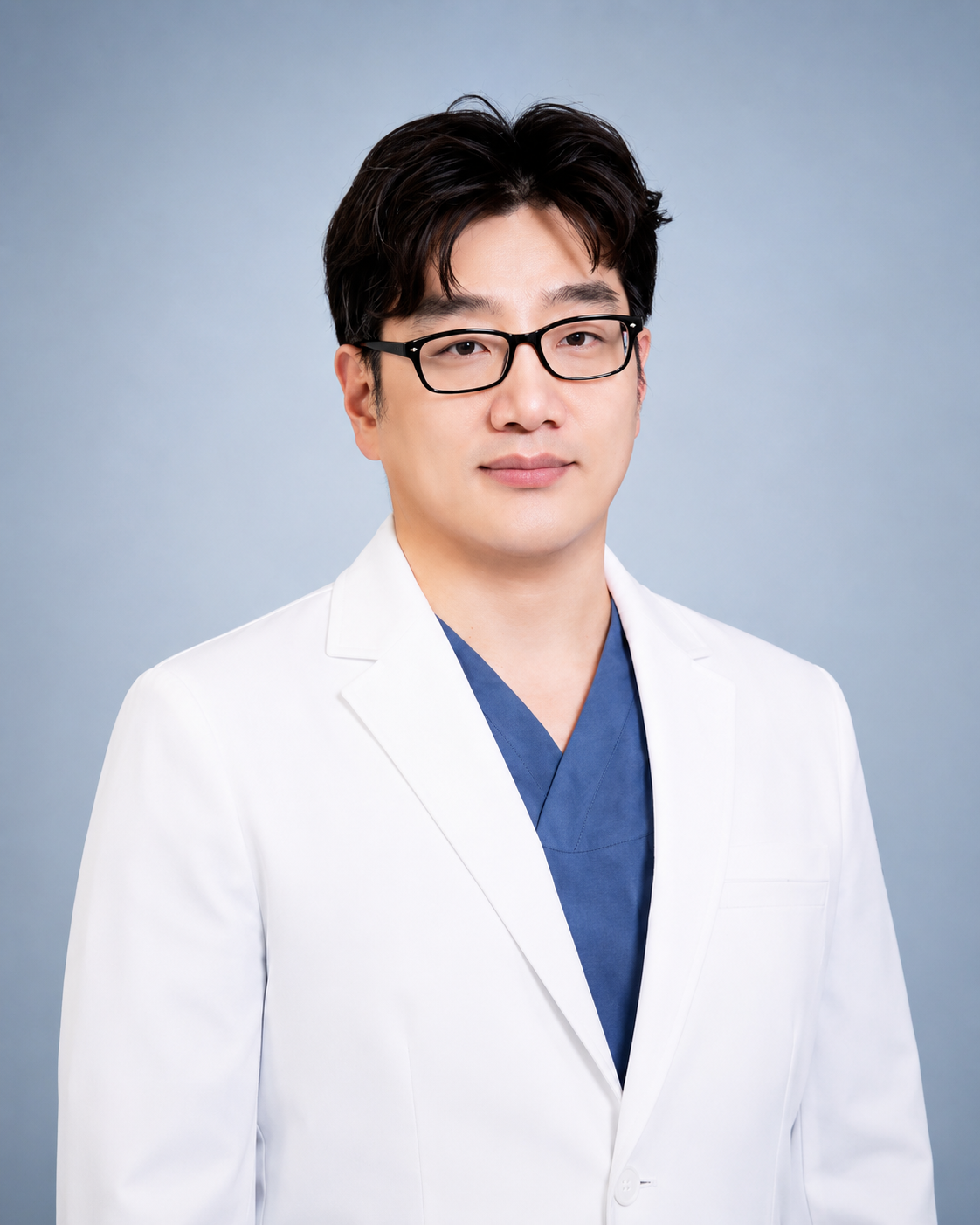
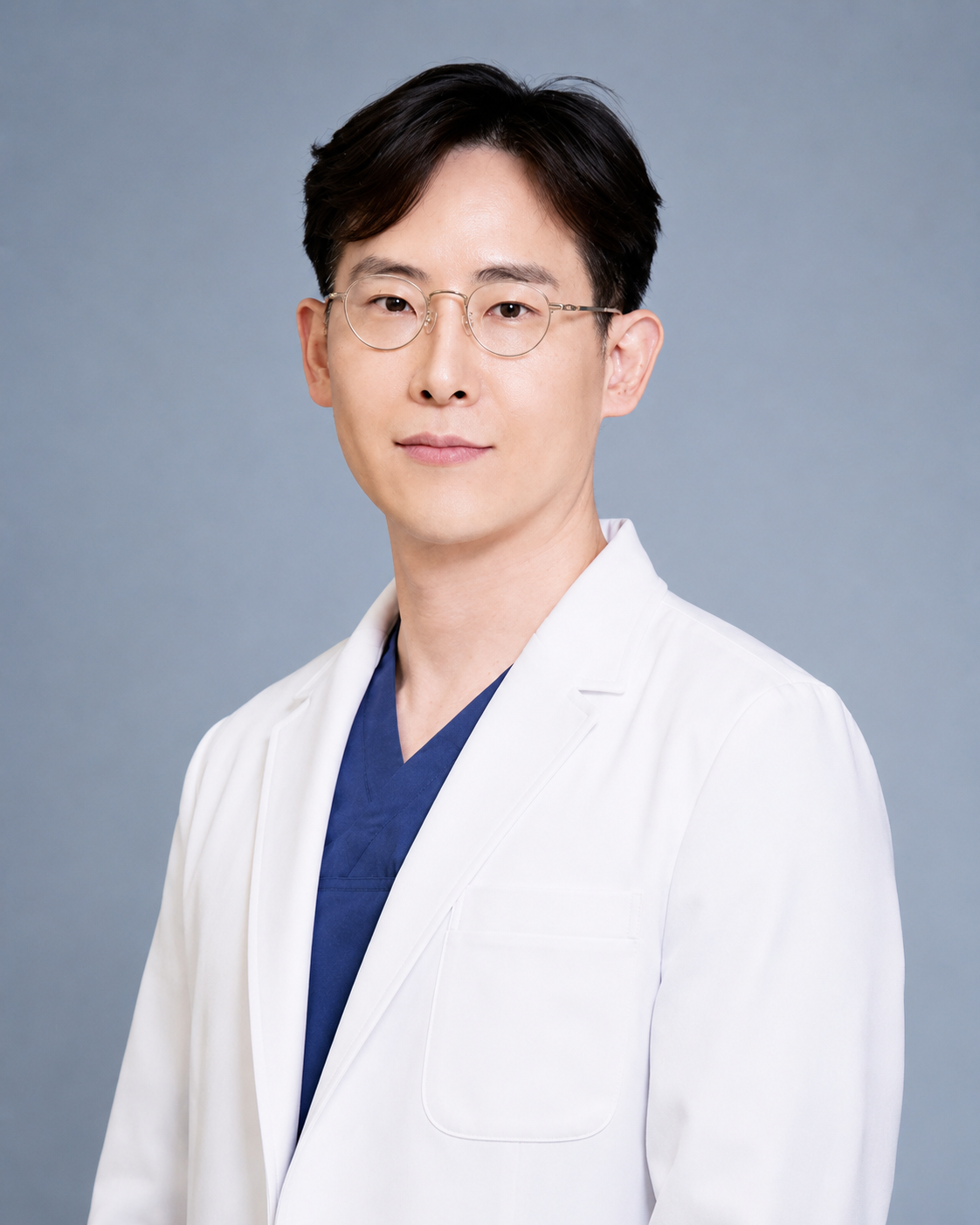
A doctor, in person, every time — never a nurse or a coordinator. JRYN Seomyeon has three doctors, and the clinic was founded by Dr. Jeong Heon Lee, who still consults here. What you actually need is decided during the consultation after your skin is examined, not from a fixed package chosen in advance.
Three doctors, one standard of care.
Every treatment plan at JRYN Seomyeon is decided and performed in person by one of our doctors — led by Dr. Jeong Heon Lee, founder of JRYN Dermatology.
From the Founder
The consultation is the treatment.
Most patients arrive asking for a specific treatment. My job is to check whether it is the right one for what they actually have. Getting that wrong is the most common mistake I correct.
Graduated from Inje University
Current Head of the JRYN Network
Current Chief Director of JRYN Seomyeon
Former Chief Director of Lin Clinic
Former Chief Director of Centum Lin Clinic
Managing Director · Seomyeon Main Branch
Dr. Yoon Jung-wook
Full Member, Korean Society of Aesthetic Plastic Surgery
Full Member, Korean Society for Aesthetic Plastic Surgery & Laser Medicine
Full Member, Korean Society of Obesity & Body Contouring
Former Neurosurgery Resident (3rd Year), Dong-A University Hospital
Former Intern, Dong-A University Hospital
Former Chief Director, Forever Plastic Surgery & Dermatology (Changwon)
Former Chief Director, Lovely Plastic Surgery & Dermatology (Changwon)
Former Director, Insta Plastic Surgery & Dermatology (Gimhae)
Former Director, Dr. Yoon Beauty Center (Vietnam)
Vice Managing Director · Seomyeon Main Branch
Dr. Jin Tae-wan
Former Director of Dermatology, MediWoman Women's Clinic
Former Director of Dermatology, Hangdo Quantum Clinic
Former Chief Director, AGE Clinic (formerly Paresa Clinic)
Former Chief Director, One Clinic (Guro)
Former Director, One Clinic (Gangnam)
Former Chief Director, SKY Plastic Surgery (Jongno)
Former Visiting Physician, Guangfu Aesthetic Plastic Surgery Hospital (Dalian, China)
Former Associate Director, Tokeshi Plastic Surgery
Former Associate Director, Midam Dermatology Clinic
Former Associate Director, Noble Line Plastic Surgery
Former Associate Director, Jeniva Plastic Surgery
Former Military Flight Surgeon, ROK Army Aviation Operations Command
Former Intern & Resident, Kangdong Sacred Heart Hospital
Before You Book
Questions patients ask first.
Typically 50 to 100 per underarm and similar per palm, mapped to the affected area rather than applied uniformly. A starch-iodine test can be used to define the area precisely — see how to read a price list.
Two to four days for a noticeable reduction, full effect at one to two weeks. Faster than most botox areas.
Palm treatment can produce mild temporary weakness in fine pinch grip for a few weeks in some patients. It resolves, and dosing is adjusted for patients whose work depends on fine hand control.
Yes, and it is common. Adding the nerve block for palms extends the appointment — allow around ninety minutes for both.
None. Occasional tenderness at injection sites for a day. Normal activity immediately — see no-downtime treatments.
Usually yes, since the mechanism is entirely different — blocking production rather than blocking the duct. Failed topical treatment is not a predictor of failed botulinum toxin.
Substantially for most patients, since bacteria producing odour depend on moisture. It is a common secondary benefit rather than the primary indication.
Treatment for diagnosed hyperhidrosis has a licensed indication in many countries and coverage varies. Korean national insurance does not cover it for foreign or local patients here — receipts are provided for claims elsewhere.
Doctor-led planning across six categories. Foreign patients pay the same as local patients — what changes a final figure is units and area, never nationality.
JRYN Seomyeon
· 4F Samjeong Tower, 672 Jungang-daero · 5 min from Seomyeon Station Exit 2 · 2 min from Seomyeon Mall Exit 16 · 6 min from Lotte Department Store Busan Main · 8 min from Jeonpo Cafe Street · inside Seomyeon Medical Street · open through lunch, seven days a week
Ready When You Are
Send your dates, get a plan before you fly.
Message us on WhatsApp with what you would like to address and when you will be in Busan. You will get an honest read in your language — including whether the treatment you have in mind is the right one.