4F, Samjeong Tower, 672 Jungang-daero, Busanjin-gu, Busan, Korea
How It Works · Seomyeon, Busan · Foreigner-Friendly
Korean and East Asian skin in Busan Seomyeon, and what actually differs.
Three genuine structural differences, one large clinical consequence and a good deal of marketing built on top. This separates what is real from what is sold, and explains why protocols here differ from Western ones.
Protocols reflect the skin rather than the passport
On This Page
Difference one — a thicker dermis
Difference two — more reactive melanocytes
Difference three — higher sebaceous activity
What follows clinically
If I am Caucasian, do these protocols suit me?
The reverse direction, which matters more
Why is this framed around skin rather than nationality?
What does this mean for choosing where to be treated?
What is marketing rather than biology
What is not a difference at all
How this shapes a consultation here
Patients arriving from Western countries ask whether Korean expertise transfers to their skin, and patients of East Asian descent ask whether treatment developed elsewhere suits theirs. Both questions have the same answer once the actual differences are set out.
Does This Sound Familiar?
What patients ask about skin type
Are Korean treatments designed for Korean skin only?
I am Caucasian. Will the protocols suit me?
My skin marks easily after any irritation.
Is Korean skin really thicker?
Why does everything here mention pigmentation?
All five come up most weeks, and the answers are more overlapping than the questions assume. The sections below set out the differences.
Difference one — a thicker dermis
East Asian skin has, on average, a thicker dermis with denser collagen than Northern European skin. That translates into slower visible wrinkling — lines appear later and shallower for the same age — and it is the main reason ageing presents differently. What it does not mean is slower ageing overall: laxity and volume loss proceed on the same schedule and become the dominant complaint instead of lines.
Difference two — more reactive melanocytes
The clinically important one. Melanocytes in higher Fitzpatrick types respond more strongly to inflammation, which is why post-inflammatory hyperpigmentation
is the complication that shapes every laser protocol here. It is also why melasma
is more prevalent and why energy settings across the board run lower than a Western textbook would suggest.
Difference three — higher sebaceous activity
Sebum output is higher on average, particularly through the central face, which produces the oily-and-congested presentation that makes microbotox
more established here than elsewhere. Combined with a humid summer climate, that is why pore appearance is among the most common presenting concerns in Korea and a comparatively minor one in drier markets.
What follows clinically
Lower fluence, longer intervals and a test pass on anything pigment-related. A preference for picosecond platforms, since shorter pulses reduce heat diffusion. Melasma protocols built around control rather than clearance. And a treatment mix weighted toward lifting and volume rather than toward line reduction, because lines arrive later — see how lasers work.
If I am Caucasian, do these protocols suit me?
Largely yes, and with a caveat worth stating. Korean clinics see Fitzpatrick III to IV constantly and lighter types regularly, since foreign patients are a meaningful share of practice here. What is less familiar is Fitzpatrick I skin at the very light end, where higher energies are tolerated than local protocols habitually use — which usually means conservative treatment producing a slower result rather than any risk.
Fitzpatrick type is assessed, not assumed from ethnicity
The reverse direction, which matters more
Less reliably, and this is the more consequential direction. Settings that clear a lentigo safely on Fitzpatrick II can provoke weeks of darkening on type IV, and a clinician treating higher types occasionally is working from a narrower base. This is the specific reason patients of East Asian descent living in Western countries frequently seek treatment here rather than at home.
Why is this framed around skin rather than nationality?
Because the variable that changes treatment is measurable and the category is not. Two patients described the same way ethnically can sit two Fitzpatrick types apart, and two patients from opposite sides of the world can respond identically. Protocols built around a passport rather than an assessment get both groups wrong — the light-skinned East Asian patient treated too cautiously and the darker-skinned European patient treated too aggressively. Asking what type you are, and being told a number rather than a reassurance, is what closes that gap — see clinic terms explained.
What does this mean for choosing where to be treated?
That the useful question is what the clinic sees regularly rather than where it is. A practice treating higher Fitzpatrick types daily has settings, intervals and test-pass habits built around them, which is a genuine advantage for anyone in that range regardless of where they live. The same logic works in reverse for very light skin. It also means the entire menu — botox, filler, lifting
and boosters
— is unaffected by this discussion, since only pigment-targeting treatment depends on it.
What is marketing rather than biology
Products described as formulated for Asian skin, which is a positioning claim rather than a formulation difference in most cases. Routines presented as Korean rather than as suited to a climate. And the implication that treatment developed in Korea is inherently gentler — settings are gentler for a specific reason, and the same device at the same settings behaves identically wherever it is used.
What is not a difference at all
The four layers of ageing, the collagen response curve, the mechanism of every device and injectable, and the way results should be judged. Biology does not vary by nationality. What varies is the parameters chosen within it, which is why the useful question is about your Fitzpatrick type rather than about your passport — see why faces age.
How this shapes a consultation here
Fitzpatrick type is assessed physically rather than inferred, and a history of marking after spots or scratches is asked about specifically since it predicts pigment response better than skin colour alone. Where a patient sits at either end of the range, settings are adjusted and a test pass used — see how a consultation works.
Our Medical Team
Who will actually treat you at JRYN Seomyeon?
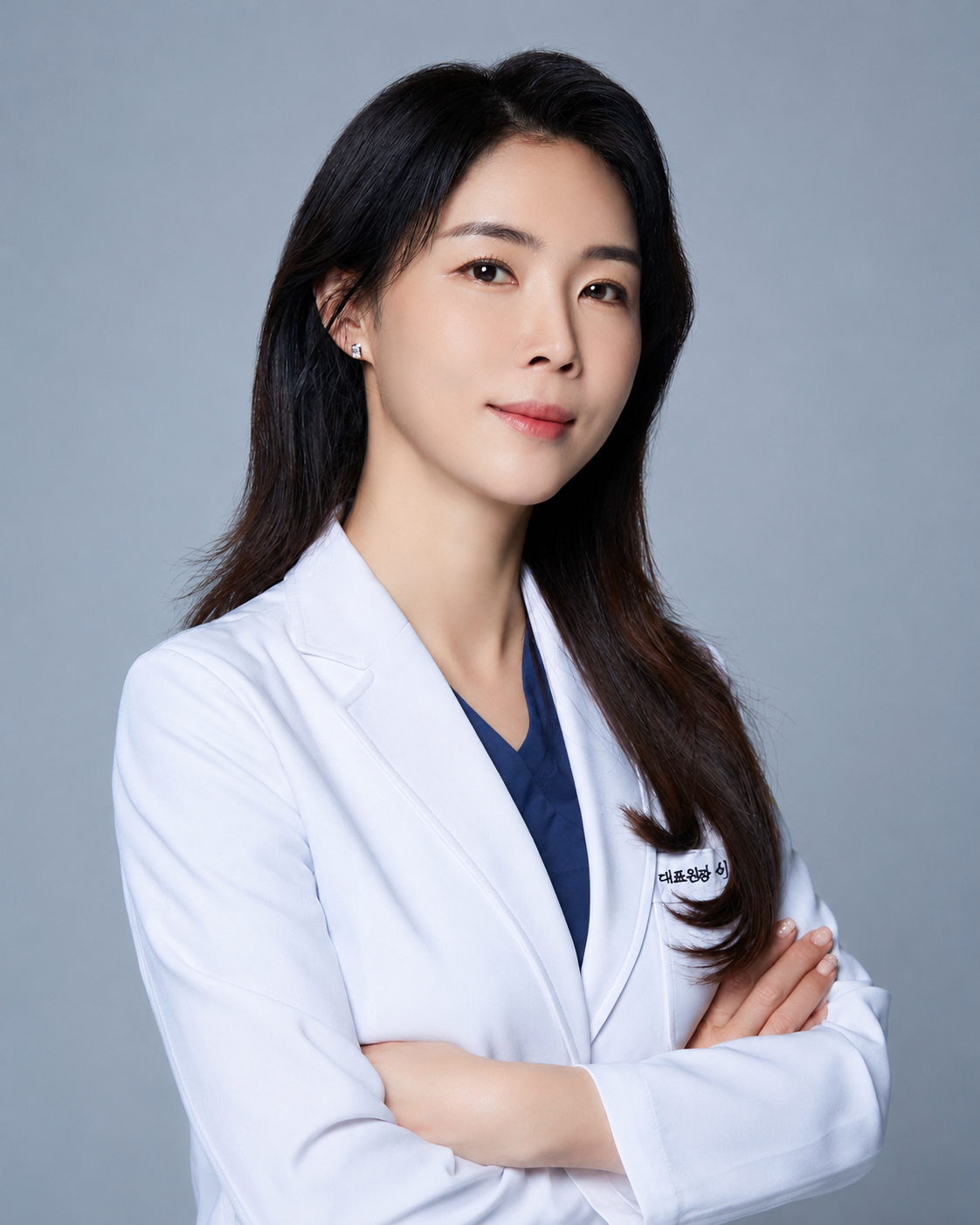
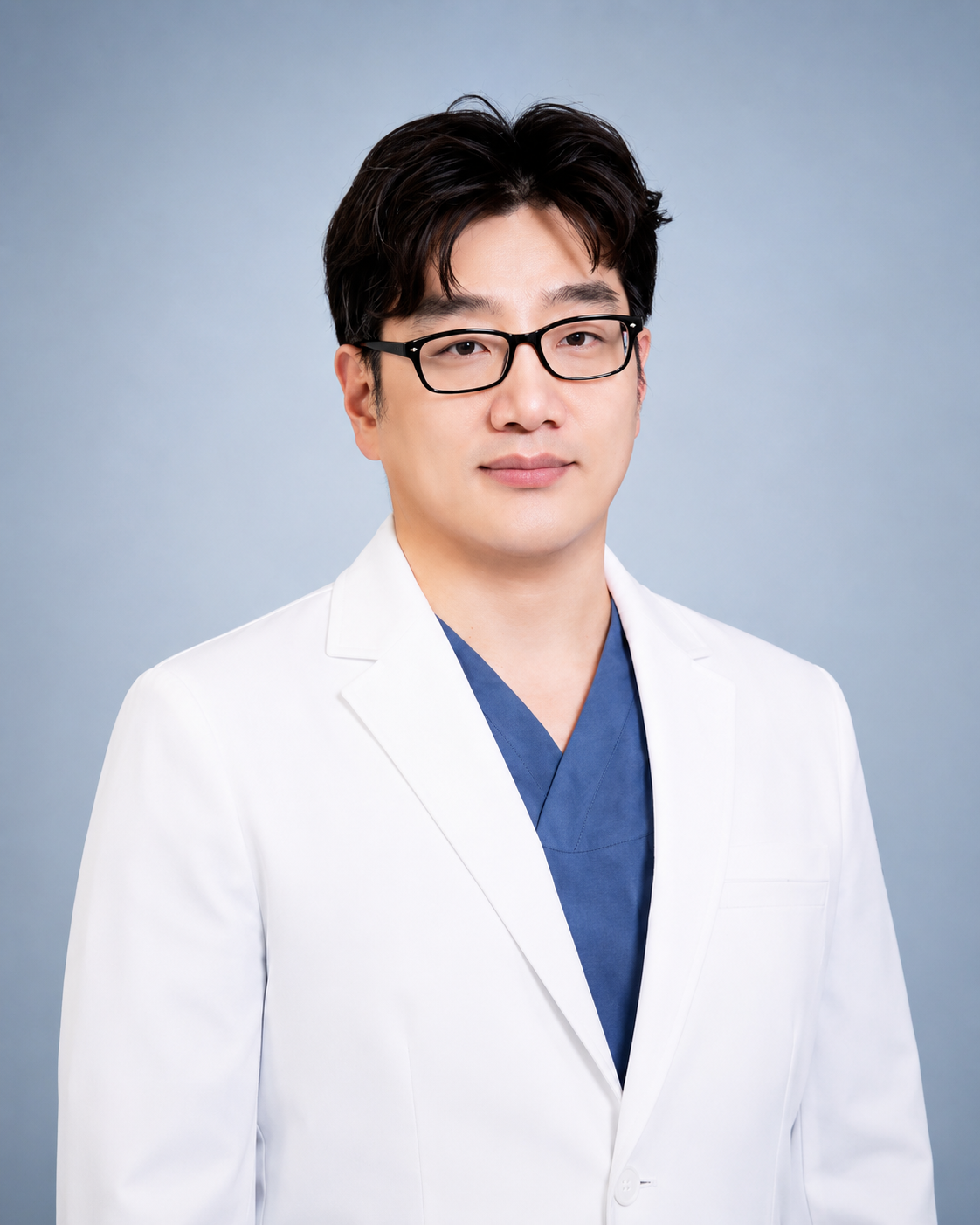
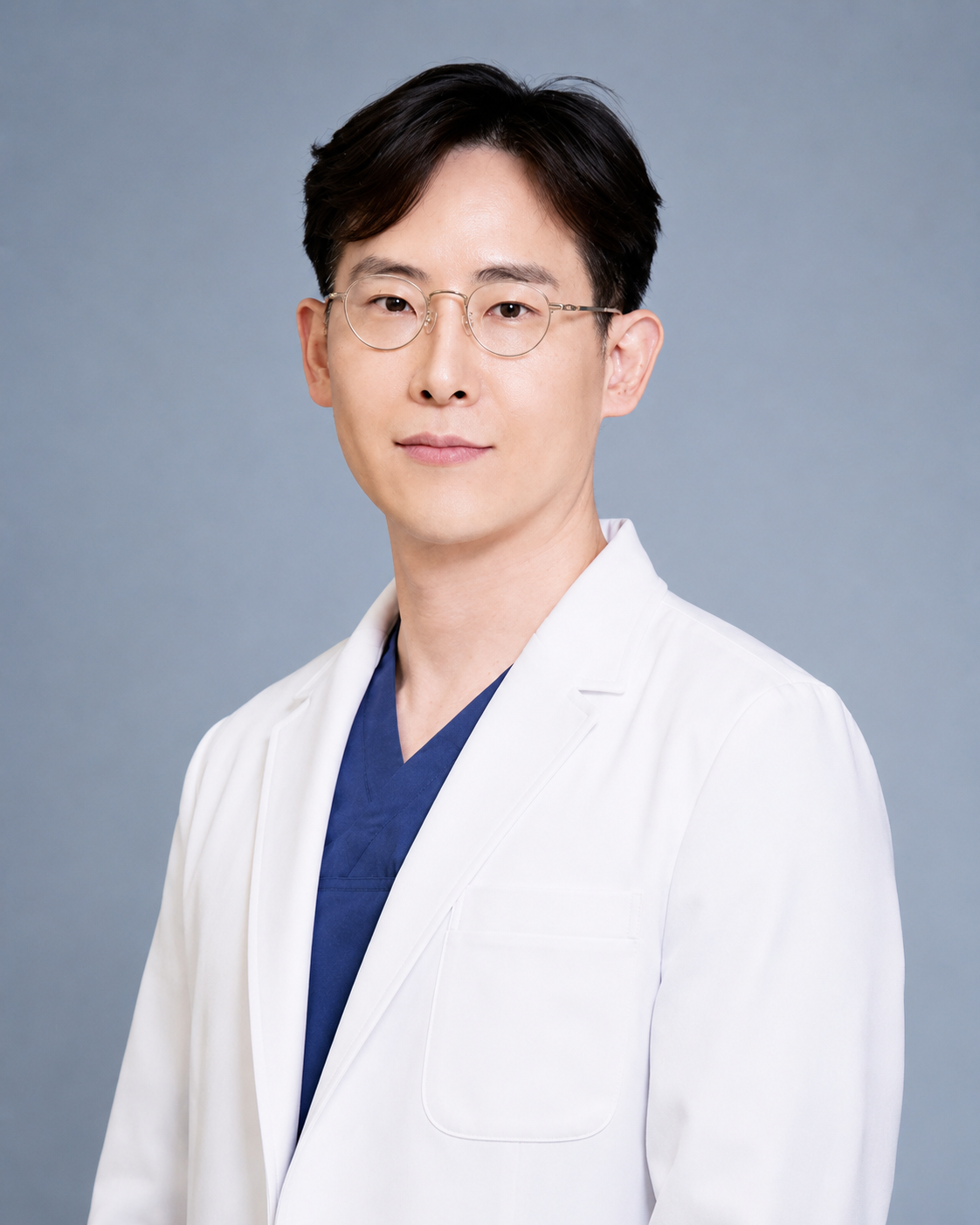
A doctor, in person, every time — never a nurse or a coordinator. JRYN Seomyeon has three doctors, and the clinic was founded by Dr. Jeong Heon Lee, who still consults here. What you actually need is decided during the consultation after your skin is examined, not from a fixed package chosen in advance.
Three doctors, one standard of care.
Every treatment plan at JRYN Seomyeon is decided and performed in person by one of our doctors — led by Dr. Jeong Heon Lee, founder of JRYN Dermatology.
From the Founder
The consultation is the treatment.
Most patients arrive asking for a specific treatment. My job is to check whether it is the right one for what they actually have. Getting that wrong is the most common mistake I correct.
Graduated from Inje University
Current Head of the JRYN Network
Current Chief Director of JRYN Seomyeon
Former Chief Director of Lin Clinic
Former Chief Director of Centum Lin Clinic
Managing Director · Seomyeon Main Branch
Dr. Yoon Jung-wook
Full Member, Korean Society of Aesthetic Plastic Surgery
Full Member, Korean Society for Aesthetic Plastic Surgery & Laser Medicine
Full Member, Korean Society of Obesity & Body Contouring
Former Neurosurgery Resident (3rd Year), Dong-A University Hospital
Former Intern, Dong-A University Hospital
Former Chief Director, Forever Plastic Surgery & Dermatology (Changwon)
Former Chief Director, Lovely Plastic Surgery & Dermatology (Changwon)
Former Director, Insta Plastic Surgery & Dermatology (Gimhae)
Former Director, Dr. Yoon Beauty Center (Vietnam)
Vice Managing Director · Seomyeon Main Branch
Dr. Jin Tae-wan
Former Director of Dermatology, MediWoman Women's Clinic
Former Director of Dermatology, Hangdo Quantum Clinic
Former Chief Director, AGE Clinic (formerly Paresa Clinic)
Former Chief Director, One Clinic (Guro)
Former Director, One Clinic (Gangnam)
Former Chief Director, SKY Plastic Surgery (Jongno)
Former Visiting Physician, Guangfu Aesthetic Plastic Surgery Hospital (Dalian, China)
Former Associate Director, Tokeshi Plastic Surgery
Former Associate Director, Midam Dermatology Clinic
Former Associate Director, Noble Line Plastic Surgery
Former Associate Director, Jeniva Plastic Surgery
Former Military Flight Surgeon, ROK Army Aviation Operations Command
Former Intern & Resident, Kangdong Sacred Heart Hospital
Before You Book
Questions patients ask first.
No. It describes UV response and varies substantially within any ethnic group. It is assessed rather than assumed, which matters for mixed heritage and for anyone at the edges of a range.
No — the same assessment, protocols and published prices. What differs between any two patients is skin type and anatomy rather than nationality — see what foreign patients actually pay.
Formulations are generally light and well tolerated, which suits humid conditions. Nothing about them is specific to ethnicity — see skincare around treatment.
A thicker dermis delays visible wrinkling, and cultural sun protection habits are strong. Both are real; neither means the underlying process differs.
Clinical data is generated where products are developed, so Korean products have more East Asian data and less on other types. That is a data question rather than a suitability one — see MFDS approval.
By examination and by how your skin has behaved historically, particularly whether marks linger after inflammation. That history is more predictive than appearance.
Barely. Both work on structures that do not vary meaningfully by skin type. Dosing follows muscle bulk and anatomy — see how botulinum toxin works.
Mention your history — how you mark, how you tan, how you scar. That is the information that changes settings, and it is more useful than a category.
Doctor-led planning across six categories. Foreign patients pay the same as local patients — what changes a final figure is units and area, never nationality.
JRYN Seomyeon
· 4F Samjeong Tower, 672 Jungang-daero · 5 min from Seomyeon Station Exit 2 · 2 min from Seomyeon Mall Exit 16 · 6 min from Lotte Department Store Busan Main · 8 min from Jeonpo Cafe Street · inside Seomyeon Medical Street · open through lunch, seven days a week
Ready When You Are
Send your dates, get a plan before you fly.
Message us on WhatsApp with what you would like to address and when you will be in Busan. You will get an honest read in your language — including whether the treatment you have in mind is the right one.