4F, Samjeong Tower, 672 Jungang-daero, Busanjin-gu, Busan, Korea
Evidence · Seomyeon, Busan · Foreigner-Friendly
Reading before and after photographs in Busan Seomyeon, and the five things to check.
A result can be made to look considerably better or worse without any change to the treatment. Knowing which variables were controlled tells you whether you are looking at evidence or at marketing.
Almost every clinic publishes these and almost none state the conditions. Five checks take a few seconds each and change how much weight a photograph deserves — including the ones we publish.
Does This Sound Familiar?
What patients notice about result photos
The after photo always looks better lit than the before.
How do I know that is even the same person?
Some clinics show dramatic results and some show subtle ones.
I cannot tell whether my own result changed anything.
Are the photos edited?
All five come up most weeks, and the fourth is the one this page helps most with. The sections below give the checks.
Check one — lighting
The largest variable and the easiest to exploit. Flat frontal lighting fills shadow and flatters; directional overhead lighting deepens every line and hollow. A before photograph under a ceiling light and an after under diffuse studio light shows an improvement that no treatment produced. Look at where shadows fall — if they differ between the two images, the lighting differed and the comparison is not one.
Check two — angle and head position
A chin lifted a few degrees tightens the jawline visibly. Head tilted back reduces under-eye shadow. A camera held slightly higher slims the lower face. None of these require intent to mislead and all of them change the apparent result. Genuine comparison photographs are taken from a fixed camera position with the head in a standardised orientation.
Check three — expression
A relaxed before and a slightly smiling after changes the midface entirely. More subtly, a raised brow lifts the upper face while lowered brows heavy it. Both images should show the same expression, and for anything treating dynamic lines both should show the muscle in the same state — an at-rest before against an at-rest after, or contracted against contracted.
Check four — the interval
A stated interval is the single best sign of an honest set. Results photographed at the correct point for the treatment mean something; results photographed at an arbitrary point may be showing swelling rather than effect. Filler
at day one is swollen rather than improved. Lifting
at week two shows almost nothing of what will arrive at month three. Jaw botox
at two weeks is too early — see how long results last.
Check five — make-up and hair
A bare-faced before against a made-up after is not a comparison of treatment. Foundation, contouring and lash definition change a face more than most single treatments do, and hair pulled back in one image and framing the face in the other alters the perceived shape. Both photographs should show the same preparation, which in practice means neither wearing make-up.
Judge your own results the same way
Are results edited?
Sometimes, and more often smoothed than reshaped. Skin-smoothing filters are applied by default on many phone cameras without the user choosing them, so an image can be edited without anyone intending it. This is a further argument for fixed clinic conditions rather than photographs taken casually — see dull skin and the glass skin idea.
Why do some clinics show dramatic results?
Selection, mostly. Any clinic publishes its best outcomes, which is reasonable, and the range of what treatment achieves is genuinely wide — a patient with significant volume loss shows more change than one with mild laxity. What is worth noticing is whether a set shows a spread of outcomes or only the extremes, and whether the treatments and volumes are stated alongside.
Why does this matter more for foreign patients?
Because a photograph is often the only evidence available before committing to a trip. A local patient can visit, consult and decide over weeks; someone booking from abroad is weighing images against a flight. That asymmetry makes the checks above worth more here than they would be at home, and it is why what a clinic states about conditions matters as much as what the images show — see booking in English.
What is the fastest way to spot a weak set?
Look at the background rather than the face. If the wall, the chair or the crop differs between the two images, the camera moved — and if the camera moved, so did the angle and probably the lighting. A genuine pair looks almost boringly identical apart from the face itself. That one glance takes a second and catches most of the problems the five checks above describe, which makes it the useful shortcut when scanning a page of examples rather than studying one pair closely.
How should I judge my own result?
Photograph yourself under consistent conditions before treatment — same room, same time of day, same distance, no make-up, neutral expression, front and both profiles. Repeat at the correct interval for the treatment. This is the single most useful thing patients neglect, and it converts a later conversation about a result from a disagreement about memory into a comparison of two images.
What we publish and how
Photographs taken under fixed lighting from a fixed camera position, at the interval appropriate to the treatment, with treatment and volume stated. Results are not smoothed. That description is itself checkable — a set without stated intervals or with visibly different lighting between images is worth discounting wherever it appears, including here — see before and after.
Our Medical Team
Who will actually treat you at JRYN Seomyeon?
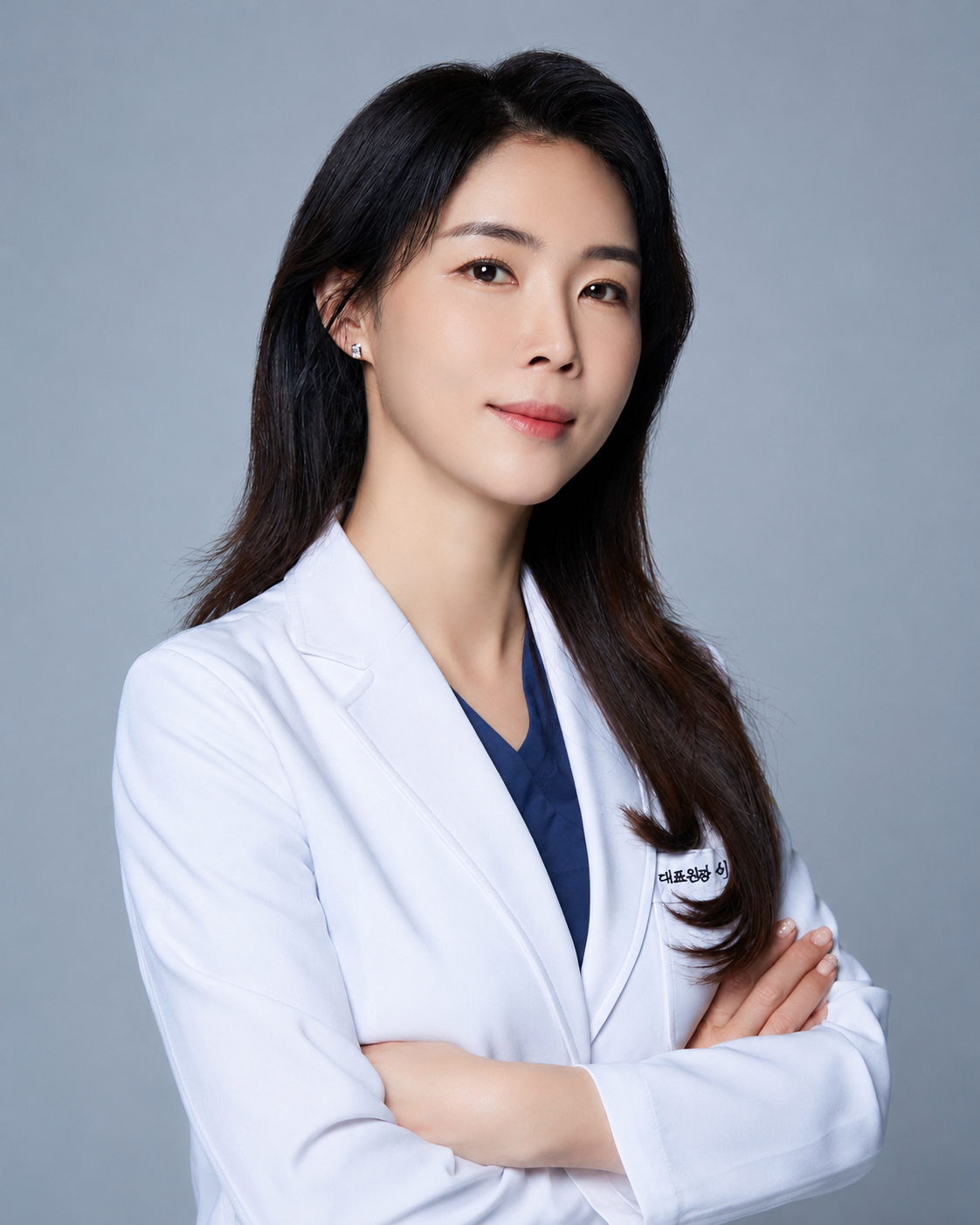
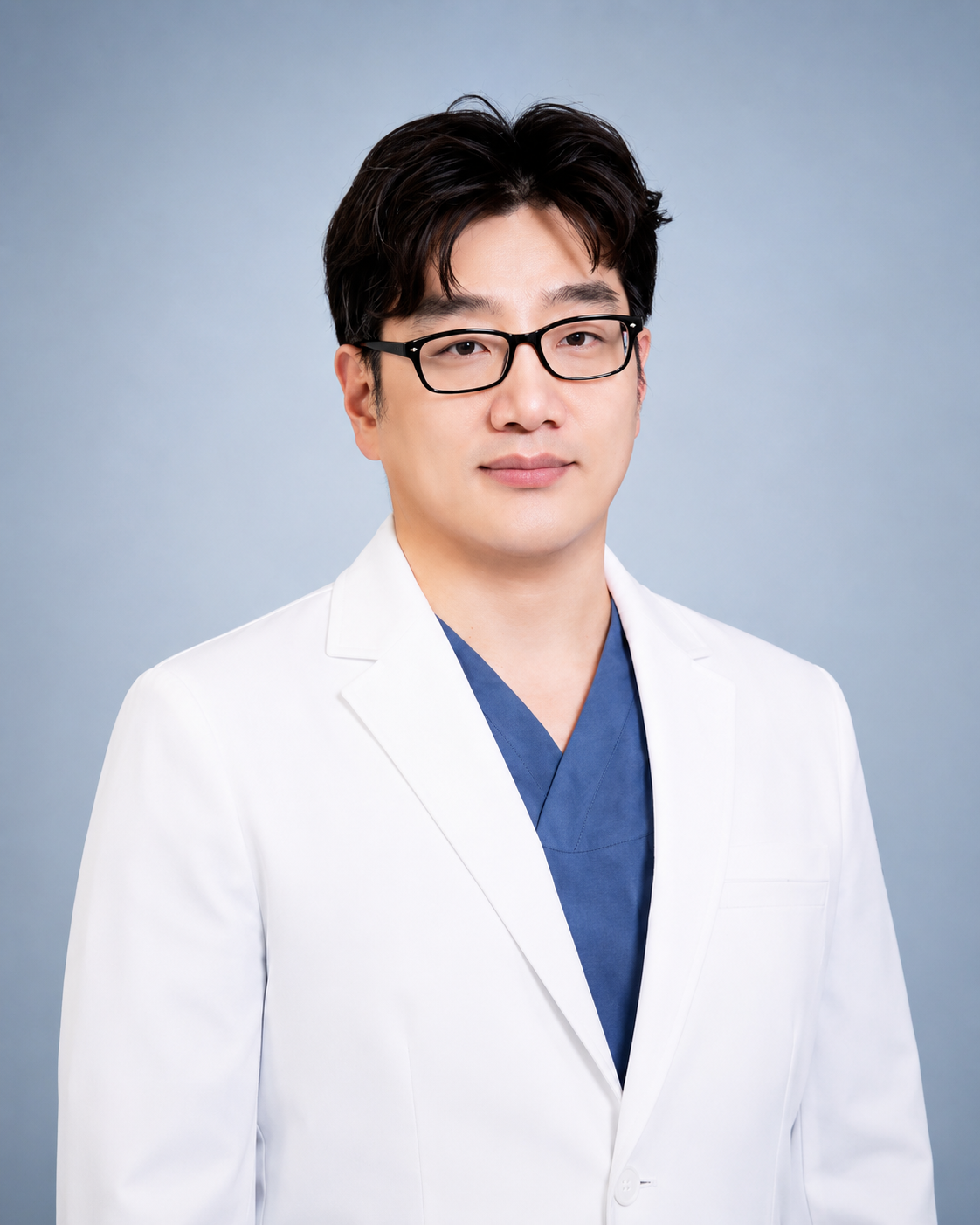
A doctor, in person, every time — never a nurse or a coordinator. JRYN Seomyeon has three doctors, and the clinic was founded by Dr. Jeong Heon Lee, who still consults here. What you actually need is decided during the consultation after your skin is examined, not from a fixed package chosen in advance.
Three doctors, one standard of care.
Every treatment plan at JRYN Seomyeon is decided and performed in person by one of our doctors — led by Dr. Jeong Heon Lee, founder of JRYN Dermatology.
From the Founder
The consultation is the treatment.
Most patients arrive asking for a specific treatment. My job is to check whether it is the right one for what they actually have. Getting that wrong is the most common mistake I correct.
Graduated from Inje University
Current Head of the JRYN Network
Current Chief Director of JRYN Seomyeon
Former Chief Director of Lin Clinic
Former Chief Director of Centum Lin Clinic
Managing Director · Seomyeon Main Branch
Dr. Yoon Jung-wook
Full Member, Korean Society of Aesthetic Plastic Surgery
Full Member, Korean Society for Aesthetic Plastic Surgery & Laser Medicine
Full Member, Korean Society of Obesity & Body Contouring
Former Neurosurgery Resident (3rd Year), Dong-A University Hospital
Former Intern, Dong-A University Hospital
Former Chief Director, Forever Plastic Surgery & Dermatology (Changwon)
Former Chief Director, Lovely Plastic Surgery & Dermatology (Changwon)
Former Director, Insta Plastic Surgery & Dermatology (Gimhae)
Former Director, Dr. Yoon Beauty Center (Vietnam)
Vice Managing Director · Seomyeon Main Branch
Dr. Jin Tae-wan
Former Director of Dermatology, MediWoman Women's Clinic
Former Director of Dermatology, Hangdo Quantum Clinic
Former Chief Director, AGE Clinic (formerly Paresa Clinic)
Former Chief Director, One Clinic (Guro)
Former Director, One Clinic (Gangnam)
Former Chief Director, SKY Plastic Surgery (Jongno)
Former Visiting Physician, Guangfu Aesthetic Plastic Surgery Hospital (Dalian, China)
Former Associate Director, Tokeshi Plastic Surgery
Former Associate Director, Midam Dermatology Clinic
Former Associate Director, Noble Line Plastic Surgery
Former Associate Director, Jeniva Plastic Surgery
Former Military Flight Surgeon, ROK Army Aviation Operations Command
Former Intern & Resident, Kangdong Sacred Heart Hospital
Before You Book
Questions patients ask first.
Not necessarily a problem. Many patients decline consent to publication, particularly in a market where discretion matters. What a set proves is limited either way; what a clinic says about limits and what it declines to treat is more informative.
Weakly. They show selected outcomes under chosen conditions. More useful signals are whether prices and unit counts are published, whether products are named, and who performs the treatment — see who performs your treatment.
Filler at two weeks, botox at two weeks and jaw botox at eight, lifting at three months, a laser
course after the final session plus four weeks. Anything earlier is showing swelling or an incomplete response.
Medical advertising is regulated and rules on claims and imagery exist. Enforcement varies, which is why the checks on this page are worth making rather than assuming compliance.
Yes, and it is reasonable. Asking for examples of a patient with a similar starting point is more useful than asking for the most dramatic result available.
Different lighting, distance and default smoothing. A phone held closer distorts the nose and midface noticeably — which is why fixed-condition photographs matter for judging your own progress.
Yes, and it is worth doing even if the clinic photographs you. It gives you an independent record under conditions you controlled — see what to bring.
Compare photographs rather than memory. Gradual change is close to invisible day to day, and patients frequently underestimate what a treatment
did until they look back at an image.
Doctor-led planning across six categories. Foreign patients pay the same as local patients — what changes a final figure is units and area, never nationality.
JRYN Seomyeon
· 4F Samjeong Tower, 672 Jungang-daero · 5 min from Seomyeon Station Exit 2 · 2 min from Seomyeon Mall Exit 16 · 6 min from Lotte Department Store Busan Main · 8 min from Jeonpo Cafe Street · inside Seomyeon Medical Street · open through lunch, seven days a week
Ready When You Are
Send your dates, get a plan before you fly.
Message us on WhatsApp with what you would like to address and when you will be in Busan. You will get an honest read in your language — including whether the treatment you have in mind is the right one.