4F, Samjeong Tower, 672 Jungang-daero, Busanjin-gu, Busan, Korea
Redness · Seomyeon, Busan · Foreigner-Friendly
Facial redness in Busan Seomyeon, and which kind you actually have.
Flushing, background redness and discrete visible vessels respond to different settings and different expectations. This explains how they are told apart, what laser can and cannot do, and why trigger management matters as much as treatment.
Vessels are assessed by size and depth, not by area
On This Page
Type one — flushing
Type two — persistent background redness
Type three — discrete visible vessels
Is it rosacea?
What triggers matter most?
What does laser actually do?
Why does redness respond better than most concerns?
Where does redness sit alongside other treatment?
What about redness from other causes?
Does treatment work on darker skin?
What should I not do?
Redness is the concern where treatment expectations most often outrun what is achievable, and where the conversation about triggers matters as much as the settings do. Both parts belong in the same plan.
Does This Sound Familiar?
What patients say about redness
My cheeks are permanently pink even when I feel fine.
I flush at the smallest thing and it takes an hour to settle.
I can see individual thread veins around my nose.
Makeup covers it but the texture underneath is getting worse.
Will laser fix it or does it come straight back?
All five come up most weeks and they describe three distinct problems. The sections below separate them.
Type one — flushing
Episodic reddening triggered by heat, alcohol, spicy food, exercise or stress, which settles over minutes to an hour. The vessels are normal and responding normally; what differs is reactivity. Laser reduces the baseline vessel load and therefore how dramatic a flush looks, but it does not stop flushing from happening. Patients expecting the trigger response to disappear are the ones most often disappointed, which is why it is said upfront.
Type two — persistent background redness
A diffuse pink or red that is present regardless of trigger, produced by a dense network of small dilated vessels. This is what vascular laser
treats best, across three to five sessions, and the improvement is measurable and durable. It is the version where treatment expectations and reality line up most comfortably.
Type three — discrete visible vessels
Individual thread veins, most often around the nose and on the cheeks, visible as distinct lines rather than a wash of colour. These clear faster than diffuse redness — often in one to three sessions — because the target is larger and takes energy more efficiently. Larger vessels sometimes need a higher purpuric setting where bruising is the intended endpoint, which is a scheduling decision rather than a complication.
Is it rosacea?
Possibly, and the distinction matters because rosacea is a chronic condition rather than an event. Rosacea typically combines persistent central facial redness with flushing, sometimes papules resembling acne, and often a stinging or burning sensation with skincare. It is managed rather than cured, and laser is one component alongside trigger control and sometimes topical or systemic treatment. Being told this is a management plan rather than a fix is more useful than optimism.
What triggers matter most?
Heat above almost everything — hot drinks, saunas, hot showers directed at the face, and Korean summers generally. Alcohol, particularly wine. Spicy food. Sudden temperature change, which is why winter commuting in and out of heated buildings is difficult for rosacea patients. Identifying your own two or three dominant triggers does more than any product, and it is worth a week of paying attention before assuming treatment alone will hold.
Trigger management does as much as the laser does
What does laser actually do?
It delivers energy absorbed by haemoglobin, which heats and collapses the targeted vessel so the body clears it. What returns over time is new vessel formation, which is why redness treatment is maintenance rather than cure — typically a course of three to five sessions and then annual or twice-yearly upkeep. That is a genuine long-term result rather than a permanent one, and the difference is worth understanding before starting.
Why does redness respond better than most concerns?
Because the target is unusually specific. Haemoglobin absorbs certain wavelengths far more strongly than surrounding tissue does, which means energy can be delivered to a vessel while leaving the skin around it largely unaffected — a precision that pigment work and resurfacing
do not have. That selectivity is why thread veins can clear in a single session and why the treatment is comfortable relative to its effect. It is also why settings matter so much: too low and the vessel is heated without collapsing, too high and surrounding tissue takes damage it did not need to.
Where does redness sit alongside other treatment?
It combines easily with most things and conflicts with few. Botox
and filler
are unaffected by vascular laser and can happen in the same visit, laser first. Energy lifting
pairs well and is often done in the same session for patients whose concern is both redness and early laxity. What needs separating is vascular laser and boosters
in the same sitting, since injection points into freshly treated skin are best avoided — a week apart is enough.
What about redness from other causes?
Two are commonly confused with vascular redness. Post-inflammatory erythema — the red marks left by healed acne — looks similar and does respond to the same laser, often faster. Barrier damage from over-treatment with actives produces redness that laser does not fix and can worsen; the answer there is stopping products and rebuilding the barrier, sometimes with polynucleotide boosters. Sorting these is part of the examination.
Does treatment work on darker skin?
Yes, with more caution and lower settings. Vascular laser targets haemoglobin rather than melanin, but competing absorption on higher Fitzpatrick types raises the risk of post-inflammatory pigmentation. A test pass matters here as much as with pigment work, and the course typically runs more sessions at lower energy rather than fewer at higher.
What should I not do?
Treat the redness as something to scrub or dry out. Aggressive exfoliation, alcohol toners and strong actives all worsen reactive skin, and patients frequently arrive with barrier damage layered on top of the original problem. The other common error is hot showers on the face, which feels soothing and drives flushing directly. Simplifying the routine is often the first genuine intervention.
Our Medical Team
Who will actually treat you at JRYN Seomyeon?
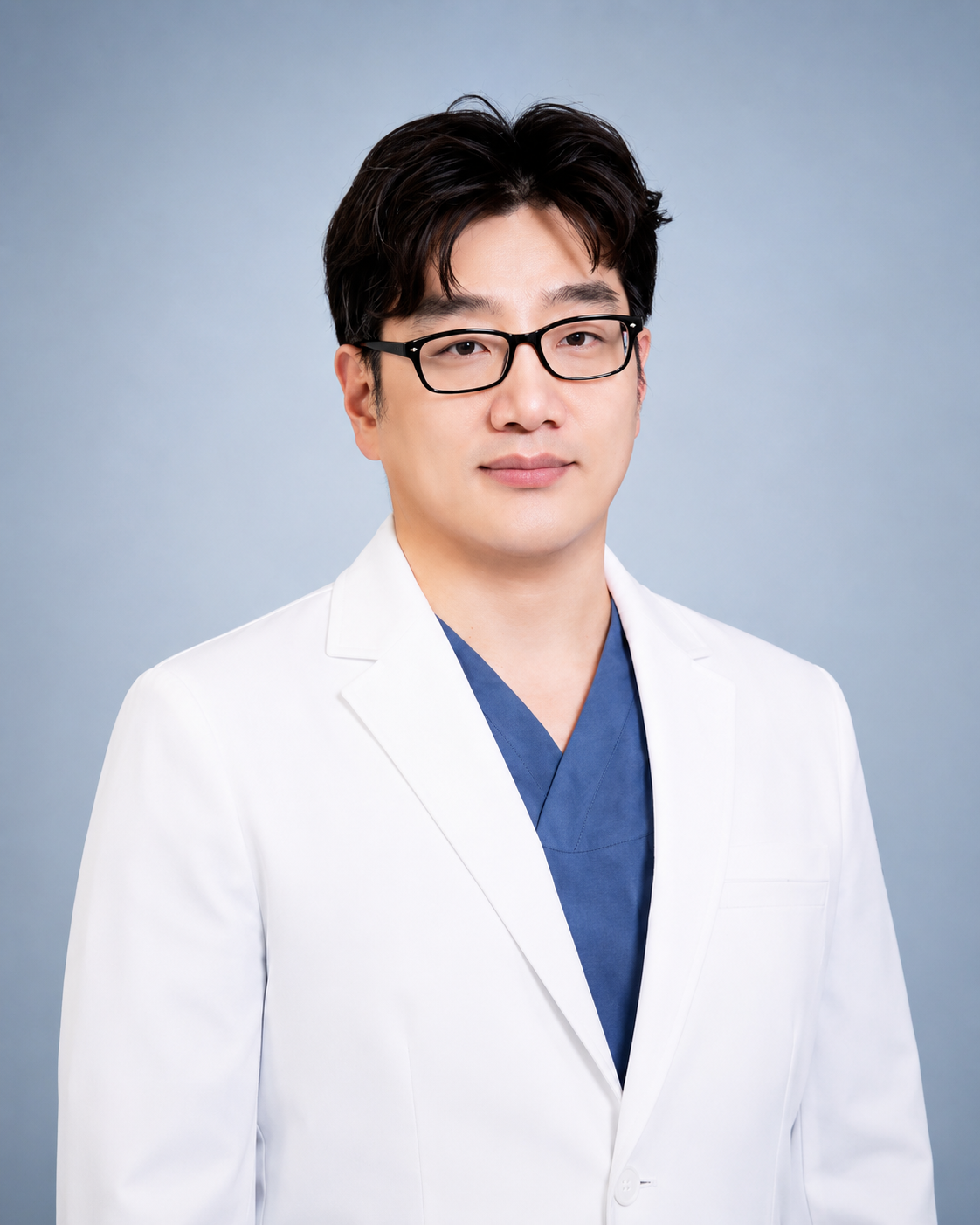
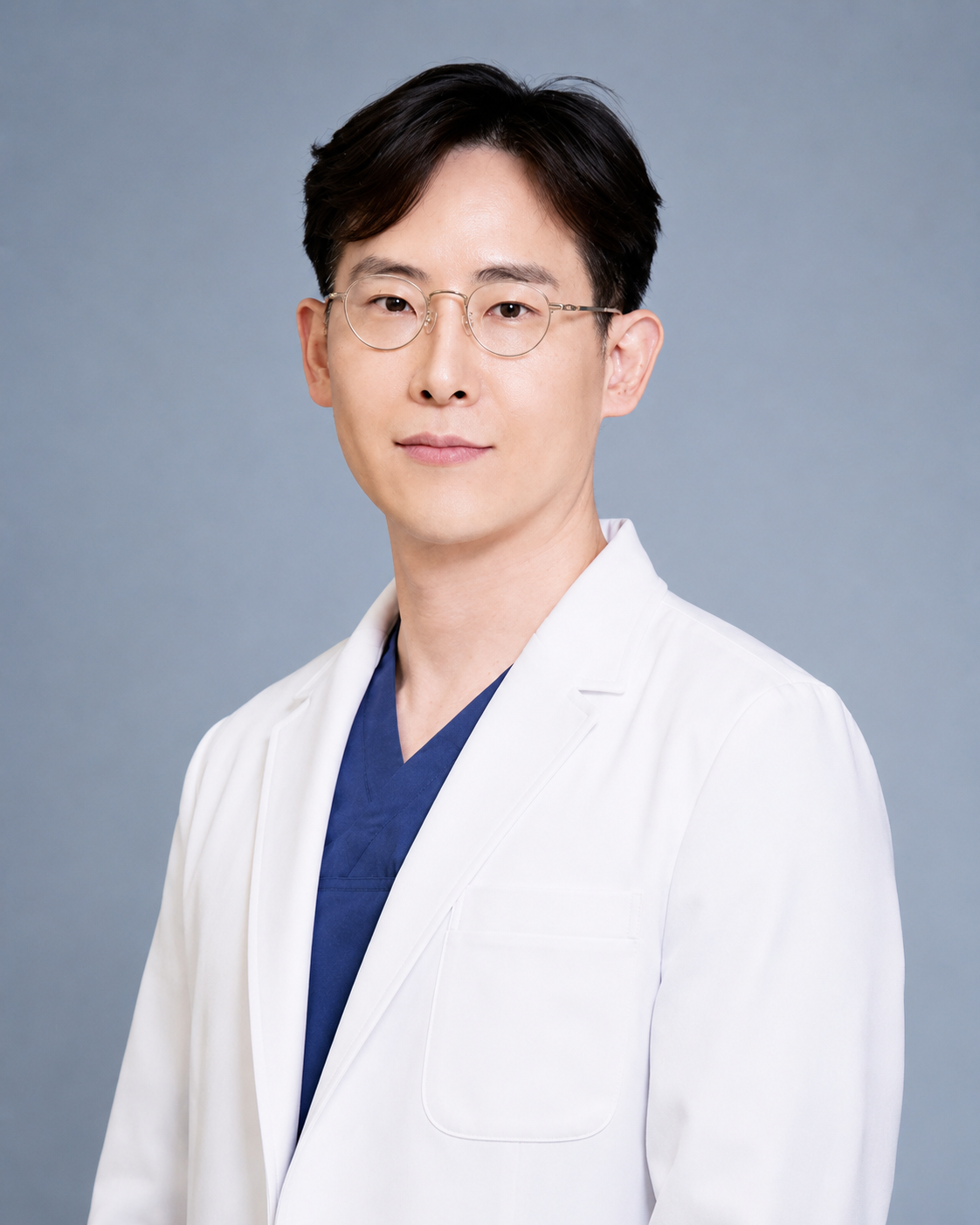
A doctor, in person, every time — never a nurse or a coordinator. JRYN Seomyeon has three doctors, and the clinic was founded by Dr. Jeong Heon Lee, who still consults here. What you actually need is decided during the consultation after your skin is examined, not from a fixed package chosen in advance.
Three doctors, one standard of care.
Every treatment plan at JRYN Seomyeon is decided and performed in person by one of our doctors — led by Dr. Jeong Heon Lee, founder of JRYN Dermatology.
From the Founder
The consultation is the treatment.
Most patients arrive asking for a specific treatment. My job is to check whether it is the right one for what they actually have. Getting that wrong is the most common mistake I correct.
Graduated from Inje University
Current Head of the JRYN Network
Current Chief Director of JRYN Seomyeon
Former Chief Director of Lin Clinic
Former Chief Director of Centum Lin Clinic
Managing Director · Seomyeon Main Branch
Dr. Yoon Jung-wook
Full Member, Korean Society of Aesthetic Plastic Surgery
Full Member, Korean Society for Aesthetic Plastic Surgery & Laser Medicine
Full Member, Korean Society of Obesity & Body Contouring
Former Neurosurgery Resident (3rd Year), Dong-A University Hospital
Former Intern, Dong-A University Hospital
Former Chief Director, Forever Plastic Surgery & Dermatology (Changwon)
Former Chief Director, Lovely Plastic Surgery & Dermatology (Changwon)
Former Director, Insta Plastic Surgery & Dermatology (Gimhae)
Former Director, Dr. Yoon Beauty Center (Vietnam)
Vice Managing Director · Seomyeon Main Branch
Dr. Jin Tae-wan
Former Director of Dermatology, MediWoman Women's Clinic
Former Director of Dermatology, Hangdo Quantum Clinic
Former Chief Director, AGE Clinic (formerly Paresa Clinic)
Former Chief Director, One Clinic (Guro)
Former Director, One Clinic (Gangnam)
Former Chief Director, SKY Plastic Surgery (Jongno)
Former Visiting Physician, Guangfu Aesthetic Plastic Surgery Hospital (Dalian, China)
Former Associate Director, Tokeshi Plastic Surgery
Former Associate Director, Midam Dermatology Clinic
Former Associate Director, Noble Line Plastic Surgery
Former Associate Director, Jeniva Plastic Surgery
Former Military Flight Surgeon, ROK Army Aviation Operations Command
Former Intern & Resident, Kangdong Sacred Heart Hospital
Before You Book
Questions patients ask first.
One to three for discrete vessels, three to five for diffuse redness. Improvement is visible from the first session for thread veins and more gradual for background redness — see facial redness treatment.
One to three days of mild redness on standard settings. Where a purpuric setting is used for stubborn vessels, allow five to ten days for the bruise-like patch to fade — that choice is made with you before treatment.
New vessels form over time, so maintenance is part of the plan. Annual or twice-yearly sessions typically hold the result after an initial course.
From the following day on standard settings, and concealer covers purpura from day one where a stronger setting was used.
It tends to progress slowly in some patients, particularly the vascular component. Treating earlier means fewer vessels to clear and better long-term control, though it is not an emergency.
Summer heat and humidity are the harder season for flushing. The cooler months are more comfortable and also the better window for treatment — see winter: the safest window.
Simple, fragrance-free, and fewer steps than most Korean routines involve. Barrier support matters more than any active ingredient. Mineral sunscreen is generally better tolerated than chemical.
Frequently, and the same vascular laser helps both the inflammation and the red marks left behind — see adult acne in your thirties.
Doctor-led planning across six categories. Foreign patients pay the same as local patients — what changes a final figure is units and area, never nationality.
JRYN Seomyeon
· 4F Samjeong Tower, 672 Jungang-daero · 5 min from Seomyeon Station Exit 2 · 2 min from Seomyeon Mall Exit 16 · 6 min from Lotte Department Store Busan Main · 8 min from Jeonpo Cafe Street · inside Seomyeon Medical Street · open through lunch, seven days a week
Ready When You Are
Send your dates, get a plan before you fly.
Message us on WhatsApp with what you would like to address and when you will be in Busan. You will get an honest read in your language — including whether the treatment you have in mind is the right one.